
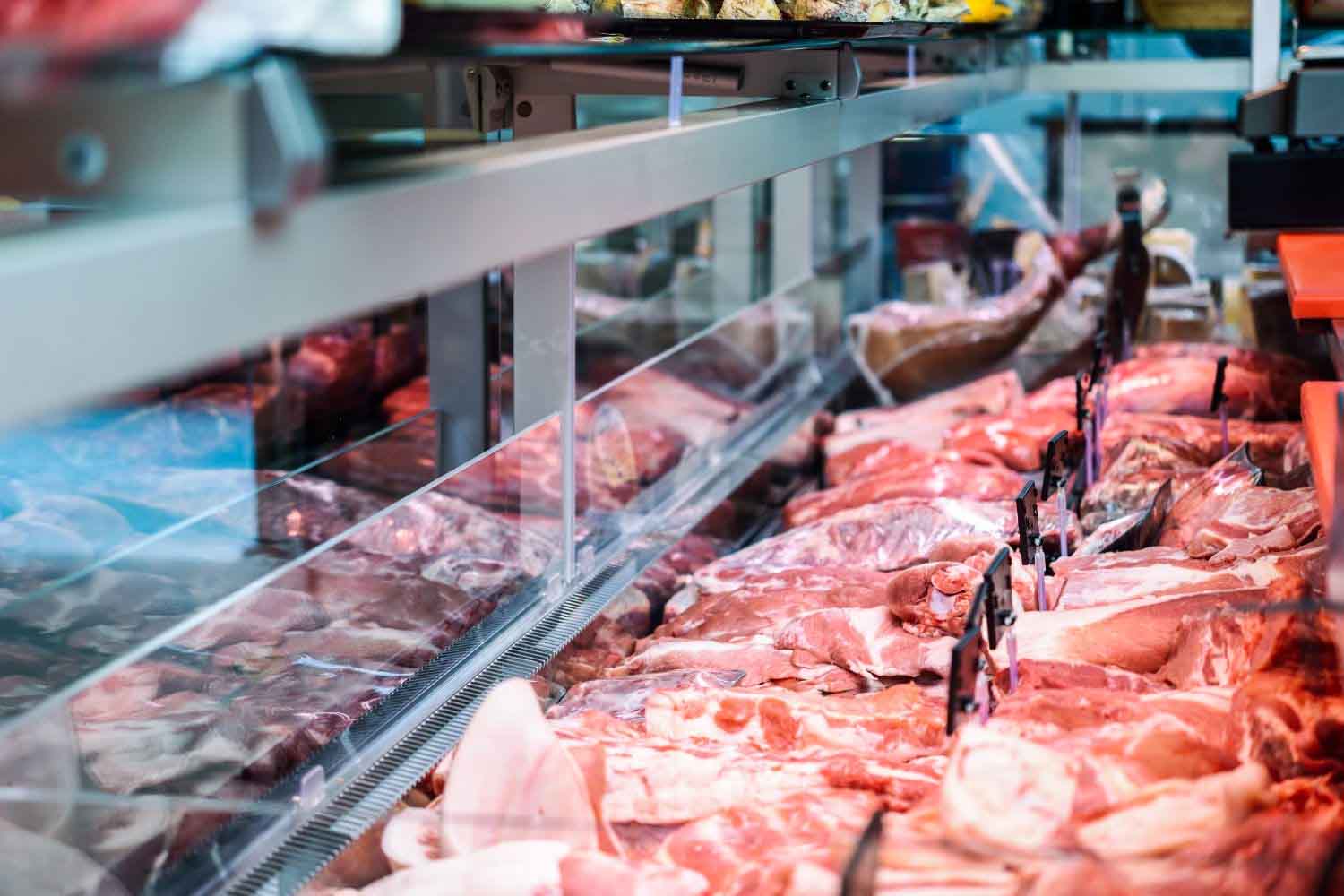
A steak and a salami often end up in the same cauldron when it comes to meat and cancer. What separates them, this time, is an analysis conducted on almost two million people: for fresh red meat no association with stomach cancer was found, while for processed meat a possible increase in risk emerges, especially among those who smoke.
This is indicated by a study published onInternational Journal of Epidemiologywhich brought together data from 20 studies conducted over time. An important distinction, especially considering how often steaks, burgers, ham and sausages are treated as if they were equivalent foods.
Fresh red meat and stomach cancer: the results on almost 2 million people
The researchers, led by Yang Peng, analyzed the eating habits of 1,992,289 people, following their health conditions for average periods of between 8 and 23 years, depending on the study. During this interval, 8,561 cases of gastric adenocarcinoma, a major form of stomach cancer, were diagnosed.
The research team compared consumption of fresh red meat, processed meats, poultry, fish, seafood and eggs. The most interesting result concerns unprocessed meat: no association detected with an increased risk of stomach cancer. The same result emerged for poultry and fish products.
We are talking about meat that has not undergone treatments such as seasoning, salting or smoking. A fresh steak, for example, or minced meat without further processing. So far, therefore, no link has been detected. The situation changes when processed meats enter the scene.
Cured meats and sausages: the risk increases by 15%, especially among smokers
According to the analysis, those who consumed at least 45 grams of processed meat per day had a 15% higher relative risk of stomach cancer than those who ate less than 3 grams. A quantity that is anything but exaggerated: 45 grams can correspond to a portion of cured meats, the kind that usually end up inside a sandwich.
The overall association was weak, with a statistical margin of up to the absence of an increase in risk. Furthermore, that 15% indicates a relative difference between the groups compared, not the individual probability of developing cancer. However, there is a detail that has attracted the attention of scholars: the association with processed meat emerged among people who smoked at the time of the observation, while it was not detected in the other groups.
Smoking is already a recognized risk factor for stomach cancer. Researchers hypothesize that it may also contribute to the effects of certain chemical compounds, including N-nitroso substances, which can form during meat processing and digestive processes. A possible explanation, still to be explored. In fact, the authors point out that part of the observed association could also depend on differences in the quantity of cigarettes smoked, which are difficult to reconstruct completely.
Another difference concerns the origin of the participants: the association was observed in the European and Australian studies, while it did not emerge in the Asian ones. In short, not all results follow the same direction. The research remains observational and allows us to identify associations, without demonstrating a cause and effect relationship on its own.
Red meat and cancer: why stomach cancer is different from colon cancer
There is a fundamental distinction to make, because when we talk about meat and cancer we tend to lump together different diseases. The International Agency for Research on Cancer (IARC) has classified processed meats in Group 1, that of human carcinogens.
The classification is based mainly on evidence relating to colorectal cancer, for which the causal link with the consumption of processed meats is considered sufficiently demonstrated. Unprocessed red meat, however, is classified in Group 2A, that of probably carcinogenic agents. For stomach cancer, the evidence is less definitive. And it is precisely on this form of cancer that the new study focuses.
According to IARC assessments, consuming 50 grams of processed meat every day is associated with an approximately 18% increase in the relative risk of colorectal cancer. The result on gastric tumors therefore adds information to a sector of research where the evidence is even less solid than that on the colon.
How much red meat can we eat?
The distinction between fresh and processed meat also helps guide the choice of foods. Steaks, fresh cuts of beef, veal or pork and meat minced without further processing belong to the unprocessed red meat category.
Salami, ham, bacon, frankfurters and other products subjected to salting, seasoning or smoking are included in processed meats. Some chicken or turkey products may also belong to this category: changing animals alone does not mean changing the type of processing.
Red meat contains important nutrients, including protein, iron, zinc and vitamin B12. The quantities consumed, however, remain an element to consider. The World Cancer Research Fund recommends limiting red meat to around 350-500 grams per week, calculated after cooking, and consuming very little processed meat, preferably avoiding it.
The new study therefore offers an additional element to distinguish the risks associated with different foods, without changing the already consolidated recommendations for the prevention of colorectal cancer. Steaks and cured meats can be found just a few centimeters apart on the butcher’s counter. In data collected from nearly two million people, however, that difference in workmanship deserves much more attention.
