
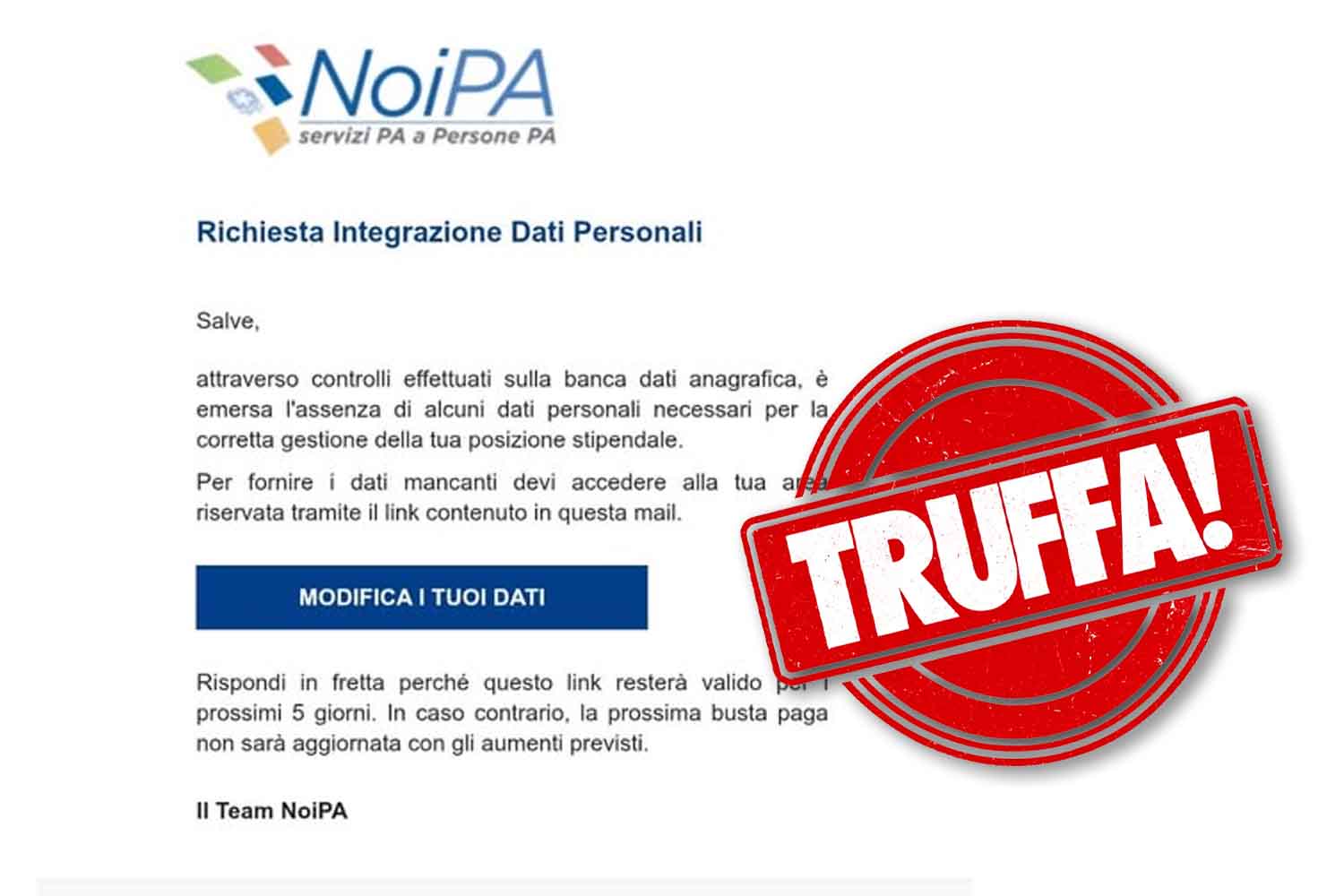
Phishing stories are all similar, but this time the criminals have raised the bar, playing on the deepest anxieties of those who work in the Public Administration. It all starts with an email that arrives suddenly, with a title that is reassuring in form and threatening in content: “Request for Integration of Personal Data”. The header looks like it came directly from the official system NoiPAthe platform that manages salaries and administrative services for millions of state employees.
The graphics are impeccable, the colors identical, the layout familiar. The text claims that, during a registry check, they would have emerged gaps in personal datagaps so significant as to compromise the “correct management of the salary position”. Everything appears so credible that it eliminates all suspicion: the promise of fixing everything with one click is an irresistible invitation. At the bottom of the message, there is the real hook: a blue button, the classic “official” button, with a peremptory “EDIT YOUR DETAILS” in thick fonts, designed to instill urgency.
Whoever presses that button enters exactly where the scammers want: in a fake form, built to steal data, credentials and banking accesswithout mercy and without hesitation.
Why salary scam is so effective
In recent weeks, this wave of messages has reached teachers, firefighters, police officers and public employees. The hackers did not rely on imagination, but on the simplest mechanism in the world: the fear of losing money. The email explains that the link will only be active for five days and that, without a timely update, the next paycheck will be .
The warning is designed to hit the stomach before hitting the mind. It’s the classic tactic of scammers: alarm and take away time to reflect. At the exact moment when anxiety rises, the click becomes an automatic gesture. No one stops to check the domain, or wonder why no one has ever mentioned missing data before.
The link leads to a page that follows the institutional graphics throughout, but which is actually a replica built only to drain sensitive information: telephone numbers, access credentials, banking details. The classic door wide open for violating bank accounts and digital profiles.
NoiPA has already confirmed the nature purely fraudulent of these emails. It would be a fake “Customer Service”, a comforting label that deceives even the most cautious users. The official invitation is clear: never click on links from addresses that resemble real ones but actually imitate them, such as “noipa.gov.mef”. All authentic communication passes only through certified channels, and the platform does not ask never to provide personal data via email, SMS or unrecognized apps.
Making your digital identity more secure remains the most solid defense. Two-factor authentication protects even when credentials are stolen, while constantly updating antivirus and operating systems reduces the risk of intrusions. It is better to avoid public Wi-Fi networks and, in case of any suspicion, contact NoiPA or the personnel offices directly: it is always safer to ignore the message than run the risk of falling for a well-packaged deception.
