
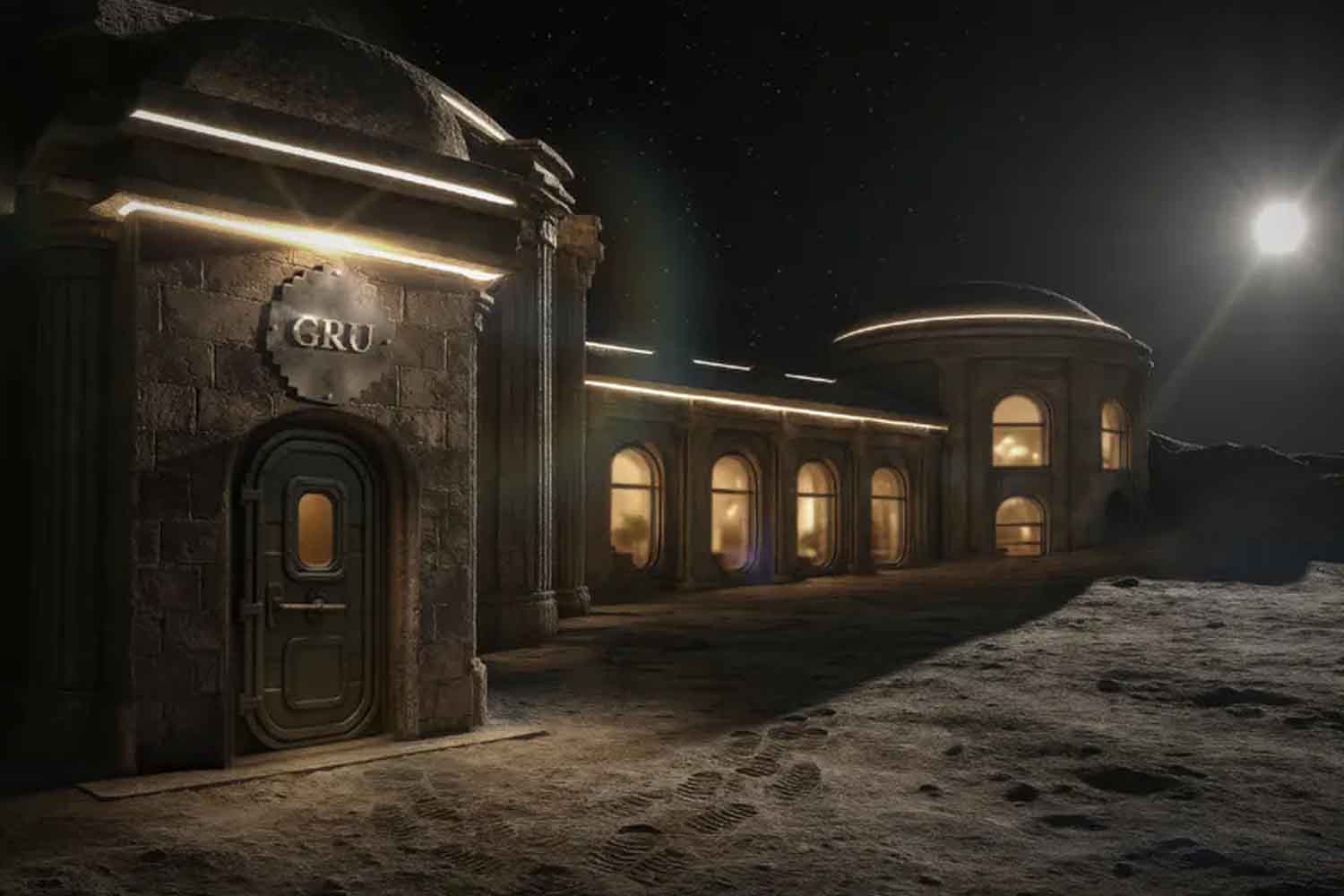
Booking a room that doesn’t yet exist, paying a deposit that can reach a million dollars, with the promise – yet to be verified – of sleeping on the Moon one day. It is not the incipit of a science fiction novel, but the concrete proposal launched by a young Californian startup that has already sparked the debate on the future of space tourism, amidst enthusiasm, skepticism and many still open questions.
The idea is as simple as it is unsettling: to convince a very small elite of super-rich to “book” today a stay planned, in intention, for 2032, in the first hotel built directly on the lunar soil.
The project bears the signature of Galactic Resource Utilization Space, known as Gru Space, founded by twenty-one-year-old Skyler Chan, an engineer trained at the University of Berkeley. The startup has just launched its official website, opening reservations and showing for the first time the architectural details of what, for now, is a virtual-only hotel.
According to what the company declared, the structure will be composed of pressurized housing modules and will be built using partly lunar soil, transformed through automated processes into resistant structural elements. The start of construction is hypothesized for 2029, provided that all the necessary authorizations arrive, while the opening to guests is set, at least on paper, three years later.
The project was born within the Y Combinator accelerator and, according to what the founder reported, it has already attracted investors connected to leading companies such as SpaceX and Anduril. A detail that helps to give credibility to the operation, even without untying all the knots.
How much does it cost to “block” a room and why are we already talking about out-of-scale figures
Anyone who wants to apply as a future lunar tourist must be ready to put their wallet in, and decisively. The startup asks for a deposit of $250,000 or $1 million, depending on the option selected, plus a non-refundable registration fee of $1,000. The deposit, as explained on the official website, can be fully refunded after the first 30 days, but will then be deducted from the final cost of the stay.
Cost which, at the moment, remains an unknown. The company admits that the final price has not yet been set, but anticipates that it will likely exceed $10 million per person. A figure that makes the target of the operation clear: not simple space enthusiasts, but individuals willing to pay astronomical sums to live an unrepeatable experience.
Between enthusiasm and caution
Beyond the slogans and suggestive images, the project raises more than one doubt. The technologies needed to build and operate a hotel on the Moon, from transporting materials to guest safety, are not yet operational on a large scale. Many observers speak of a highly speculative idea, which also focuses on the strength of the story and the attraction exerted by exclusivity.
Yet, the global context plays in favor of initiatives of this type. The Moon has returned to the center of scientific and industrial interest, and the boundary between exploration and tourism appears increasingly thin. In this scenario, Gru Space’s lunar hotel seems to want to intercept a specific desire: not so much to travel, but to be among the first, to leave a mark, to buy a piece of the future in advance.
It remains to be seen whether, in a few years, that future will really have a reception overlooking the Sea of Tranquility or whether this story will end up being confined between well-made renderings and refunded reservations. Meanwhile, someone is already ready to bet a million dollars on it.
You might also be interested in:
