
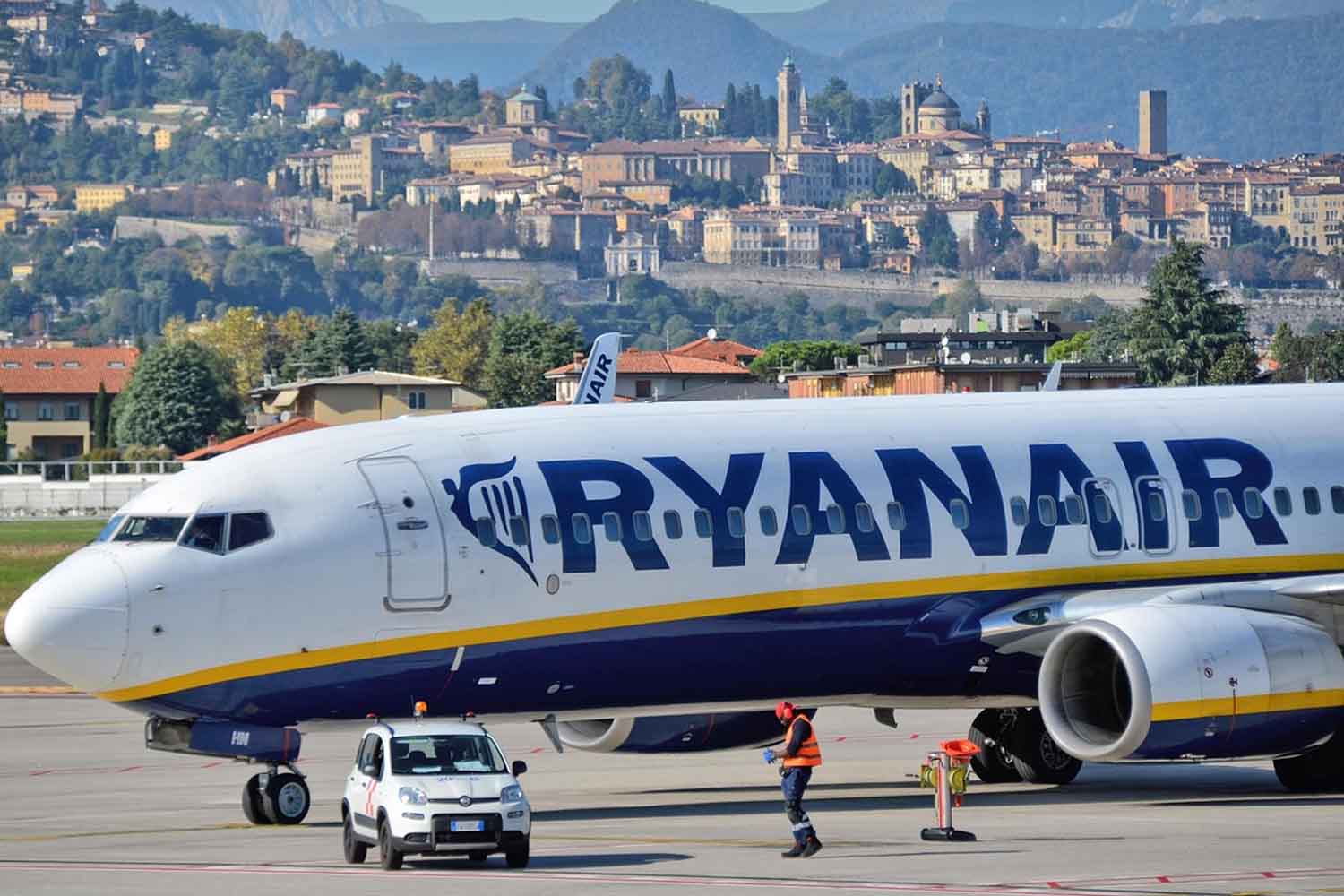
Flying low cost in Europe is becoming a luxury. Not because of the war in the Middle East, nor some sudden geopolitical crisis, but for a much more prosaic reason: the costs have become unsustainable. Ryanair has decided to respond with a drastic move, reviewing its entire European network for the 2026 season and cutting dozens of routes on some of the historically most important markets for tourists on the continent, including Italians.
The Irish company has clearly indicated the causes: increasingly high airport taxes, increasing state taxes on air transport and increasing charges for traffic management. Faced with these increases, the strategy is as simple as it is brutal – leave the no longer profitable ports and concentrate the fleet where the numbers add up, such as Malta, Budapest and Marrakech, destinations which will instead see an increase in frequencies.
What are the canceled routes
Portugal
The heaviest blow, at least in terms of tourism impact, concerns Portugal.
Since March 29, Ryanair has stopped flying to and from the Azores altogether, canceling six routes in one fell swoop. Around 400 thousand passengers a year will now have to find often much more expensive alternatives to reach one of the most extraordinary archipelagos in Europe.
Spain
Spain is the most affected market overall. The Santiago de Compostela base closes its doors, flights to Asturias, Vigo, Valladolid and Jerez are permanently cancelled, and the Canary Islands, including Tenerife North, also suffer cuts. Santander and Zaragoza will experience a clear reduction in capacity.
Germany, France and Belgium
In Germany, 24 routes will disappear, with repercussions on important airports such as Berlin, Hamburg, Cologne and Frankfurt-Hahn, as well as on the network of smaller airports. France loses connections to Bergerac, Brive and Strasbourg, while Belgium is perhaps the one that pays the highest price in absolute terms: the closure of around twenty routes will result in almost a million fewer seats, with direct effects on the airports of Brussels and Charleroi.
What to do if your flight has been cancelled
Anyone who had already booked a flight on one of the canceled routes is not defenseless. EU Regulation 261/2004 guarantees precise and concrete protections. The passenger can choose between a full refund of the ticket or re-routing on the first available alternative flight. If the company does not offer quick solutions, it is possible to organize yourself and then request reimbursement of documented expenses.
While waiting at the airport the company is obliged to provide free assistance: meals, drinks and the possibility of communicating with the outside world. If the alternative flight departs the following day, hotel accommodation and transport are also included. When the cancellation depends on an operational choice of the company – and not on causes of force majeure such as bad weather or controllers’ strikes – the right to financial compensation is also triggered, the amount of which varies based on the distance of the route and the advance notice of the cancellation.
The practical advice is banal but fundamental: keep everything. Every email received from the company, every receipt of expenses incurred for the disservice, every boarding pass. During periods of reorganization like this, airports get crowded and queues at security checks get longer: leaving earlier than usual is a precaution that is almost always worth taking.
