
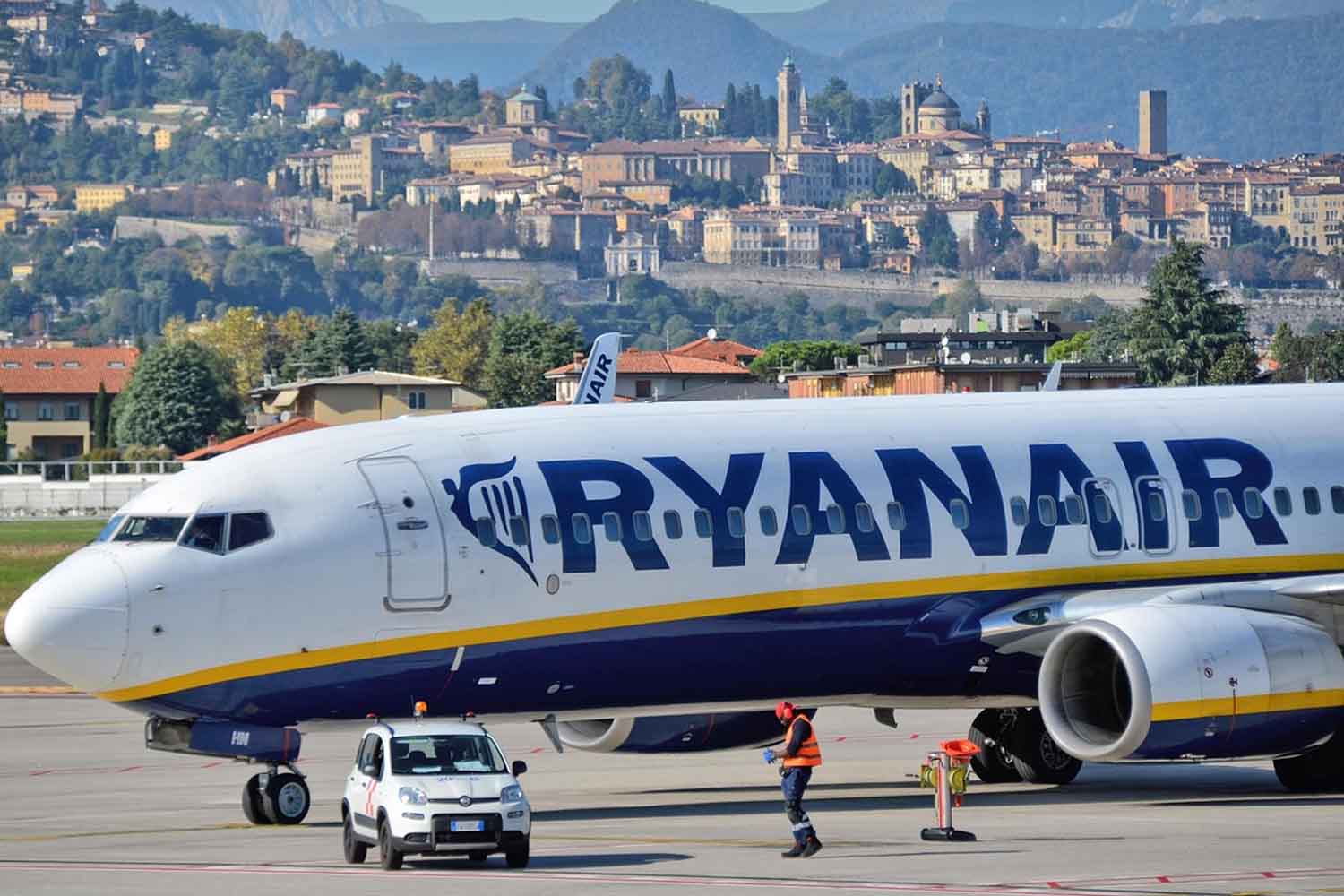
Twenty minutes. This is the gap that, from November 10th, will change the habits of those traveling with Ryanair, because the airport check-in desks and those for baggage delivery will close sixty minutes before departure, no longer forty as happens now. The Irish company announced this on Wednesday 22 April on its website, with an announcement that is worth reading carefully, because behind an apparently technical change lies a bigger piece of history, that of the new European border control system.
Who is really involved
First of all, a clarification that the company is keen to make clear. The restriction affects only 20% of passengers: those who check in baggage in the hold or who, for any reason, still have to check in at the counter upon arrival at the airport. The remaining 80% — those who travel with hand luggage only and have already registered online — will not see anything change. You will board the airport, go through security and reach the gate exactly as before.
Dara Brady, the company’s Chief Marketing Officer, explained the meaning of the measure without mincing words:
From Tuesday 10 November, Ryanair customers will be able to take advantage of the airport check-in and bag drop service closing 60 minutes before the scheduled departure time, rather than the current 40 minutes. This will allow the 20% of our customers (who check in baggage) to have more time to get through security and passport control queues, and to reach their boarding gate on time, especially during busy periods, when queues at the airport can be longer. Furthermore, by October we will install self-service kiosks in over 95% of airports served by Ryanair. This will result in a faster baggage delivery service, fewer queues at check-in desks and an even more punctual service for the 20% of our customers who still wish to check in a bag, while the 80% (who do not check in baggage) will not be affected by this small 20-minute change, as they will continue to check in online before arriving at the airport and will go directly to the boarding gate after security.
The EES node: the system that made the queues longer
Anyone who has passed through a European airport in recent months knows that the queues are actually longer. From 10 April 2026, the Entry/Exit System (EES) is fully operational in all 29 countries of the Schengen area. This is a European Union IT system that records, at each border crossing, the data of non-EU citizens in transit for short stays: name, travel document, fingerprint, facial image. It replaced the old passport stamp — which some may already regret — with an automated biometric procedure.
The system was introduced progressively starting from 12 October 2025 and has been mandatory on all external Schengen border crossings since April. The numbers released by the European Commission speak of over 52 million registrations already completed and more than 27,000 rejections, of which around 700 to people identified as a security risk. In terms of safety, the results are there. In terms of waiting times, there are also problems.
The EES does not apply to EU citizens — who continue to cross borders as before — but for travelers from third countries, even those with biometric passports, the first registration process takes longer than a simple stamp.
Ryanair, in the official press release, does not mention the European system by name. He talks about “queues at passport controls”, without attributing the cause. An omission which is hardly accidental, but which does not change the substance: the early closing of the stalls is also an indirect response to a structural bottleneck which, at least for this summer season, shows no signs of resolving.
Self-service kiosks: fewer queues, more responsibility
As noted in the above press release, Ryanair has not just moved the clock forward and, in parallel with the announcement, has communicated that by October 2026 it will install self-service bag drop stations in over 95% of the airports in its network. The kiosks are integrated with the company’s app: the passenger checks in the baggage, prints the label independently and approaches the carousel without going through the traditional counter.
Fewer queues at the counters, quicker check-in times. But also, and it is worth saying this clearly, full responsibility for times is transferred to the traveller. Anyone who does not show up with their baggage ready, labeled and on time will not have an operator to deal with and will find the system closed.
For those traveling with hold luggage, the new rule of thumb is simple: show up at the terminal at least two hours before departure. That margin, generous until a few months ago, has now become the minimum wage.
