
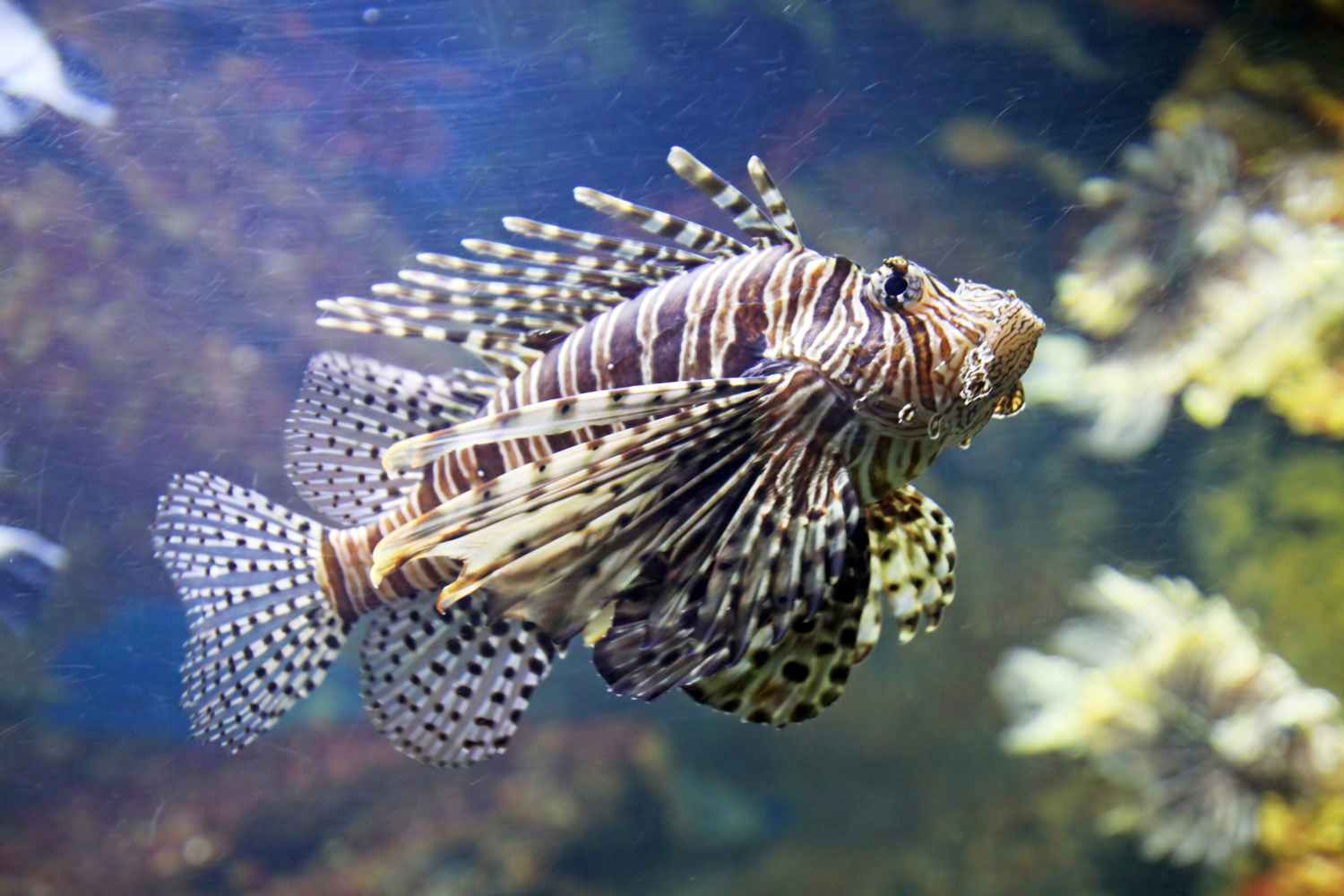
The Mediterranean is no longer just the sea we knew. In recent years, alien species, i.e. from other basins, have begun to colonize it with increasing rapidity, modifying ecological balances and economic dynamics. Among these, the lionfish has become one of the clearest examples of how climate change and human activities are rewriting marine geography.
Colorful, showy, but also extremely voracious, this predator native to the Indo-Pacific has spread along the coasts of the eastern Mediterranean, reaching as far as the Ionian Sea. It has no natural predators and reproduces rapidly, putting pressure on native species. “It leaves nothing behind it and multiplies because it has no enemies,” Cypriot fisherman Photis Gaitanos, who has been observing the changing seabed off Larnaca for years, told Euronews.
What is the Mediterranean losing?
Gaitanos has been fishing for forty years and says that more than two years have passed since the last mullet ended up in his nets, a fish that was once common and in great demand. “Our earnings have gotten worse every year,” he says, linking the decline in catches to the arrival of invasive species and warming seas.
According to the General Fisheries Commission for the Mediterranean, the basin’s waters are warming about 20% faster than the global average. A fact that explains why species coming from the Red Sea, also favored by the expansion of the Suez Canal, today find ideal conditions to establish themselves and multiply.
Bring the invader to the plate
Faced with a spread that is difficult to stop, Cyprus has chosen an unusual path: eating lionfish. Once the poisonous spines are removed, its flesh is considered edible and prized. Some restaurants have included it in their menus, also thanks to campaigns such as #TasteTheOcean, which since 2021 have promoted the consumption of invasive species as an alternative to the more common fish.
The European Commissioner for Fisheries, Costas Kadis, claims that “by introducing invasive species such as the lionfish (or the blue crab) into our diet we can turn this challenge into an opportunity”. But is turning an ecological problem into a food product a sustainable strategy in the long term, or does it risk shifting the focus without addressing the causes?
A precedent that really works?
At the Larnaca fish market, lionfish have a competitive price, lower than that of species such as sea bass. For restaurateurs like Stephanos Mentonis, it is also a way to educate customers: “When they taste it, it is no less tasty than any other fish”, he explained to Euronews, recalling however that the preparation is delicate and that the bones can cause intense pain.
Meanwhile, other invaders like the silver-cheeked toadfish don’t even offer this possibility. Toxic and harmful to networks, it is cut down with European incentives and then destroyed. Two alien species, two opposite approaches: consumption on the one hand, elimination on the other.
View this post on Instagram
Models indicate that lionfish could colonize the entire Mediterranean by the end of the century. The question remains open: can changing diet really slow down the invasion or is it just a way to adapt to a sea we are already losing?
