
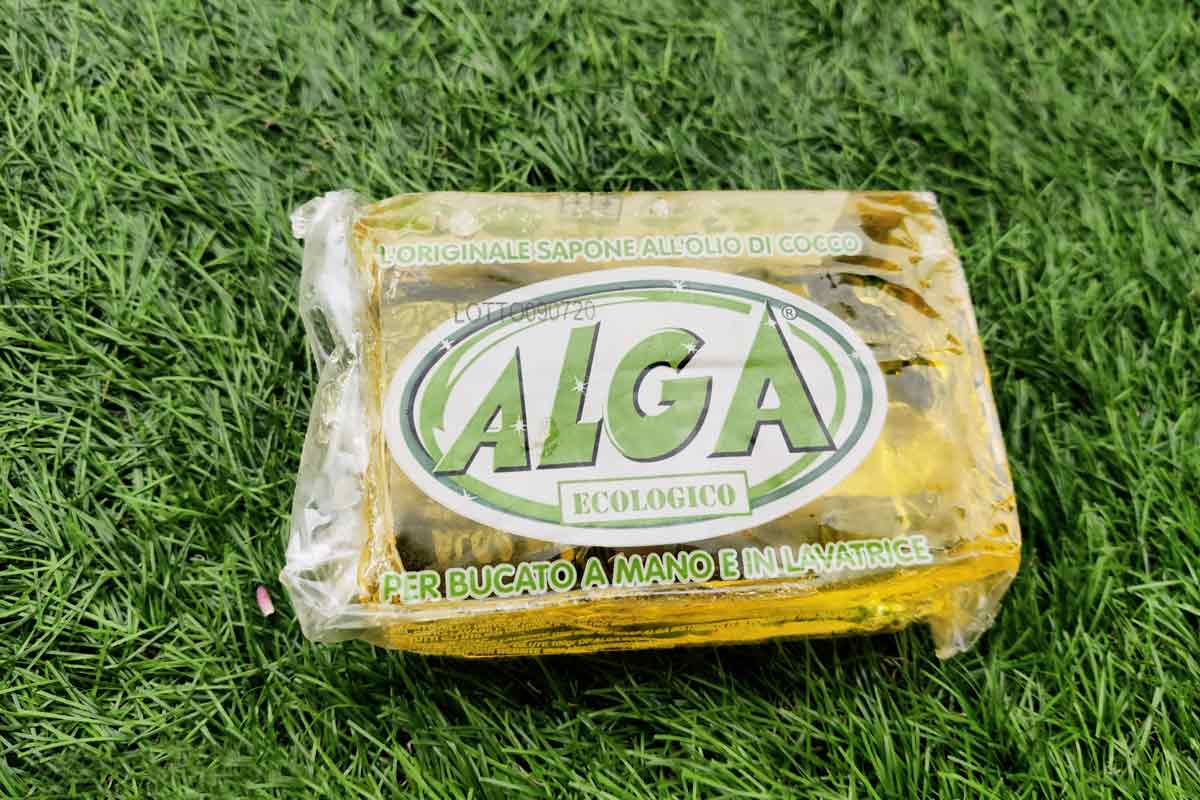
It is cheap, lasts a long time and can be useful in many household chores. Alga soap, with its unmistakable soft and sticky consistency, is one of those products that, once tried, easily end up staying in the detergent cabinet. Precisely because it is simple to use, however, it is equally easy to treat it as if it were suitable for everything. And here the problems begin.
The fact that it is a soft potassium soap with a rather essential formulation does not mean that we can use it without criterion, increase the doses when the dirt seems difficult or pass it on any surface in the house.
There are at least three very common errors that can transform a practical and economical product into a source of stains, residues and, in some cases, ruined materials.
Mistake number 1: thinking that more soap means cleaner
It’s probably the most spontaneous mistake. The stain won’t come out? We add soap. Is the floor very dirty? Let’s double the quantity. Does your laundry seem to need a more vigorous cleaning? Let’s put another piece.
In reality, with Alga soap, overdoing it is not necessarily a good idea. An excessive amount can become more difficult to rinse and leave residues on fabrics or an annoying film on surfaces. On floors the result can be even more evident: instead of a clean sensation you can end up with streaks that force water to pass through again. The consistency of the soap is easily misleading. A small piece seems like little, especially when it is dissolved, but there is no need to start with large doses. Better to use a little product and possibly increase only after checking the result.
Mistake number 2: using it on any surface because it is “natural”
“It’s natural, what could it possibly ruin?” The problem is precisely this reasoning: a detergent can have a simple composition and still be unsuitable for some materials. Alga soap is still a cleaning product and not all surfaces react in the same way.
Particular attention should be paid to porous materials, unprotected wood, waxed or painted surfaces and, more generally, delicate coverings or those subjected to particular treatments. Even when we have already used soap without problems in the kitchen or on the tiles, it does not mean that we can automatically transfer the same method to the rest of the house.
The simplest way to avoid surprises remains the one we often forget: testing in a hidden spot. Simply use a small amount of diluted product, let it dry and observe the result. If cloudiness, halos or color changes appear, it is better to stop there. It takes a few minutes and can avoid damage that is much more difficult to fix.
Mistake number 3: automatically considering it harmless on plants
It is one of the most intriguing uses: potassium soaps are also used against some small plant parasites, such as aphids and certain scale insects. But this doesn’t mean we can take the stick from the laundry cabinet, dissolve it randomly in water and sprinkle it on the leaves.
Not all plants tolerate soft soap in the same way, especially when the solution is too concentrated or is applied during the hottest hours. Even before that, there is another check to do: check the product label and the manufacturer’s instructions, because soap sold for laundry is not automatically intended for any other use.
Again, testing on a small area is a smart precaution. And above all, no applications under strong sun, no improvised doses and no belief that “it’s biodegradable”.
The real strength of Alga soap is not being able to use it without rules, but almost the opposite: a little is enough, used in the right place and in the right way.
And this is probably the simplest trick to make that famous yellow stick really last without turning the initial savings into double work
