
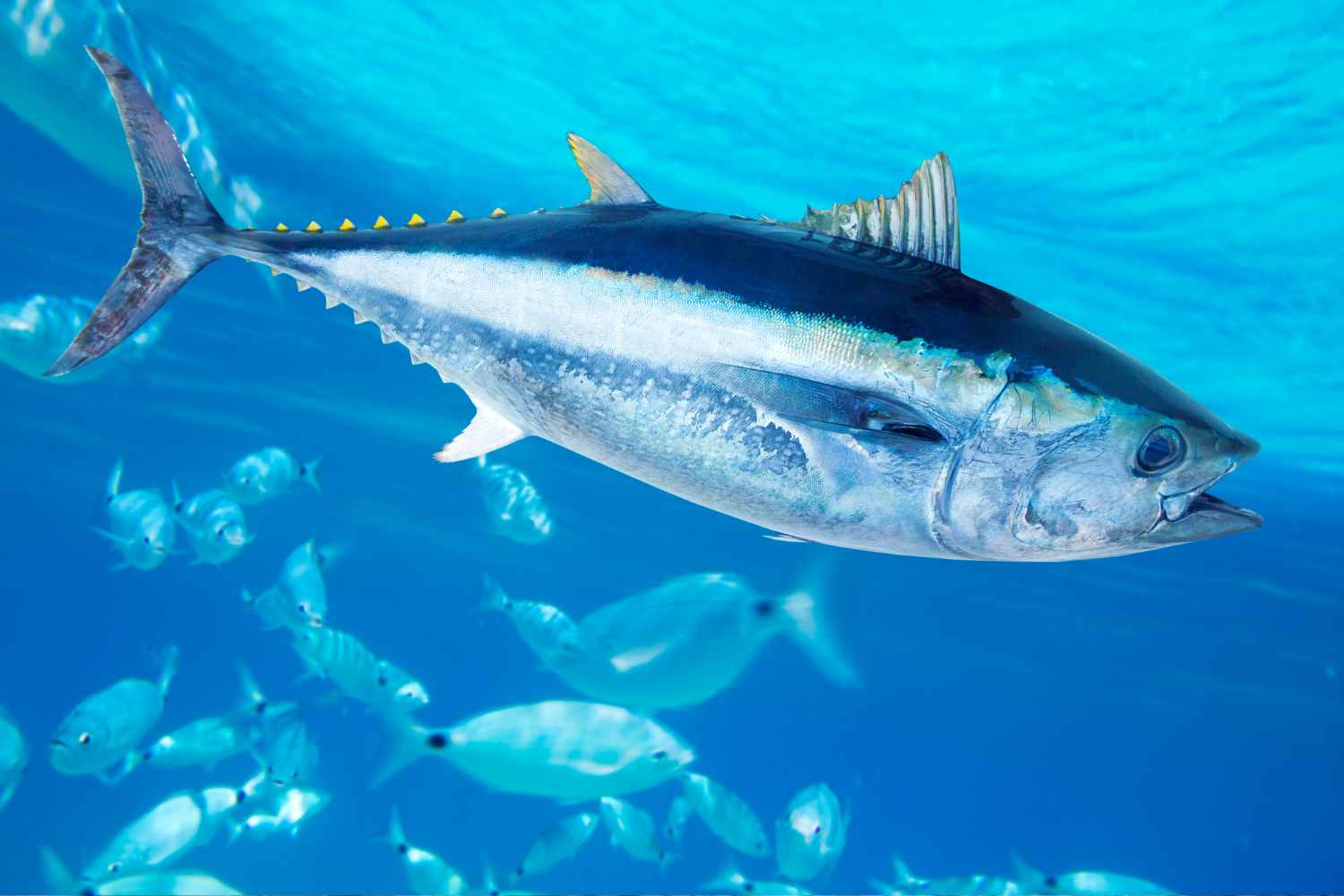
Seven people ended up in hospital after a lunch of bluefin tuna. This is what happened in Palermo, where a group of intoxicated people (three of whom belonged to the same family) experienced nausea and other symptoms typical of food poisoning in the hours following the meal. One is hospitalized in intensive care at Villa Sofia hospital, the others are under observation in the emergency rooms of the Civico, Ingrassia and Policlinico hospitals.
The tuna had been purchased in a fish shop in the city, whose name was not disclosed. On the same day, the establishment had reportedly sold approximately 200 kilos of tracked fish. The Carabinieri of the NAS of Palermo, led by Lieutenant Colonel Luigi Pacifico, identified the shop and started investigating the case. The suspicion of investigators and doctors is that the fish contained an abnormal level of histamine, a toxic substance that accumulates in tuna tissues when the cold chain is interrupted, and which is the cause of the so-called scombroid syndrome.
What is scombroid syndrome
The name comes from the family of Scombridae (such as tuna itself, mackerel and bonito), all fish which have a high concentration of the amino acid L-histidine in their muscle tissues. If storage is inadequate, bacteria with histidine decarboxylase activity convert that amino acid into histamine. The problem is that this molecule is extraordinarily stable, resisting cooking, freezing and canning, so a contaminated fish remains toxic regardless of the heat treatment it receives.
From a medical point of view, the syndrome falls in a gray area between toxicology and allergology, which is why it is classified as a pseudo-allergic reaction, or PAR. Unlike a true food allergy, mediated by the patient’s IgE, here the reaction does not depend on individual sensitivity. Anyone, allergic or not, would develop symptoms if they ingest a sufficient dose of histamine. Mauro Minelli, professor of clinical nutrition at the LUM Giuseppe Degennaro University, explains this when asked by Adnkronos Salute about the Palermo episode.
The symptoms
The latency is very short, the first signals appear a few minutes to an hour after ingestion. The classic picture involves widespread skin redness (flushing) on the face, neck and upper part of the trunk, accompanied by throbbing headache, dizziness, nausea, abdominal pain and diarrhoea. In more severe cases, tachycardia and hypotension are recorded. An element that can help the diagnosis is the memory of a “spicy” or metallic taste of the fish consumed.
How to treat it and how to prevent it
The treatment aims to counteract the massive presence of exogenous histamine. Corticosteroids are the most rational aid in the acute phase, to manage the systemic inflammatory component, antihistamines (anti-H1 and anti-H2) are useful although they present limitations, because if histamine has already occupied the sites of action, competitive effectiveness would be reduced. In cases with cardiovascular instability, hemodynamic support may be necessary.
Prevention, on a practical level, is reduced to a single factor, linked to temperature, because rigorously maintaining the cold throughout the entire supply chain, from capture to sale, is the only truly effective tool. Once histamine has formed, there is no cooking or treatment that can eliminate it.
