

You say Siena and you immediately think of the splendid one Camp Squarein the picturesque way Torre del Mangiato the rows of vines of the Maremma countryside. Yet there are also lesser-known places that represent true jewels of history and nature that deserve to be included in the itinerary of your next trip to the Tuscan city. Let’s see them together.
Le Biancane di Leonina, the lunar landscape of the Crete Senesi
View this post on Instagram
Among the most surprising places in the surroundings of Siena are the Biancane di Leonina, spectacular clay formations that shape one of the most iconic landscapes of the Crete Senesi. These light-toned hills originated millions of years ago, when the area was submerged by the waters of the Tyrrhenian Sea, and still today retain traces of their ancient marine origins in the soil. Soil erosion has given rise to an almost lunar environment, characterized by rounded reliefs, sparse vegetation and species adapted to particular conditions, such as the fragrant artemisia. To discover this geosite of national interest you can follow the Ring of Biancane di Leonina, a panoramic itinerary that crosses the heart of the Crete Senesi and offers breathtaking views of one of the most evocative landscapes in Tuscany. Dominating the area is the Leonina Castle, an ancient medieval fortification that has watched over this extraordinary natural setting for centuries.
Upper Merse nature reserve
Established as a protected area by the Tuscany Region in 1996, the reserve is located in a suggestive hilly area completely wooded and hosts a long stretch of the Merse river (from which it takes its name) and its tributaries. It is characterized by the presence of chestnut trees, oaks, turkey oaks and oaks – all typical trees of the Mediterranean scrub of which the reserve is an expression.
Most of the trees that live in the reserve represent the ideal nest for birds (such as the great spotted woodpecker, the green woodpecker and the wryneck) but also for mammals of extreme conservation importance such as the wild cat, the marten and the skunk.
©greenMe
Among the animals that populate the area we also remember some birds of prey – such as the short-toed shark, the buzzard and the kestrel – and four endemic fish species – namely the Arno goby, the stream chub, the Apennine barbel and the roella.
But rivers and tributaries are also home to two species of amphibians typically typical of peninsular Italy, the spectacled salamander and the Italian frog, a sign of the good state of health of the waterways, and the very rare river crayfish, threatened by extinction due to indiscriminate fishing and the presence in the territory of the invasive species of the Louisiana red crayfish.
(Read also: One of the most feared and isolated prisons in Mexico has now become a heavenly nature reserve)
Montesiepi hermitage
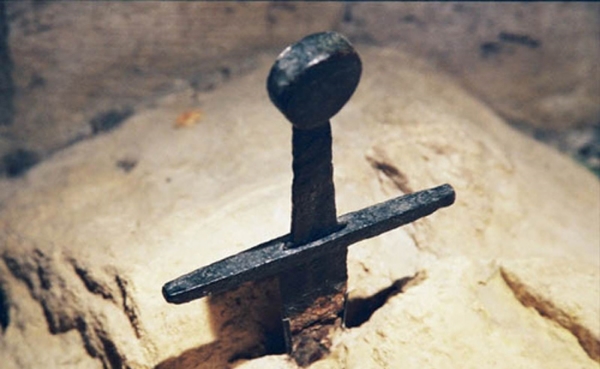
This small chapel perched on the Chiusdino hill houses a real sword in the stone! Legend has it that the knight Galgano Guidotti (who would become a saint) chose to lay down his weapons forever and dedicate himself to the life of a hermit after receiving God’s “call”. Then, as an act of conversion to peace, he stuck his sword inside a boulder.
Needless to say, that sword stuck in the rock was never pulled away again. A cult began to be established around the rock of San Galgano and the hill began to be a pilgrimage destination, until the construction of the small church (1181-1185) in the center of which is the rock with the sword stuck in it.
©greenMe
The Biodiversity Museum of Monticiano
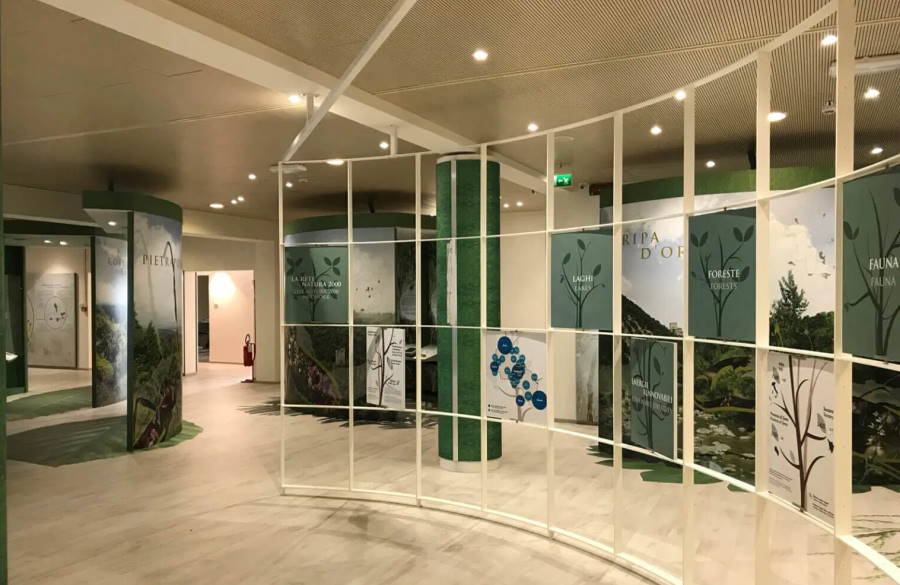
The Museum of Biodiversity of Monticiano was born in 2019 and is one of a kind in Italy: through interactive maps, games, videos and sound experiences, it tells the great heritage of biodiversity on our planet and explains what we can do to conserve it for as long as possible.
The museum is divided into numerous rooms arranged on two floors, each dedicated to a particular aspect of biodiversity. A particular look, obviously, is aimed at the Tuscany region where the museum is located, with its ecosystem rich in plant and animal species which give life, among other things, to the wine and food excellences of the region.
©WWF
The upper floor is entirely dedicated to the 14 nature reserves present in the province of Siena, each characterized by animal species typical of this heterogeneous and varied territory. Also in this case, explanatory panels and multimedia content guide the visitor to discover the animals and plants that live in this province.
The Abbey of San Galgano
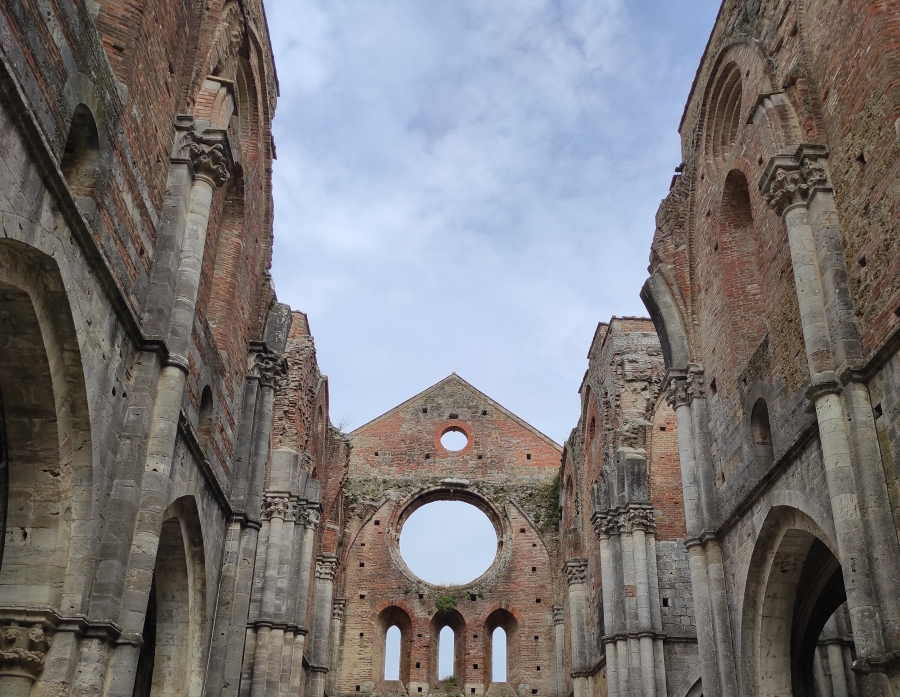
The Gothic abbey of San Galgano, built between 1218 and 1288, represents the first Gothic church in Tuscany. Unfortunately, however, it is no longer a church: it was in fact deconsecrated in 1789, after three years earlier lightning had struck the bell tower which collapsed onto the roof, destroying it.
Despite the fact that it is no longer a church and has no longer had a roof for several centuries, the main structure of the abbey resists the passage of time, standing imposingly in the middle of the Sienese countryside, on the outskirts of the municipality of Chiusdino.
But not only that: the absence of the roof creates a suggestive and almost magical atmosphere inside the structure, as it allows the visitor to admire the tall columns and vaults typical of the Gothic style while seeing the sky above his head!
©greenMe
The Petriolo Baths
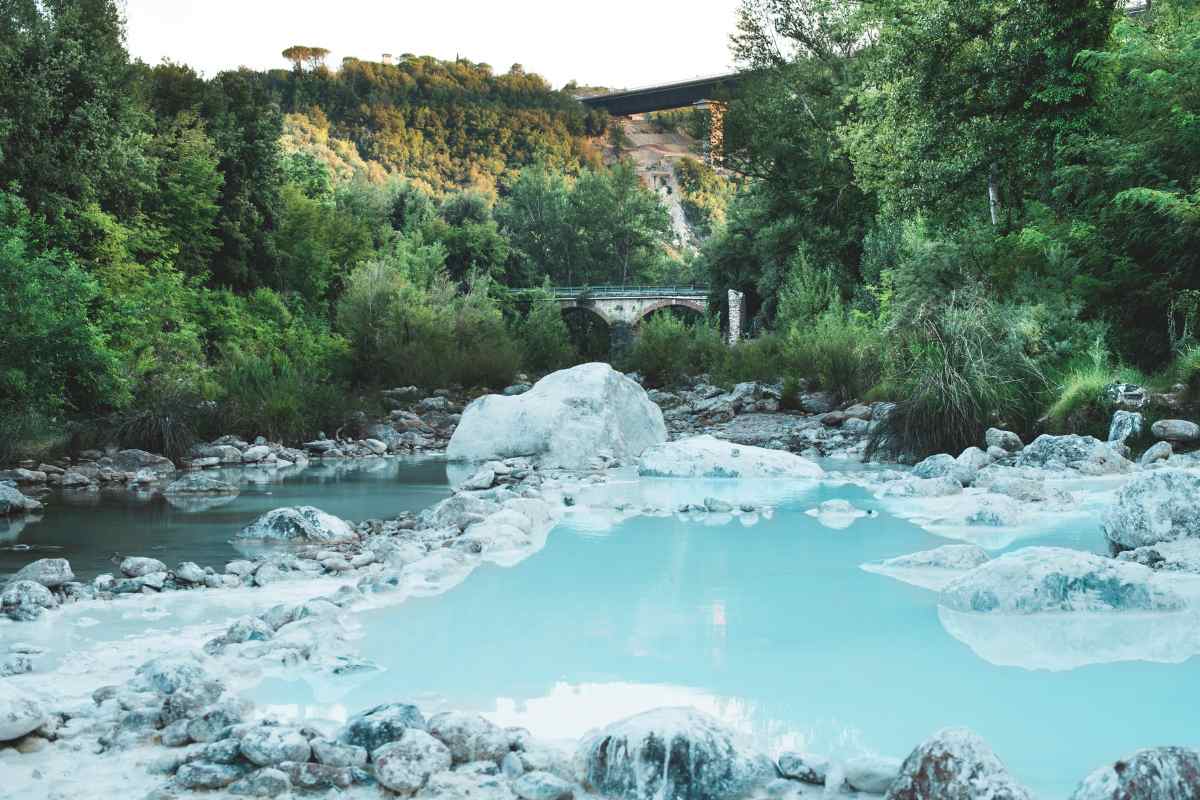
Immersed in the woods of the Val di Merse, between the provinces of Siena and Grosseto, the Terme di Petriolo represent one of the oldest spa complexes in Tuscany. The sulphurous waters flow naturally at a temperature of around 43°C and have been appreciated since Roman times for their beneficial properties. Next to the spa there are suggestive free outdoor pools, overlooking the Farma river and surrounded by vegetation, which offer a relaxing experience immersed in nature. Frequented in the past by popes, nobles and leaders, the spa still retains the charm of a place where history, landscape and well-being meet.
Monteriggioni, the medieval village frozen in time
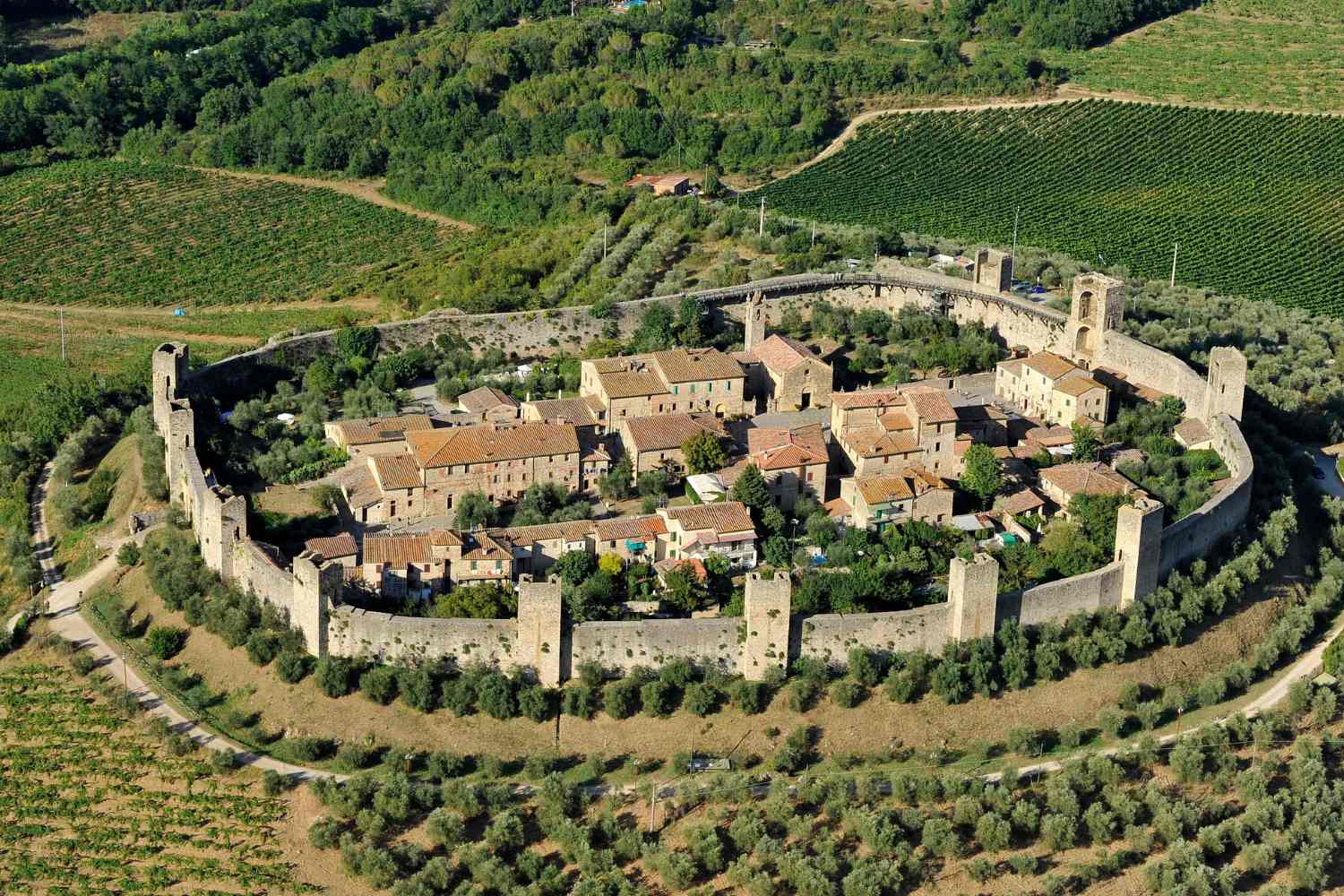
Perched on a hill a few kilometers from Siena, Monteriggioni is considered one of the best preserved medieval villages in Italy. Founded by the Republic of Siena between 1213 and 1219 as a defensive outpost against Florence, it still retains its imposing walls almost intact, approximately 570 meters long and punctuated by fourteen towers that dominate the surrounding landscape. The extraordinary grandeur of the fortifications even struck Dante Alighieri, who mentioned them in the XXXI canto of the Inferno of the Divine Comedy. Walking through its stone streets, crossing the ancient entrance doors and walking along the walkways on the walls means taking an authentic journey into the Middle Ages, immersed in an atmosphere that seems to have remained unchanged over the centuries.
