
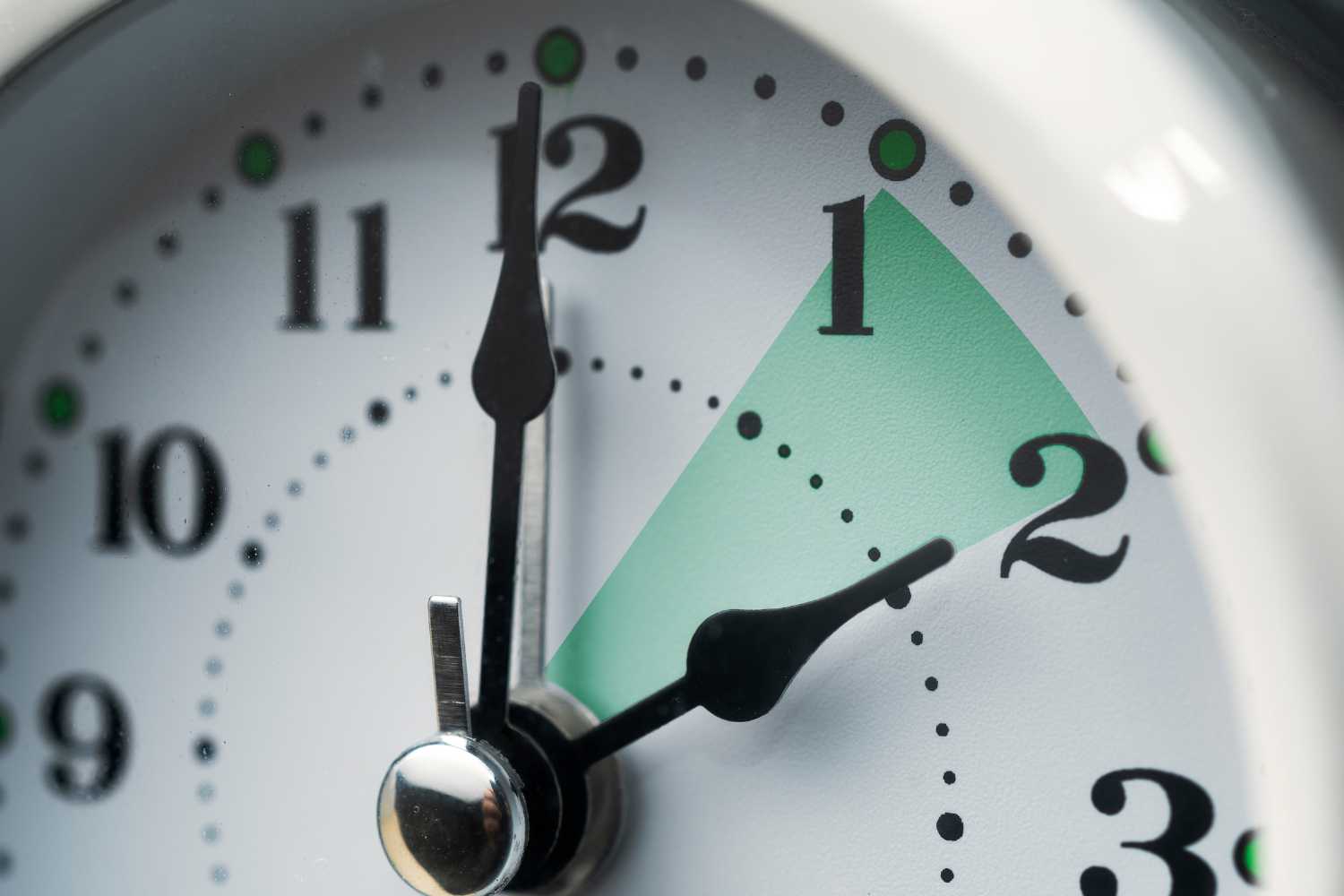
On the night between Saturday 25th and Sunday 26th October, the clock will go back one hour. Goodbye to summer time marks the official entry into solar time, but according to SIMA – Italian Society of Environmental Medicine, this seasonal habit is now anachronistic, as well as harmful.
In the ten years between 2004 and 2024, thanks to the adoption of summer time, Italy saved 11.7 billion kWh of electricity — the equivalent of 2.2 billion euros in bills. In 2025 alone, according to Terna data, the seven months of summer time will lead to additional savings of 330 million kWh, equal to approximately 100 million euros.
An immediate effect on the environment too: maintaining summer time means reducing between 160,000 and 200,000 tons of CO₂ per year, a cut that corresponds to the absorption of 2-6 million trees.
The advantages of summer time all year round
According to SIMA, the biannual transition between summer time and standard time causes negative health effects by interfering with the circadian rhythm — our internal biological clock. The president Alessandro Miani explains that the time change can alter blood pressure, heart rate and sleep quality, with consequences on concentration, mood and productivity.
Several studies confirm these effects: one study, for example, found a 4% increase in heart attacks in the week following the return to standard time. Furthermore, the reduction of natural light in the evening hours is correlated with an increase in road and work accidents, while during summer time periods there are up to 13% fewer accidents thanks to greater visibility.
In Australia, research has even linked the time change to an increase in suicide cases and in general there is a worsening of public safety: more hours of evening darkness also mean more crimes and thefts.
A saving that would be good for everyone
Over 350 thousand citizens have already signed a petition on Change.org to ask the Government to make summer time permanent.
A change which, SIMA and Consumerismo No Profit underline, would be not only an environmental measure but also an economic and health one: more natural light in the evening means less energy consumption, fewer emissions, fewer accidents and a better quality of life.
As Luigi Gabriele, president of Consumerismo, reminds us, the possibility of adopting summer time throughout the year is already foreseen by the 2019 European Directive, which leaves member states freedom of choice, provided there is minimal coordination to avoid misalignments in trade and transport.
Making summer time permanent would not only be a choice of good economic sense, but a concrete act of sustainability and protection of collective well-being.
HERE is the petition.
