
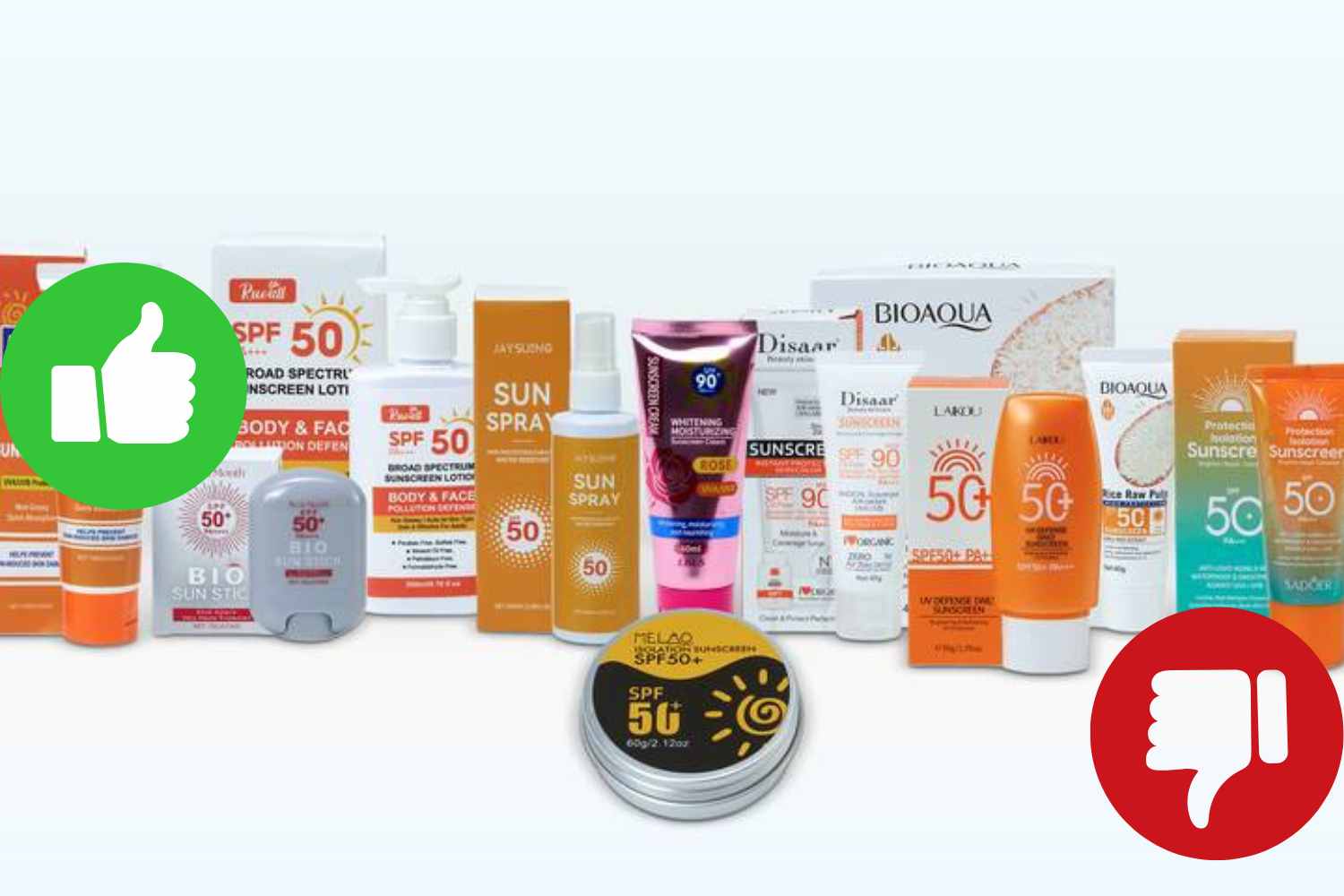
Ten tubes purchased online, three substances banned by the European Union, a single cream that passes the efficacy test. This is the outcome of the test published on 8 July by Que Choisir Ensemble, which examined the sun creams sold on three (Temu, Shein and AliExpress) of the platforms most frequented by European buyers.
What the lab found
The association bought ten products (brands such as Sadoer, Bioaqua, Ouhoe, Jaysuing, Melao, Disaar, West Month, Laikou, Ruoall and Lbls) and subjected them to laboratory tests to verify two things: the composition and the real protection index compared to that declared on the label. The result, writes Que Choisir, leaves no room for interpretation, given that none of the ten products is fully satisfactory.
Three creams contain 4-MBC (4-methylbenzylidene camphor), a UV filter banned in the European Union because it is classified as an endocrine disruptor, capable of acting on the thyroid and estrogenic balance. For these three, the verdict is already written and they should never have been for sale. Another six present what the association defines as an “abysmal” gap between the promised protection and that measured in the laboratory, with drops ranging from -38% to -98%. A cream declared SPF 50, in practice, can protect like an SPF 1 or a little more: exposure to the sun considered safe thus turns into a real risk of sunburn and skin damage, without the user realizing it.
@quechoisir.org
There remains only one product, the Ouhoe brand, which achieves acceptable protection values. But even here the test finds a problem, because the formula contains theethylhexyl methoxycinnamateanother famous endocrine disruptor. In short, none of the ten emerge unscathed.
It’s not the first time
Que Choisir had already turned the spotlight on Temu in May 2024 with a complaint to Arcom to force the platform to respect European rules (we also talked about it, given that Altroconsumo did the same). In February 2025, a survey conducted with other European organizations found that 81% of 214 products tested on Temu did not comply with EU legislation (we also covered the topic in this case). The case of sun creams is therefore part of an already open trend, not an isolated episode: toys, chargers and costume jewelery had already ended up in the crosshairs of the same checks.
The association’s requests
Faced with these results, Que Choisir Ensemble has announced that it will present a new complaint to Arcom and will report the cases to the DGCCRF, the French competition and fraud prevention authority. President Marie-Amandine Stévenin is calling for a drastic measure, which includes the temporary suspension of access to the three platforms, since none of them are able to guarantee that the products offered for sale are not dangerous.
Contacted by the association, the three platforms reacted differently. Temu announced that it had temporarily suspended the sale of solar products in the European Union, Shein announced an internal audit on the category, without however specifying the criteria or timing of the checks, while AliExpress limited itself to talking about “presumably problematic” items, committing to remove products “similar” to those tested, a formula which, Que Choisir notes, leaves more questions open than it closes. None of the three, it should be added, has undertaken to directly inform buyers of the aforementioned products.
Why you should be wary of the low price
The French case concerns all products that can also be purchased from Italy, given that the three platforms operate on a European scale. A package arriving in a few days for a few euros may seem like a bargain, the fact is that the poor traceability of these sellers, often without a real identifiable manufacturer, makes any effective recall difficult, because a brand withdrawn today can reappear tomorrow under another name, on the same site.
