
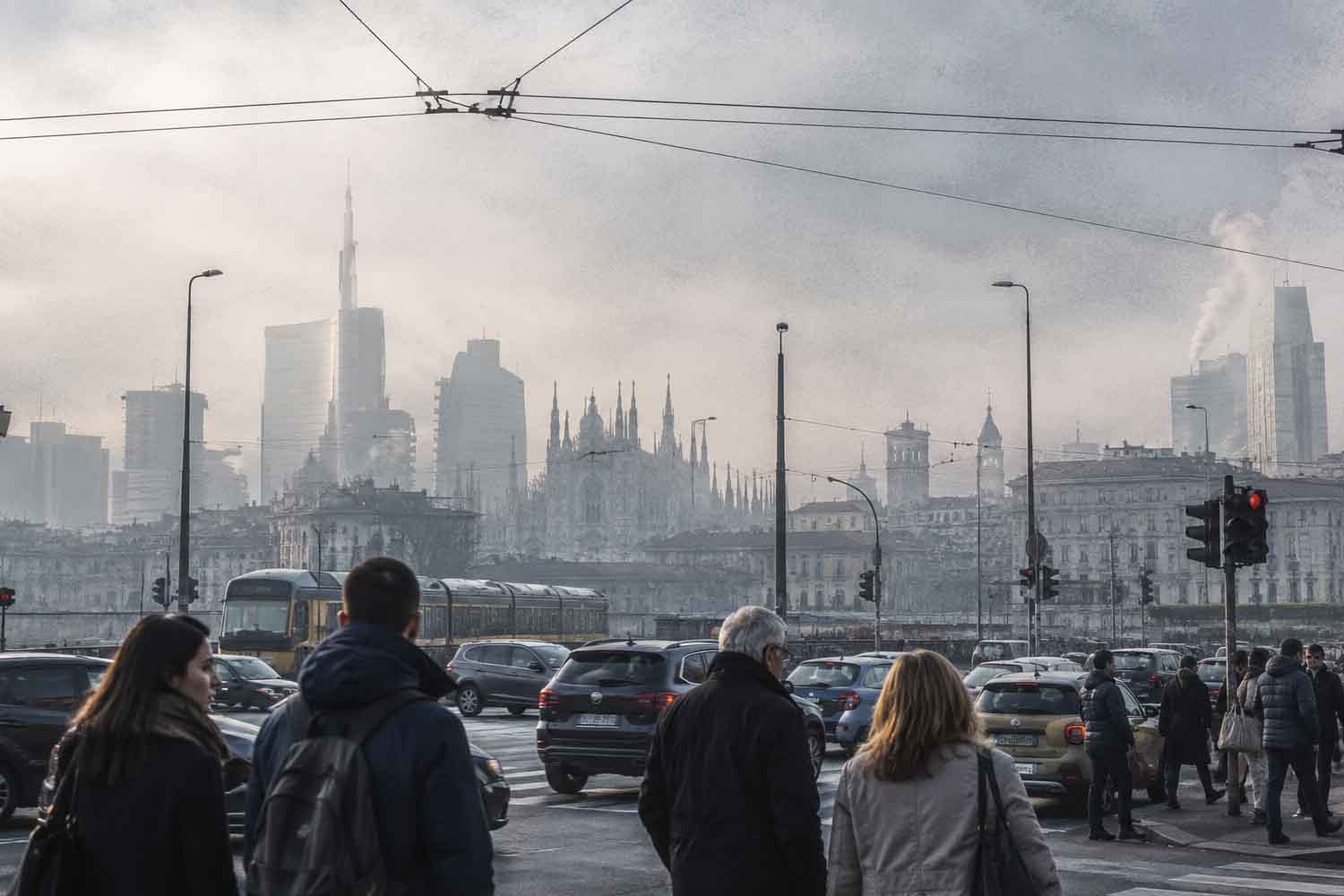
In 2023, in Italy, an estimated 73 premature deaths attributable to prolonged exposure to PM2.5 per 100 thousand inhabitants. The European Union average is 41. Spain stops at 28, Germany at 26 and France at 22. Among the four large economies of the EU, Italy runs alone. In the wrong direction.
The data comes from SDGs Report 2026 of Istat, built on Eurostat data. The European ranking places our country in the fifth worst place in the EU, preceded only by Bulgaria, Greece, Croatia and Romania. Istat speaks of an “unfavorable” position. It’s the statistical way of saying that we breathe badly and we pay the price for it.
In ten years Italy drops from 88 to 73
2023 marked a clear improvement compared to 2022, when premature deaths attributable to fine particulate matter were 86 per 100,000 inhabitants. Broadening our gaze, however, the Italian pace becomes much less brilliant: in 2013 the value was 88. In ten years we have subtracted fifteen deaths per 100 thousand inhabitants; in the same period the European average almost halved.
The Italian reduction, writes Istat, was gradual and irregular. France, Germany and Spain have fallen well below the Union average, while Italy remains 32 points above. The improvement therefore exists. Except that the others have stepped on the accelerator and we continue to discuss the route.
These numbers are epidemiological estimates. The indicator calculates mortality attributable to long-term exposure to PM2.5 concentrations above the World Health Organization’s annual guideline value of 5 micrograms per cubic meter. It does not reconstruct the cause of every single death: it measures how much air pollution affects the mortality of a population.
PM2.5 is made up of particles small enough to penetrate deep into the respiratory system. The World Health Organization links exposure to increased mortality from respiratory diseases, cardiovascular diseases and lung cancer.
84% of the capitals exceed more than double the WHO value
The concentrations detected in cities help to understand why Italian mortality is falling so slowly. In 2024, 84.1% of provincial capitals recorded an annual average of PM2.5 above 10 micrograms per cubic meter: more than double the 5 indicated by the WHO. In 2014 the share was 100%. We left the bottom of the table, without moving far enough away.
The extreme values have reduced. Capital cities with concentrations equal to or greater than 21 micrograms per cubic meter went from 25% in 2014 to 11% in 2024. In the same period, however, the share of cities between 11 and 20 micrograms rose from 64% to 69%.
The dirtiest tail becomes shorter; the majority of cities remain exposed to concentrations two to four times higher than the WHO guideline value. Moving from the worst range to just below is progress. Breathing it every day remains a terrible consolation.
The report also highlights widespread critical issues for other pollutants. In 2024, 78.9% of provincial capitals exceeded 20 micrograms per cubic meter of PM10 and 87.4% recorded at least one day above the long-term target for ozone. The percentages change, the presence of smog in urban life much less.
Fine dust does not always cause immediately visible damage. Exposure accumulates over the years, increasing pressure on the heart, lungs and blood vessels, especially in elderly people, children and those already living with respiratory or cardiovascular diseases. You don’t need to see a gray pall outside the window for the air to be doing its worst job.
2023 brought a sharp decline. The European gap remains entirely there: France 22, Germany 26, Spain 28. Italy 73. To recover it, fifteen fewer premature deaths per 100 thousand inhabitants in ten years are not enough.
