
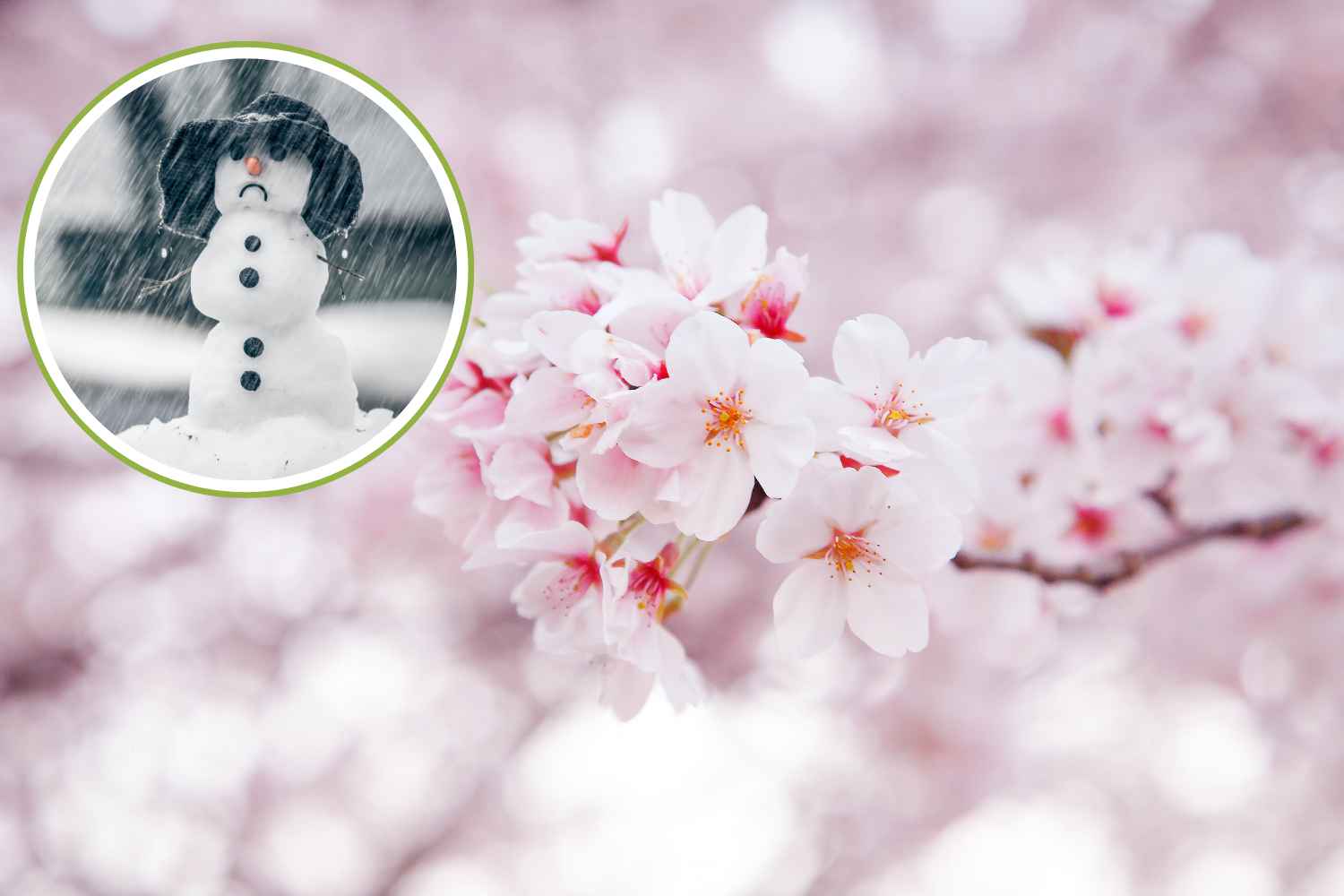
Until Monday we are in the middle of the so -called “days of the old”, a fascinating Italian popular tradition that embraces the last three days of March: on 29, 30 and 31. This ancient peasant belief is linked to a meteorological phenomenon that many of us were able to observe: a sudden and unexpected return of the cold just when we thought that spring was now definitively arrived.
And apparently, tradition is confirmed this year: in different Italian regions we are already witnessing rainfall and a significant lowering of temperatures, which remind us that winter has not yet said its last word.
The legend of the old days
But where does this curious name come from? The most widespread legend tells of an elderly shepherdess who, deceived by the mild climate at the end of March, believed that winter was now behind him. Happy for the early arrival of the summer, the old woman exclaimed with a tone of challenge:
“March, March, I don’t fear you, I have bread, wine and wood to the fireplace!”
The month of March, feeling derided and offended by so much arrogance, decided to take revenge. He loaned in April three days and sparked a sudden return of the cold that caught the poor woman unprepared. The frost was so intense that the old woman, who had already exhausted her winter stocks, was the victim.
The mythological roots: the link with Demeter and Persephone
What makes this tradition even more fascinating is its connection with the ancient Greek mythology. The figure of the old man can be interpreted as a representation of Demeter in his winter aspect, the goddess of the earth saddened by the absence of his daughter Persephone, kidnapped by Hades and forced to spend a part of the year in the underworld.
This myth perfectly symbolizes the seasonal cycle of death and rebirth that characterizes the transition from winter to spring. When Persephone is in the underworld, Demeter is in mourning and the earth becomes sterile (winter); When Persephone returns to the mother, nature refracts (spring).
The days of the old woman can therefore be seen as Demeter’s last moments of pain before the return of her daughter, a last event of winter before the spring rebirth.
Regional rituals and traditions
The Italian cultural wealth is manifested in the numerous regional variants linked to this tradition as the purifying bonfires of the Veneto: in the rural Veneto, historically large bonfires were lit during these days, with a double symbolic meaning of purification of the earth in preparation for the spring sowing and propitiatory rites to encourage a good harvest. A straw puppet, representing the winter or the “old”, was thrown between the flames, in a symbolic gesture that marked the definitive end of the cold season and the welcome of the spring warmth.
“Sega la Vecchia” of central Italy
In Tuscany, Emilia-Romagna and Umbria, the suggestive tradition of “Sega La Vecchia” is widespread. This ceremony, celebrated in half Lent, provides that a puppet depicting an old woman be symbolically sawed in the square.
The ritual, with a strong symbolic value, concretely represents the moment of transition between the two seasons: the winter (the old) is literally “cut” to make room for the nascent spring.
A real meteorological phenomenon?
What makes this tradition fascinating is that it often corresponds to a real meteorological phenomenon. The last days of March are in fact frequently characterized by sudden thermal lowerings and unstable climatic conditions.
According to some meteorologists, this phenomenon could be explained with the contrast between the hot air masses that begin to trace the Mediterranean and the last cold fronts from Northern Europe. The battle between these air masses often generates atmospheric instability and significant thermal changes.
How to deal with the days of the old woman
Unlike the unfortunate protagonist of the legend, we have the advantage of knowing this tradition and we can therefore prepare ourselves adequately:
Do not put the winter clothes too early, even if the temperatures were myths in the previous days, pay attention to the most sensitive plants, which could suffer from the sudden thermal drop. Check the local weather forecasts, which today allow us to prepare ourselves in advance for climate change
Traditions like that of the old days remind us how much our ancestors were attentive observers of natural cycles. In an era in which there were no scientific weather forecasts, the rural communities had developed a complex system of beliefs and observations that allowed them to interpret the signals of nature.
Today, although climate change are altering many of the traditional seasonal patterns, these ancient popular wisdoms continue to show us how important it is to maintain a deep bond with the natural rhythms that govern our planet.
So, if until Monday you will still feel the need to brush up on scarf and coat, remember: it is not a simple whim of the time, but the last farewell of winter before definitively giving way to spring. The old woman of legend has left us a warning: never take it for granted that the winter is over, until March said her last word.
