
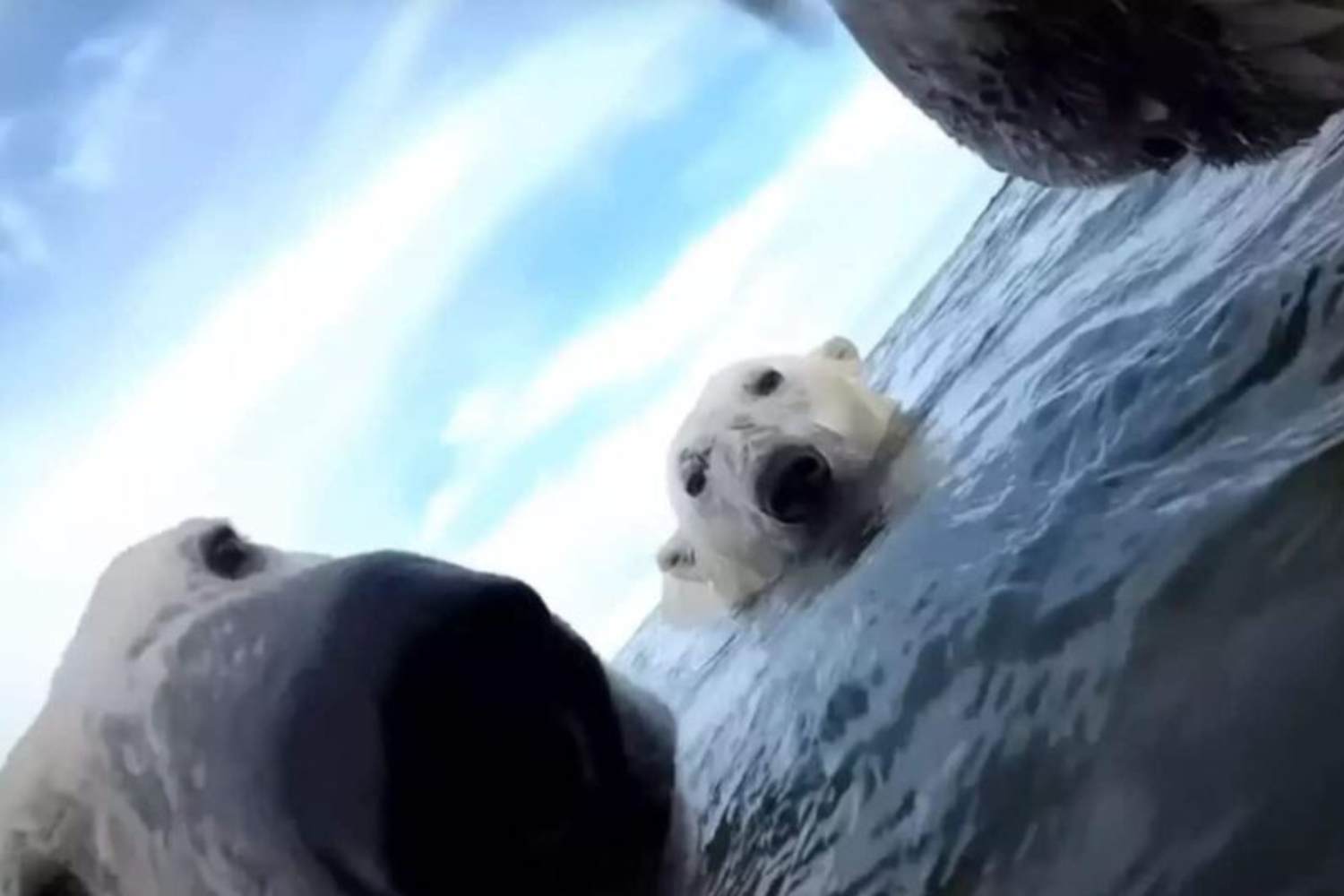
A group of scientists monitored 20 polar bears in Hudson Bay, Canada, equipping them with small GoPros to closely observe how the species reacts to climate change. The images, collected over three years, offer a direct look at the new eating habits of these large predators, forced to spend more and more time away from the sea ice where they usually hunt seals.
The research, published on Nature Communicationsconfirms that the ice-free season has extended by three weeks since 1979, pushing bears to spend longer periods on land. But their attempt at adaptation is proving insufficient.
The footage reveals desperate strategies
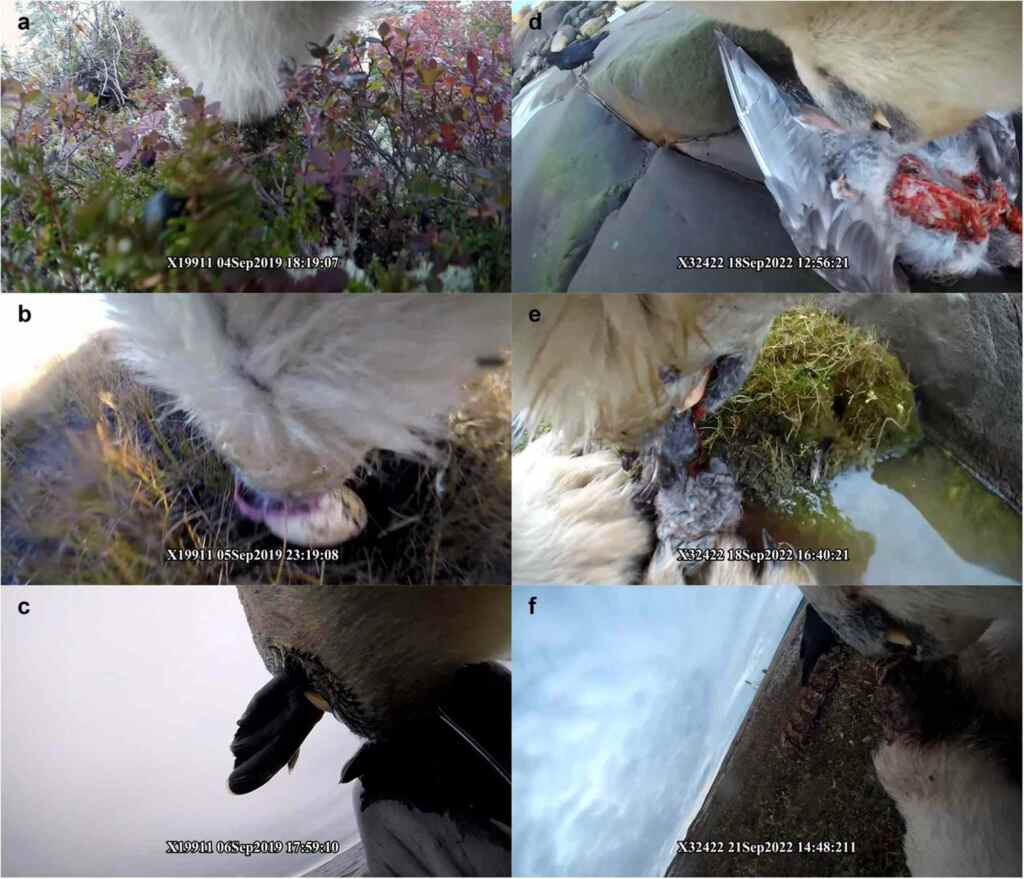
Surprising scenes emerge from the recordings: bears feeding on bird carcasses, grazing on grass and berries, or scavenging marine remains to survive. In some cases they are filmed playing in the water or chewing moose antlers, behaviors that have so far rarely been documented.
Biologist Anthony Pagano of the US Geological Survey, coordinator of the study, explained that these images show the intelligence and adaptive capacity of the species, but also the limits of such strategies. Bears alternate moments of rest with attempts to hunt and collect food, but the energy balance remains negative.
Falling weight and warning signs
Out of 20 specimens observed, 19 lost weight, and one in particular recorded a loss of over 36 kilos. Despite efforts, terrestrial food does not guarantee the necessary caloric intake. Expert Andrew Derocher of the University of Alberta called these behaviors “acts of desperation,” underlining that “Hungry bears are more at risk than well-fed ones”.
The problem isn’t just about diet: in Hudson Bay the polar bear population has decreased by 30% since 1987, a clear sign of the collapse of the Arctic ecosystem. More and more specimens are undertaking long-distance swims, an anomalous behavior that reveals stress and fatigue.
The only hope: save the ice
Although some bears still manage to hunt on glacial ice in regions such as Greenland and Svalbard, scientists warn that this is not a true adaptation but a temporary survival strategy. Organizations such as Polar Bears International reiterate that the salvation of the species depends only on reducing emissions and limiting global warming. As climatologist Katharine Hayhoe recalls, “We need all possible solutions and everyone’s commitment”.
You might also be interested in:
