
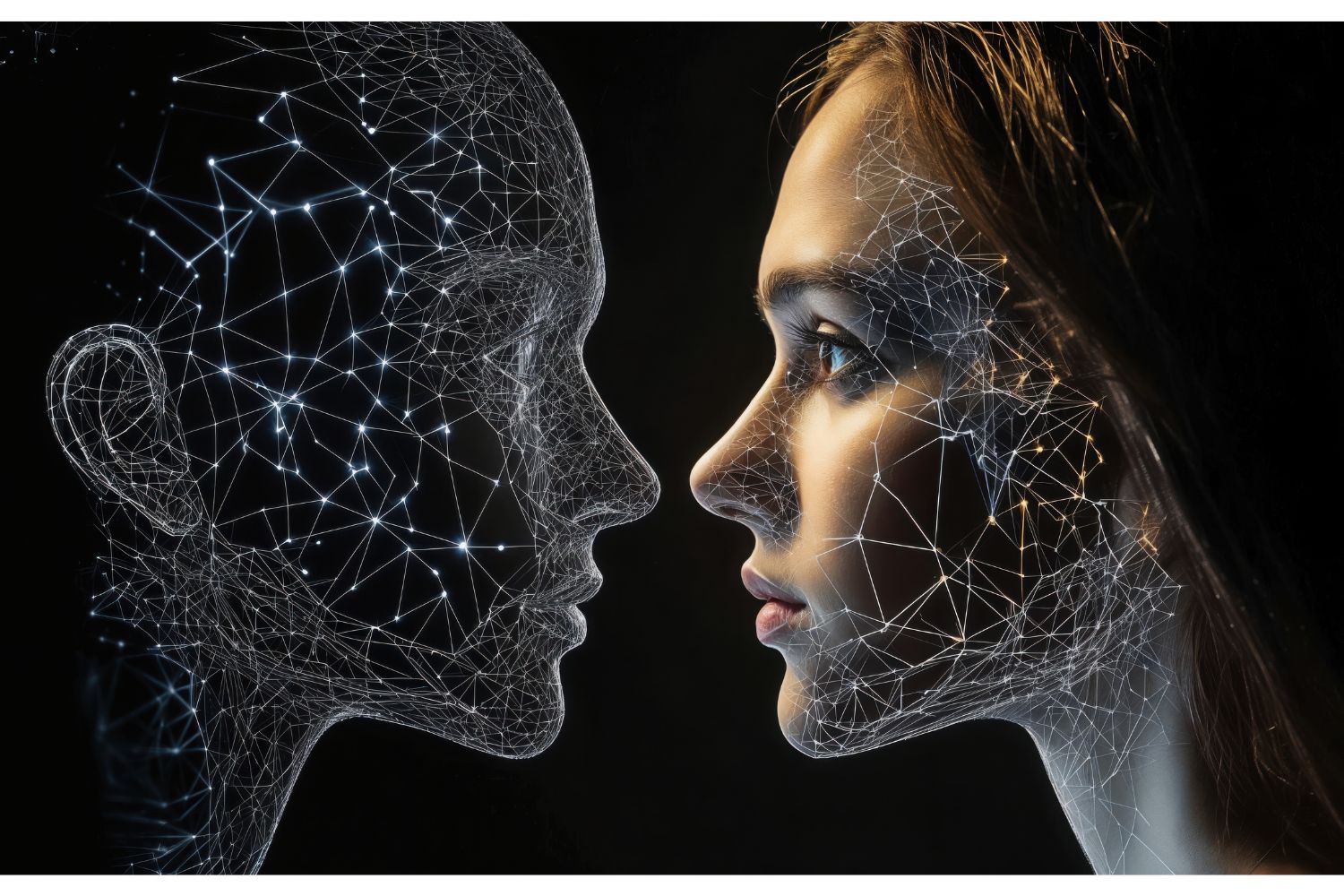
First impressions can be deceiving, we know that. But now we know something more: research guided byUniversity of Milan-Bicocca demonstrated that a word, but also just the tone of the voice, can draw the face of another person in our mind, or rewrite our mental representation of the other.
The researchers, in particular, used a technique called reverse correlationconsolidated for the characterization of perceptual models and which, as we read in a previous work, is actually particularly suitable for a scenario in which the human observer looks for details in a larger picture and the perceptual system is probed using radially symmetric noise, such as Gaussian white noise (this condition is particularly “stringent” in ecological contexts, since natural signals are clearly not comparable to white noise).
In this new study, the technique was used to visualize the mental representations of faces built by the minds of some volunteers, before and after listening to a positive or negative voice.
If the voice appeared sweet and gentle, the mind reconstructed an image of the face as more open, more reliable and pleasant; on the contrary, a cold or hostile voice “drawed” harder and more negative faces. And all this occurred even when they had initially been described in the opposite way.
According to scientists, this is a spontaneous process of integration between the senses, which occurs automatically even when the face is observed with the sole purpose of memorizing its features, and not of judging it.
Social impressions are not “set in stone” – explains Matteo Masi, first author of the study – Listening to the voice can reprogram the visual image of someone in our head. Our perceptions are open to information from multiple senses and much more plastic than we imagine
As the authors explain, the potential applications of this research range in theory from staff recruitment to judicial processes, from interactions with voice assistants and avatars built with Artificial Intelligence to building trust in the media and politics.
Our mind does not photograph people, it continually constructs them – adds Marco Brambilla – Every new piece of information — a gesture, a word, a voice — can change what we think we see
No, first impressions aren’t everything: one word is enough to change a face.
The work was published on Social Psychological and Personality Science.
Sources: University of Milan-Bicocca / Social Psychological and Personality Science
