
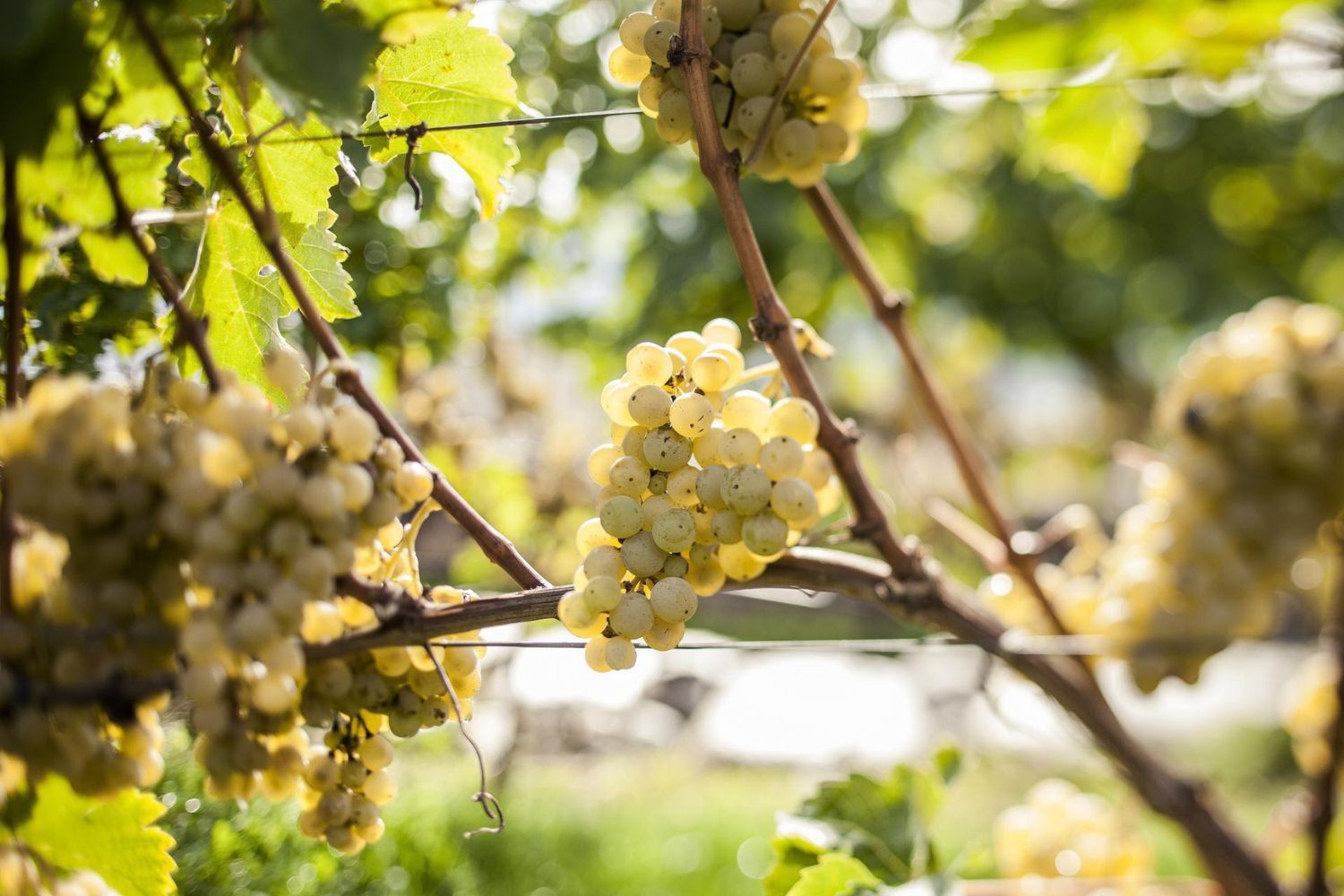
The 2026 harvest began well in advance in many Italian wine-growing areas. From Alto Adige to Puglia, passing through Friuli-Venezia Giulia, Veneto, Piedmont, Lombardy, Trentino and Marche, the first grapes have already entered the cellar when in many areas of Italy the harvest, until a few decades ago, would still have been a long way off.
However, this is not a uniform advance nor a single “Italian record”, the dates change a lot based on the grape variety, altitude, exposure, water availability and characteristics of the territory. The common fact is rather an accelerated ripening of the grapes, in a year marked by high temperatures and, in several areas, also by water shortages.
Never so early in South Tyrol
The most striking case comes from Alto Adige. The Alto Adige Wine Consortium has announced in recent days that the harvest of early grapes intended for the base wines for sparkling wine has already begun and that, in some areas, the harvest has begun. According to the director of the Consortium, Eduard Bernhart, this is the earliest start of the harvest in the history of Alto Adige.
The explanation can be traced back above all to the thermal trend for the whole of 2026: March and April were already particularly hot, accelerating the vegetative cycle of the vine. Added to this were the high temperatures of June and July, which favored a further acceleration of ripening.
For now the grapes are described as healthy, but it is still early to judge the vintage overall. Much will depend on the weather conditions in the coming weeks, especially on night-time temperatures, any precipitation and the risk of hailstorms.
The grape harvest in Friuli
The phenomenon is also very evident when moving to Friuli-Venezia Giulia. In Dolegna del Collio, the harvest began on August 10th and here too it had never happened so early. Until 2015 in that area the harvest began in September, then the harvest progressively advanced towards the end of August and, from 2022, after Ferragosto.
Here too the heat and the lack of rain played an important role. However, the situation has a double face: the dry weather has reduced the pressure of fungal diseases, but has made the management of the vineyards more complicated, especially the young ones, which needed irrigation.
In Veneto
Even in Veneto the calendar has moved. The forecasts released by the Veneto Region and Veneto Agricoltura indicate an advance of approximately 8-10 days compared to normal, with early varieties such as Pinot Grigio and Chardonnay among the first to be harvested. For some companies the harvest started already on the eve of August.
The picture, however, is not that of a vineyard simply “in crisis due to the heat”. The grapes are considered to be of good or excellent quality overall and regional production should remain substantially at the 2025 levels, albeit with important differences between the different areas.
The problem is above all the availability of water: in the areas where it was possible to irrigate the effects of the drought were contained, while some varieties and some territories were more affected by water stress.
Piedmont
Even in Piedmont the vine ran. In the Granda hills the first operations were scheduled for the first week of August, initially for the earliest varieties intended for sparkling wines. Coldiretti explicitly linked the advance to high temperatures, which accelerated the different vegetative phases of the vine, while the irregular distribution of precipitation increased attention to water stress.
In the Alta Langa, Pinot Noir and Chardonnay intended for sparkling wine bases began to be harvested from 5 August. In the same period, also in the Asti area the harvest started on August 5th, much earlier than in previous years.
In Franciacorta it was harvested as early as July
One of the most surprising signals comes from Lombardy. In Franciacorta the harvest started as early as July 30th, in the areas of Gussago and Monte Orfano. This is an exceptionally early date, so much so that the first harvests have been described as the earliest ever for the area.
Also in this case the climatic trend has accelerated the season. The high temperatures pushed ripening rapidly and forced the winemakers to follow the evolution of the grapes with great attention.
In the Marche region about a week in advance
The advance also affects Central Italy. In the Marche the 2026 harvest is expected about a week earlier than last year. The great heat accelerated the ripening of the grapes and the first harvests concerned Pinot Noir and Chardonnay intended for sparkling wine bases. From August 24th the harvest should progressively involve the other main vineyard areas.
Here too the quality of the grapes is judged positively, but some companies have suffered very heavy damage due to the summer hailstorms.
In Puglia
On August 5, the Puglia Region officially announced the start of the 2026 harvest in Leverano, in the territory of the PDO Salice Salentino, with the first cutting of the grapes in the presence of the regional councilor for Agriculture Francesco Paolicelli.
Here too, the first operations naturally concern the earliest varieties, while the harvesting of the different grapes will continue progressively in the following weeks.
Because this year the grapes ripened so early
But why is the 2026 harvest so early? The answer must be sought above all in temperature trends. The vine follows a vegetative cycle that is very sensitive to the climate. When temperatures rise, some stages of development may accelerate: budding may begin earlier, as can flowering, veraison and ripening.
In 2026 this process was favored by a particularly warm spring, which was followed by very hot summer months. The result is that in many vineyards the vine has reached some of the conditions that allow harvesting to be planned earlier.
But there is another important aspect: ripening earlier does not necessarily mean that the grapes are better or worse. The ripening of grapes is not in fact a single process. On the one hand, sugars increase, on the other, acidity, aromas, polyphenols and other important components for the future wine must evolve.
High temperatures can accelerate the accumulation of sugars in the grapes. This means that the grapes can quickly reach a sugar level sufficient to make harvesting worthwhile.
But if the heat is intense and prolonged, the situation can become more complex. An excessive advance can in fact create a mismatch between different maturation components.
This is precisely one of the reasons why winemakers do not decide the harvest date simply by looking at the calendar. They analyze the grapes and follow different parameters to understand when the best possible balance exists.
The second great protagonist is water. If the heat accelerates the calendar, water availability becomes essential to help the vines manage the stress caused by high temperatures.
In 2026, several wine-growing areas had to deal with low or irregular rainfall and increased pressure on the irrigation front. In Friuli-Venezia Giulia, for example, the lack of rainfall has led to a particularly difficult situation in the management of water resources, while in the vineyards of Dolegna del Collio, where the harvest began on August 10, the younger vineyards needed irrigation.
Water, therefore, has become one of the decisive factors to face this season, not only to support the plants during the heat, but also to prevent water stress from compromising the ripening of the grapes.
Is this a preview destined to become more and more frequent?
Early harvests are nothing new and a single year cannot be used to demonstrate climate change alone. However, the advance of the phenological and harvesting phases is one of the transformations that winemakers have been observing for years in different areas.
In 2026 the phenomenon is particularly evident. And for now the picture is one of anticipation, generally healthy grapes and good quality prospects, but also of many unknowns.
The heat accelerated ripening, the drought especially tested the less irrigated vineyards, the hailstorms caused localized damage and the next few weeks will be decisive in understanding how the grapes will evolve while still on the vine.
It is precisely because of this strong variability that this year it is not easy to take a unique photograph of the Italian harvest. The organizations in the sector have chosen to be cautious with quantitative estimates, waiting to have more reliable data once the collection is complete.
The real news, therefore, is not just that in 2026 there will be an earlier harvest. It’s that the vine calendar is becoming increasingly sensitive to temperatures and water availability, forcing winemakers to continually adapt growing times and techniques.
Sources: Alto Adige Wine Consortium / Puglia Region / Confindustria Veneto / Franciacorta wine
