
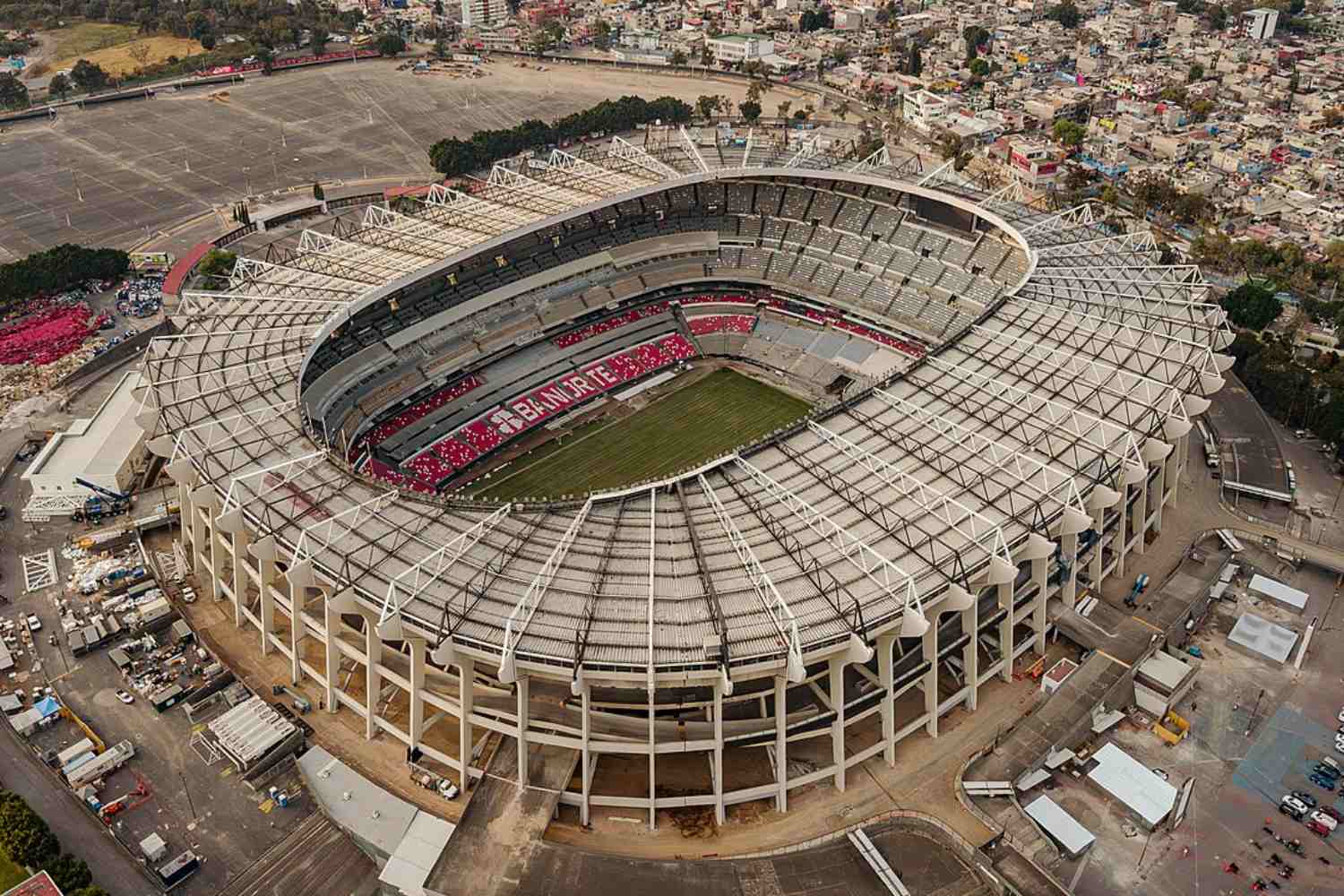
The Azteca stadium in Mexico City, one of the absolute temples of world football, has returned to the center of global attention for a very different reason than sporting feats. The facility, famous for Maradona’s “mano de Dios” in 1986 and for having hosted two world finals, is today monitored directly by NASA, becoming the first stadium in the world under space observation for ground movements.
The alarm concerns the structural stability of the area on which the plant is located, where progressive soil subsidence was detected. The stadium, which on 11 June will host the opening match of the next World Cup between Mexico and South Africa, is in fact located in an area of the capital already known for land subsidence phenomena, linked above all to the intensive exploitation of underground water resources.
The sinking phenomenon and the alarming data
According to surveys, the ground in Mexico City is sinking at a rate of up to 1.5 centimeters per month. A fact which, if confirmed in the long term, represents a significant critical issue for large infrastructures such as the Azteca stadium.
NASA experts use advanced radar satellite systems to analyze changes in the Earth’s surface in real time. These tools allow you to identify ground deformations with millimetric precision, highlighting the areas most at risk. At the basis of the phenomenon is the excessive extraction of water from aquifers, which causes the compaction of the soil under the weight of the city.
Environmental causes and the role of man
The problem does not only concern the stadium built in 1966 and capable of hosting over 87 thousand spectators, but the entire metropolis. Land subsidence is a widespread phenomenon in various areas of Mexico City and is linked to an increasingly fragile hydrogeological balance. Groundwater is extracted at a faster rate than its natural regeneration, causing progressive subsidence of urban land.
This process is not new, but in recent years it has shown worrying accelerations, also involving symbolic infrastructures such as the Angel of Independence, one of the most important monuments of the capital. In some cases structural interventions were necessary to compensate for the difference in level of the ground.
Portions of concrete deteriorate
In addition to the scientific data, some reports related to the state of the plant also attract attention. Videos circulating online show portions of concrete deteriorating and fans breaking off small fragments of the stadium as souvenirs, contributing to the progressive deterioration of the structure.
@publimetromx
Aficionados report the loss of concrete in the butacas of the Estadio Azteca and show part of the works “ya remodeladas”. #PublimetroMX #América #Pumas
♬ original sound – Publimetro México
– Publimetro México
Scholars link the phenomenon to a broader issue of urban water management. Intervening on the problem would mean reducing the extraction of groundwater, but with complex consequences for a city of over 10 million inhabitants. Meanwhile, satellite surveillance continues. NASA observes, technicians study and the world of football awaits. The stadium that made football history today also becomes an emblematic case of urban fragility and global geological change.
You might also be interested in:
