
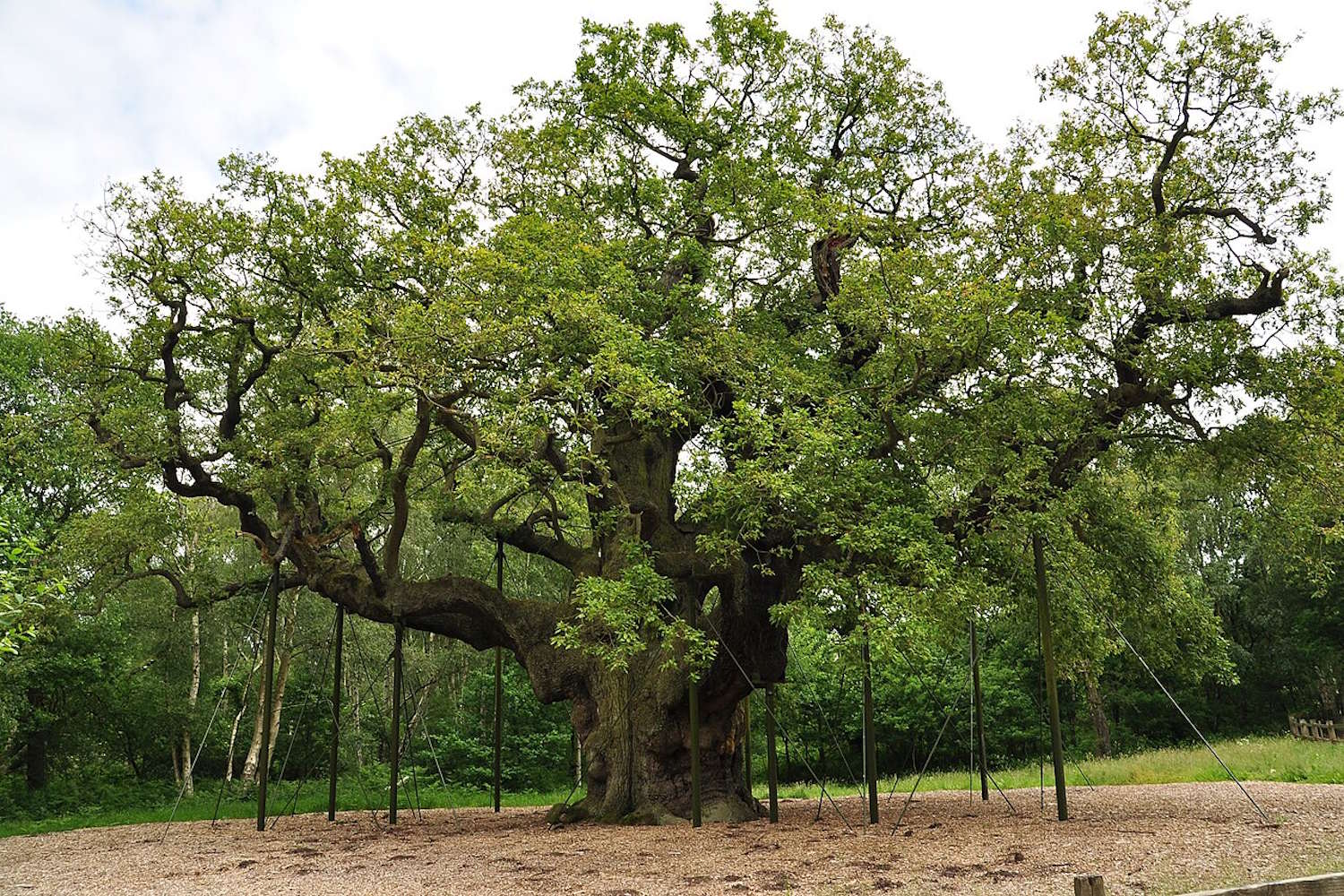
For over a thousand years it dominated the heart of Sherwood Forest, becoming a symbol of legends, biodiversity and collective memory. Now the Major Oak, the famous oak associated with the legend of Robin Hood, is officially dead.
This was announced by experts who had been monitoring the conditions of the monumental tree for years, after noting that for the first time it did not produce new leaves during the spring.
We are in the Nottinghamshirein England, and this giant oak was considered one of the oldest in the United Kingdom. He was estimated to be between 800 and 1,200 years old. An authentic natural monument that over the centuries has resisted fires, storms, snowfalls and even the most recent heat waves caused by the climate crisis.
The announced death of a giant
The experts of Royal Society for the Protection of Birds (RSPB), the organization that manages Sherwood Forest, explain that there is no single cause responsible for the disappearance of the tree. Rather, it is the result of a combination of factors that have accumulated over time.
Among these, an important role would have been played by the pressure exerted by millions of visitors who over the years have reached the forest to admire the famous tree. That continuous trampling has progressively compacted the soil around the roots, making it more difficult for it to absorb water, oxygen and essential nutrients.
The increasingly devastating effects of the climate crisis have made the situation worse. In recent years the UK has experienced exceptionally hot and dry summers, with record temperatures putting forest ecosystems under severe stress. According to specialists tracking the Major Oak, the tree’s decline coincided with at least five summers characterized by extreme heat and prolonged drought.
Paradoxically, some interventions carried out to protect the oak may also have contributed to its fragility: over the last hundred years, in fact, numerous supports have been installed to support the large branches of the tree and preserve its structure.
Measures which, according to experts, may have altered some of the plant’s natural adaptation processes. In recent years, conservationists had concentrated their efforts above all on recovering the quality of the soil, now heavily degraded by tourist pressure.
Despite biological death, the Major Oak will not be cut down. The giant structure will continue to remain in Sherwood Forest, slowly transforming into a valuable habitat for insects, fungi, birds and other life forms.
Dead monumental trees, in fact, play a fundamental role in forest ecosystems, becoming true biodiversity refuges.
Furthermore, the genetic heritage of the Major Oak will continue to live on thanks to the numerous young oaks born from its acorns and planted in various parts of the world. Among those who look after a descendant there is also the British actress Judi Dench, who has always been committed to the protection of ancient trees.
The disappearance of the Major Oak is the symbol of the fragility of our natural heritage in the face of phenomena that we often underestimate: unmanaged tourism, land degradation and the increasingly intense effects of climate change. As experts point out, trees don’t simply die of old age, but with the right environmental conditions, an oak like the Major Oak could have continued to live for hundreds of years.
His legacy today no longer belongs only to the story of Robin Hood, but becomes a valuable lesson for the conservation of monumental trees around the world.
