
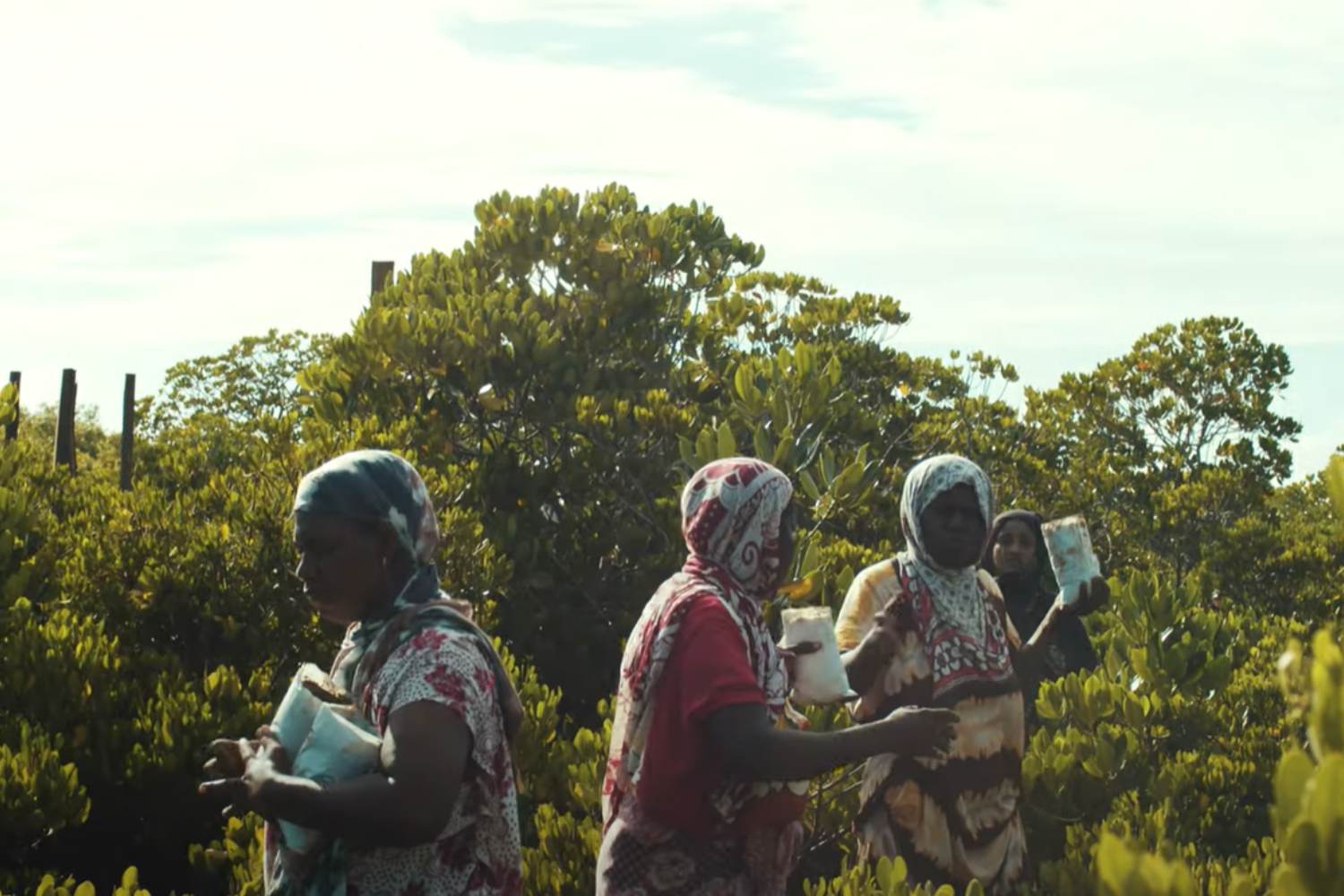
To Pate Island, in the county of Lamu in Kenyaa group of women decided to respond with determination to the environmental crisis that hit the mangrove forests. Guided by Zulfa Hassanknown as “Mama Mikoko” (Mother Mangrovia), the women of the MangaWanda Women’s Association they are replacing These fundamental trees, transforming not only the landscape, but also the social fabric of their communities.
Born in 2018, these initiatives allowed regenerate over 12 hectares of coastal forestthanks to the planting more than 60,000 seedlings. The activity takes place During the low tide: women planted by hand, carefully, every seed in a saturated and saline soil, giving life to an essential habitat for the sea and the land.
View this post on Instagram
Women at the center of change
In a traditional society where the female role was often confined to the domestic sphere, this project represented a silent revolution. Women are the protagonists of a local development model combining Environmental sustainability and economic autonomy.
Thanks to the support of entities such as The Nature Conservancy and Daughters for Earth, many participants were able to access microp. with which to start small businessessuch as grocery stores or restaurants. The work between the mangroves thus translated into financial education, training and leadership Community.
Zulfa and his companions not only plant trees, but form new generations of environmental activistswelcome delegations of visitors and teach other groups such as starting similar projects. Some of them, today, earn the equivalent of about 300 dollars a month as trainers.
The superpowers of the mangroves
Theirs is a fundamental contribution given the importance of mangrove That grow in extreme environmentsbetween fresh and salty water, e offer Natural protection against storms, coastal erosion and cyclones. Their intricate roots stabilize the coasts and provide refuge to countless marine species, such as crabs, fish and crustaceansfundamental for the local economy.
But their value goes further: they are capable of store up to five times more carbon Compared to terrestrial trees, thanks to the ability to retain organic matter in saturated soils. In an era marked by climate changethe role of mangroves is more central to the health of the planet.
Beyond the reforestation: a community that is reborn
Today MangaWanda Women’s Association is much more than an environmental project. Women also deal with water desalinization, construction of school toilets And redevelopment of water basinsdemonstrating an integrated vision of community well -being.
There is no shortage of difficulties: forest permitsbureaucracy and regulatory constraints are still significant obstacles. But the resilience of these women, their ability to adapt and innovate, makes their impact tangible and lasting. The dream is ambitious: open a Restaurant, an educational center and reception spaces for visitorstelling the story of a territory that has been able to be reborn through the hands of those who, for too long, remain invisible.
The MangaWanda model shows that i Ecological projects led by local communities They are among the most effective strategies to combat environmental degradation. And when it is women who guide change, the results do not limit themselves to nature, but expand to social justice, gender equality and sustainable development. In a remote corner of Kenya, the reforestation of the mangroves has become the symbol of a new futuregreener, more fair and deeply human.
