
In the last few hours the Sun has shown the most energetic face of its cycle, launching a very powerful coronal mass ejection (CME) towards the Earth. The event, originating from a brilliant X-class flare, projected an enormous quantity of plasma and charged particles into space which reached our planet in an unusually rapid time. The result was a G4-level geomagnetic storm, considered severe, among the most intense observed in the last twenty years.
What struck the experts above all was the speed. The solar cloud traveled about 150 million kilometers in just over 25 hours, traveling at over 1,600 km per second. Typically similar phenomena take several days to reach Earth. This speed amplified the impact on the Earth’s magnetosphere, compressing it and making the storm particularly effective.
The aurora in the skies of Northern Italy
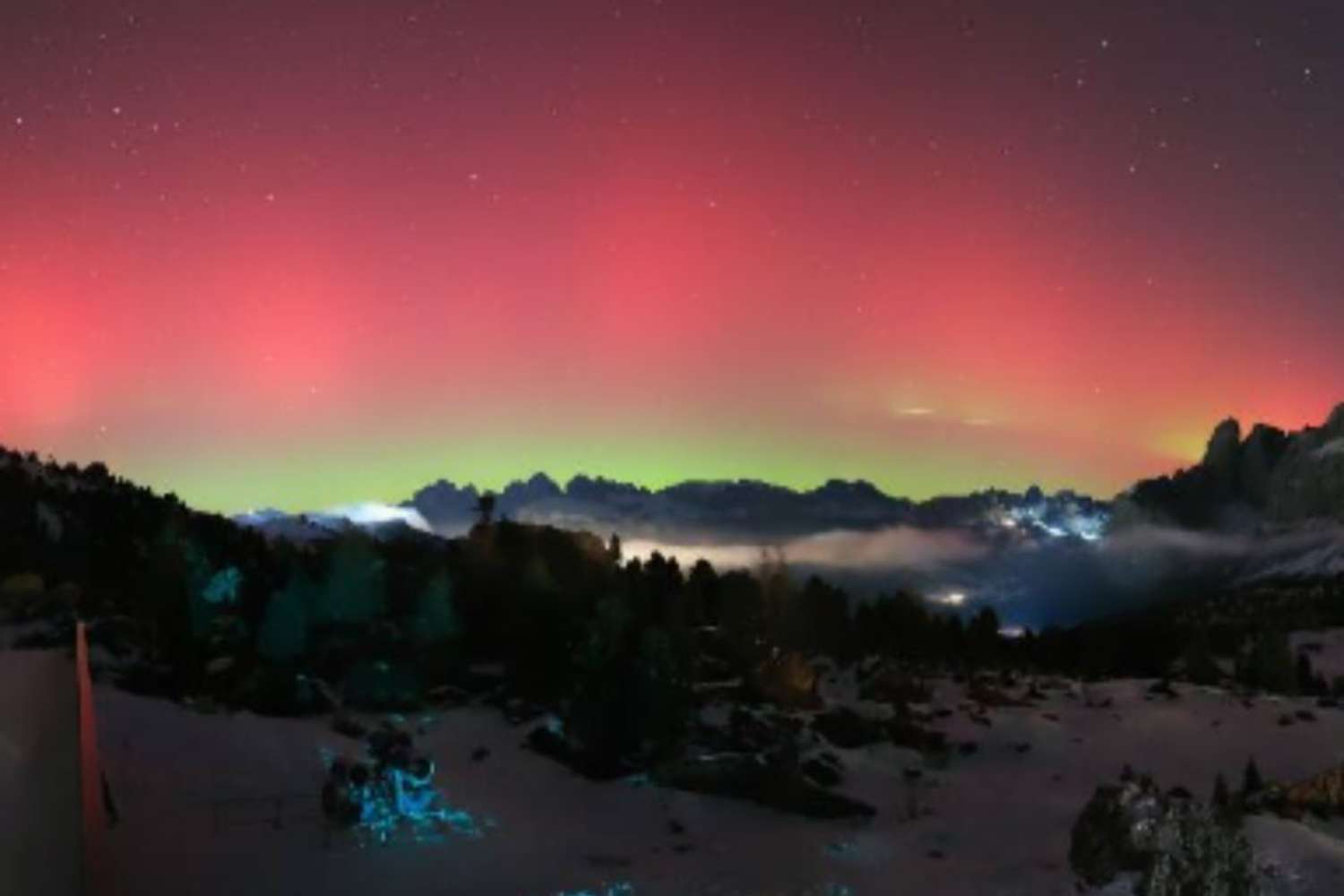
The most visible effect was the spectacle of the Northern Lights, which appeared at latitudes where they are normally rare. On the night between 19 and 20 January, the sky of Northern Italy was colored green, red and purple. Reports and photographs arrived from Piedmont, Lombardy, Veneto, Trentino-Alto Adige and Emilia-Romagna, with luminous arcs and diffused glows visible even to the naked eye in some areas. A phenomenon made possible by the southward movement of the auroral oval, driven by the force of the storm.
The key role of the magnetic field
Not all CMEs produce such noticeable effects. In this case, the orientation of the solar magnetic field, the so-called Bz index, facing south, was decisive. This configuration favors the magnetic connection with the Earth’s field, allowing solar energy to penetrate the atmosphere more easily and intensifying both auroras and geomagnetic disturbances.
Disturbances to technology
Alongside the spectacle, there was no shortage of technological risks. Monitoring authorities have reported disturbances to radio communications, possible errors in GPS systems and increased attention to electrical networks, exposed to induced currents. At the moment there has been no serious damage, but the event has been compared, in terms of dynamics, to the great storms of the past, such as that of 2003.
What to expect now
The storm is expected to gradually weaken, but solar activity remains high. As the maximum of the solar cycle approaches, similar episodes could repeat in the coming months, giving new colorful skies and reminding us how much the Sun continues to influence life on Earth.
You might also be interested in:
