
There are sounds that do not only belong to nature, but to an entire time. They remain suspended, as if they were waiting for someone capable of really listening to them. The 1949 Whale Song is one of them. It doesn’t come from just any dusty archive, it comes from an ocean that no longer exists today, made up of less disturbed depths, of wider silences, of human presences still on the margins.
When that recording resurfaced, during patient digitization work, it brought with it much more than a sound sequence. It brought to light a different way of being in the world, even if no one at the time had full awareness of what was happening.
An almost intact ocean, where natural sounds moved freely
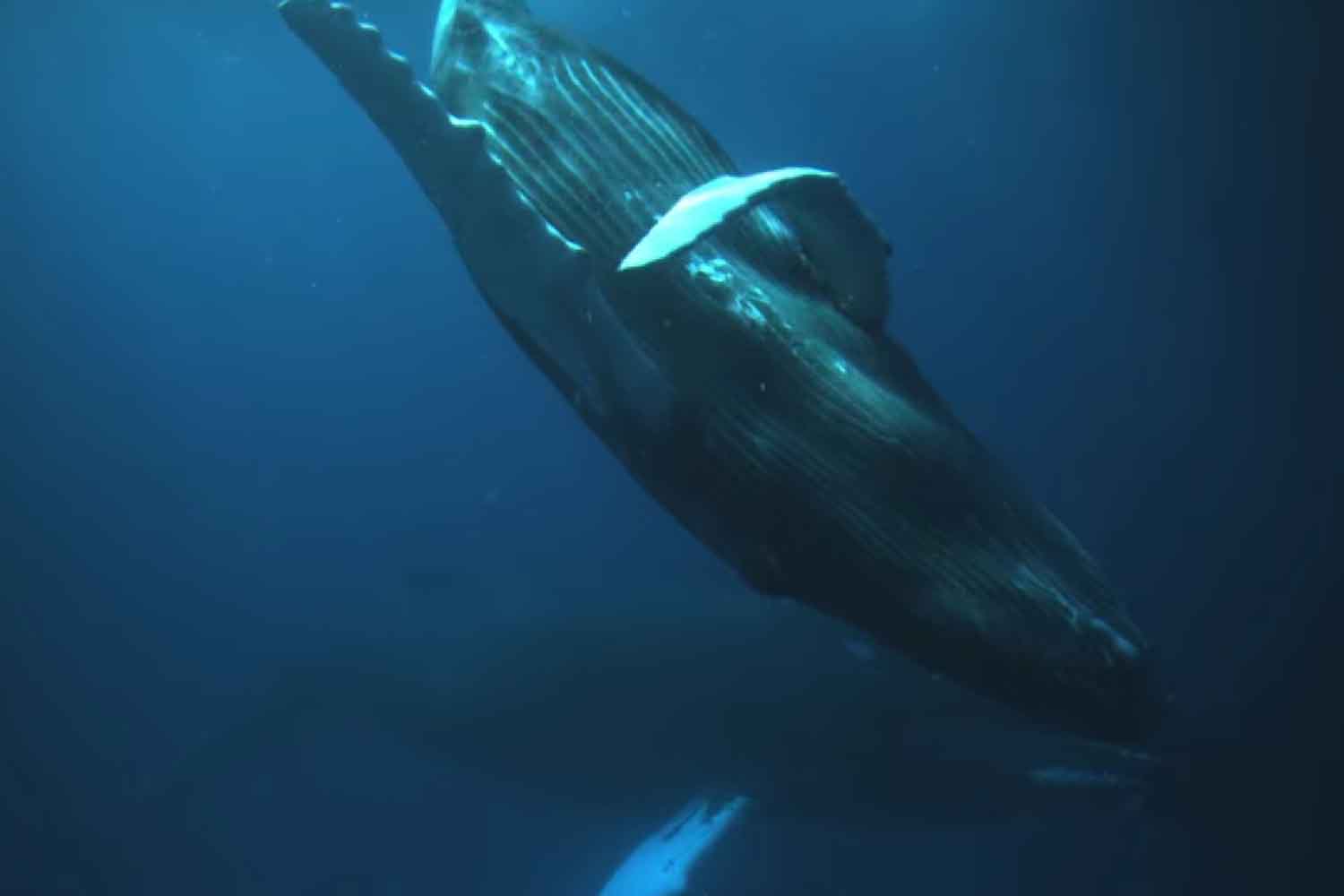
That sound belongs to a humpback whale, one of those creatures that seem to carry the weight and grace of the entire planet. The recording was made in March 1949, in the waters of Bermuda, during a series of acoustic experiments conducted by researchers testing sonar technologies.
No one was looking for a whale song. Scientists listened, recorded, archived. At one point they even decided to stop the sounds of their boats to capture what was moving beneath the surface. A simple, almost instinctive gesture, which today takes on the value of a precious choice.
That material remained preserved for decades on a medium that seems to have come from another era, a record recorded with a Gray Audograph, an instrument designed for dictation. His resistance made the difference. Many tapes from the same period have been lost, slowly fading away over time. This instead remained there, intact, waiting for the right moment to be heard again.
Listening to that song today means entering a completely different sound environment from the one we are used to. The sea of the 1940s had a cleaner, almost rarefied rhythm. The sounds propagated without obstacles, without that continuous background that today accompanies every stretch of ocean.
From casual discovery to current awareness
Whales communicate through a sonic complexity that is deeply fascinating. They use clicks, whistles, repetitive sequences that turn into real songs. Each sound has a precise function, it serves to orient oneself, to find food, to maintain relationships within the group.
That song from 1949 offers an acoustic photograph that today becomes a precious reference. It allows you to compare the past with the present and observe how the soundscape has changed over time. Maritime traffic, industrial activities, the constant movement of ships have filled the ocean with new, often invasive frequencies.
The most recent studies show that whales adapt the way they communicate based on the noise around them. They change the intensity, frequency and duration of their calls. This means that every change in the acoustic environment is directly reflected on their behavior.
Listening to that recording again today has something surprisingly intimate. Inside there is a voice that moves freely, without having to compete with a noisier world. A voice that crosses the water naturally, as if the space around it was still completely its own.
There is also a less immediate, more subtle effect. That sound invites us to slow down, to pay attention, to recognize how our passage has left traces even where we don’t see them. The ocean continues to speak, only today it does so amidst much more interference. Yet, an old rediscovered record is enough to remind us that there is another way of listening. Deeper, fuller, closer to what we have been.
You might also be interested in:
