
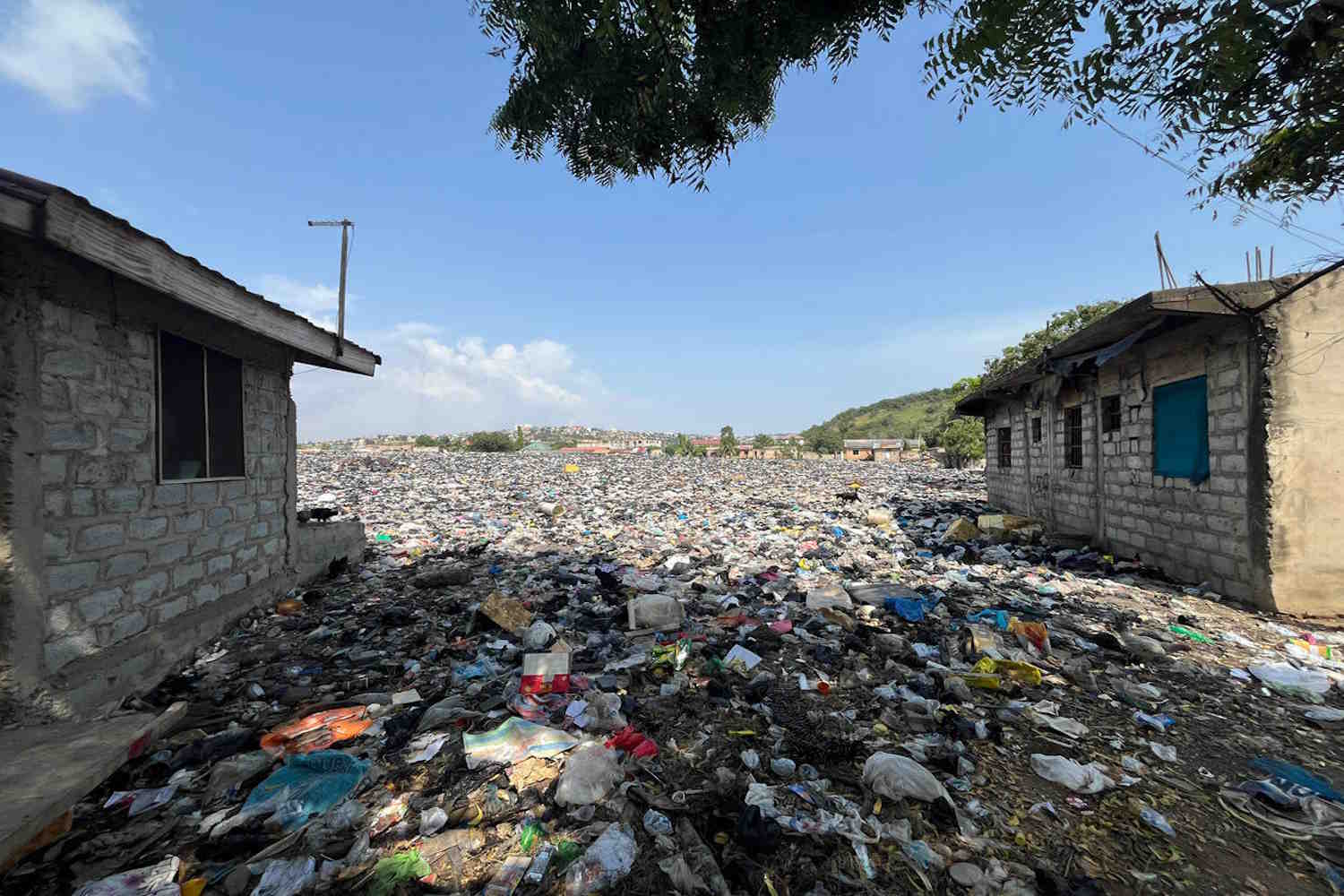
Ghana is under a plastic sea. According to the NGO Earth Care Ghanaevery year, the country of West Africa imports more than two million tons of plastic products. And the Ghanaians, as well as the Nigerians, in turn throw more than one million plastic tons per year, equivalent by weight more than half a million cars. This is equivalent to about 31 kg of plastic waste per person.
It is a figure much lower than that of citizens of the United States and the United Kingdom, which guide the world in the production of plastic waste. But the richest countries have the means to deal with pollution (obviously often reflecting the problem to the poorest ones: last year, the United States sent almost half a million tons of old plastic abroad).
A walk on the Accra promenade is enough to understand the extent of the landfill. And today’s report signed by Jess Staufenbergwith photos of Costanza Gambariniwhich tells – among others – the story of the waste collector Lydia Bamfo, is really touching.
“Let’s clean the city”, the Ghana waste collectors
In the oldest neighborhood of Accra, Jamestown, the wooden huts turn their back on an ocean that can only be found through a labyrinth of alleys that come out on a beach just visible for waste, writes Staufenberg.
Here, the waste collectors, the “Waste Pickers“Like Lydia Bamfo, they play every blessed day a crucial role in the management of the plastic” mountains “that afflict the city and its coasts. And, on the beaches, even after daily cleaning, the sand remains striated by billions of microplastics too small to be removed.
Lydia and Johnson: faces and stories of a daily resistance
Lydia Bamfo51 years old, mother of seven children, for 25 years he began his days before dawn. With his tricycle he collects plastic on the streets of Accra, weighs and records the “bottles” of the young collectors who rely on her. Today he leads theAccra Borla Tricycle Associationan organization that represents over 8,000 workers. His life was marked by poverty and abuse, but has found a job in the waste collection that he defines as “important”, because “The city without us would be submerged“.
Johnson Doeon the other hand, he began at 16 among the landfills. Now he is driving an association of 700 collectors and is the African contact person for the International Alliance of Waste Pickers, which represents 40 million workers worldwide. His group recovers up to 40% of landfill waste, which otherwise would remain there for decades.
Just more than half a dollar per kilo in inhuman conditions
Plastic collected, especially the precious HDPE (the one used for tanks, bottles, tanks), is sold to recyclators for about 5 Cedis per kilo (less than 0.50 dollars), they tell. It is a figure that is enough to survive, in a city where the minimum daily salary is just under 2 dollars.
Many collectors are orphaned, without internet access, without protections, without voice.
Those who work among waste often do so in inhuman conditions. The landfills are full of toxic materials, medical waste, industrial waste. There are those who have lost fingers and those who get sick for the fumes. Keren, Lydia’s daughter, is only 19 years old but already suffers from chest pains and breathing difficulties.
To all this is added the social stigma. Lydia was called “vulture”, “witch”, even denied by her own family for the work she does. However, a job that allows you to convenient to breathe.
The “market solutions” that exclude those who really are on the field
In recent years, while governments hesitate, initiatives financed by international giants have been born. Like the 100 million dollar “plastic bonds” launched by the World Bank: each ton of plastic collection generates a credit that companies can buy to say “plastic neutral”.
In Ghana, these funds end up in the hands of organizations such as the Asasi Foundation, which recycles plastic pellets or “timber” to make school desks.
A nice idea? Apparently, yes. But in the field, according to Lydia and Johnson, the reality is different.
Collectors report that they receive nothing of these funding. Indeed, they are often underpaid or excluded from the supply chains created by these foundations. Johnson accuses Asase of having circumvented his association, causing a long and expensive legal dispute.
Many define these projects as a “false solution”: they do not reduce the production of plastic, they do not help those who collect it, but allow companies to wash their consciousness without really changing. Meanwhile, the most difficult plastics to recycle – such as the multilayer ones – remain in the streets, ignored.
Real solutions? From the bottom
According to the leaders of the Waste Pickers And several environmental experts, real solutions must include who is already on the field every day:
Behind each bottle collected, there is a face, a story, a sacrifice. Lydia, Johnson and thousands of others work in the shadows for a cleaner world. But we cannot expect them to solve a crisis created elsewhere alone. Justice is needed, not just technologies. You need listening, not just finance.
Because a more sustainable world is built together, from below, for everyone.
Sources: Earth Care Ghana / Al Jazeera
Don’t you want to lose our news?
