
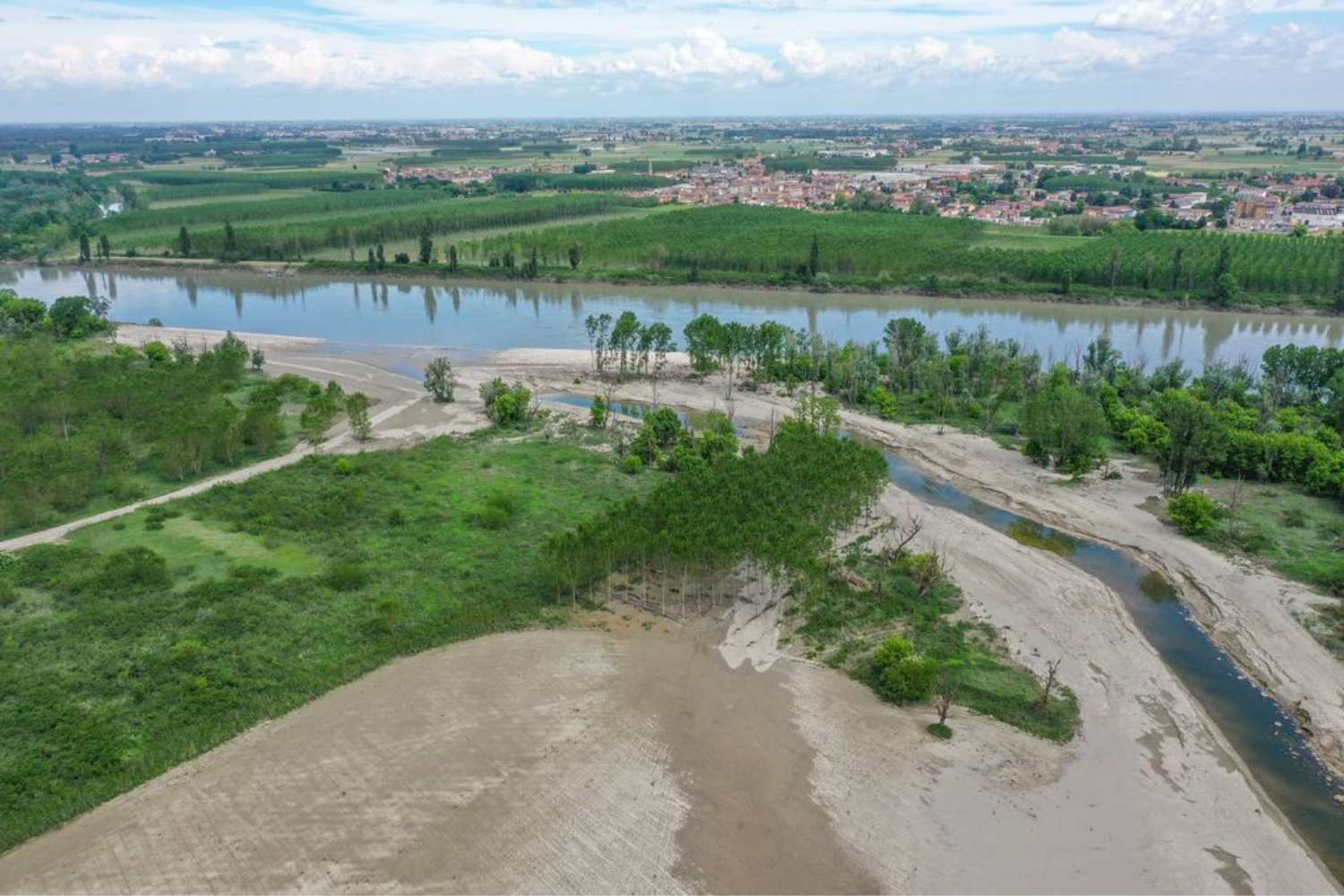
The Great River regains its lost nature. After decades of artificialisation, embankments, excavations and transformations which have profoundly altered the ecological balance, the first results of the unprecedented river renaturation work in Italy have arrived.
Thanks to a 357 million euro investment financed by the PNRR – Next Generation EU, the maxi project which aims to make the Po more resilient to the climate crisis, richer in biodiversity and more capable of carrying out its ecological functions has been concluded. The data relating to the intervention, presented in Parma by the Interregional Agency for the Po River (AIPo) last Friday, provide a picture of 13 major works distributed across Piedmont, Lombardy, Emilia-Romagna and Veneto: 37 kilometers of riverbed recovered, over 440 hectares of natural areas redeveloped and more than 561,500 native trees and shrubs planted.
@AIPo
Numbers that tell of a paradigm shift in the management of the main Italian watercourse: no longer just containment and defense works, but interventions designed to give space back to the river and encourage the restoration of natural processes that had been compromised over time.
The Great River under pressure
The Po passes through four Regions, 13 provinces and 181 municipalities before flowing into the Adriatic. Over a quarter of the Italian population lives in its basin and a very significant share of the country’s agricultural, industrial and livestock activities is concentrated. Precisely this intense anthropization has contributed to profoundly modifying the river over time. The defense works carried out in the twentieth century, fundamental for protecting the territories from floods, have however progressively narrowed and stiffened the riverbed, compromising natural habitats, wet areas and ecological dynamics.
The consequences have been the loss of biodiversity, the fragmentation of ecosystems and the spread of invasive species, aggravated in recent years by the effects of the climate crisis, including extreme droughts and increasingly intense meteorological phenomena. The heart of the project was precisely that of giving back space to the Po and its natural processes. Among the interventions carried out include the lowering of artificial structures for navigation, the reopening of lateral channels and the restoration of hydraulic connections between the main course and the oxbows, the secondary branches of the river. Operations that allow the water to move again in a more natural way, favoring the formation of precious habitats for fish, amphibians, birds and numerous other species.
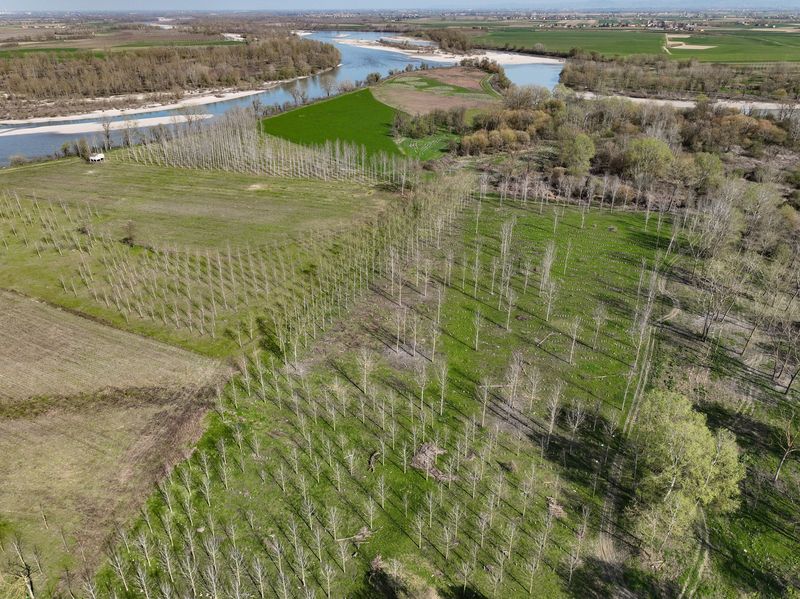
@AIPo
At the same time, extensive reforestation with native species was started, accompanied by the control of invasive plants and the recovery of wetlands and ancient river branches. According to the bodies involved, these actions will not only increase biodiversity but also strengthen the territory’s ability to absorb the impacts of climate change, contributing to the mitigation of heat waves and flood management.
Renaturalization does not mean going back, but looking forward
During the presentation of the results, the Minister of the Environment and Energy Security Gilberto Pichetto Fratin highlighted how the project represents a new vision of river management: “Renaturation does not mean bringing the river back to the past, but recreating the conditions so that, even in the face of climate change, the territory can be managed better. We have recovered spaces and paths of the river that were lost in the last century, giving the Po back its natural mobility”.
A concept also reiterated by the European Commissioner for the Environment and Water Resilience Jessika Roswall, who defined the project as a concrete example of a nature-based solution: “The degradation of the Po represents a threat to Northern Italy and to the rich biodiversity that inhabits it. Its renaturalisation sends an important signal: recognizing the value of the rivers and investing in their restoration means protecting people, the environment and the economy”.
The challenge has just begun
If the interventions have been completed, the work does not end here. In fact, the project involves five years of maintenance and monitoring of the new plantings and the evolution of river dynamics, an essential phase to ensure that the benefits obtained are long-lasting. Because the real challenge will be to transform this huge investment into a permanent change.
The Renaturation of the Po is a project of great importance because it has brought together hydraulic safety and natural valorisation, restoring space to the river and increasing the plant heritage. – underlines Elisa Venturini, Veneto Regional Councilor for the Environment, Climate, Parks and Civil Protection – President of the AIPo Steering Committee. But today the challenge is not only to create works like this but to maintain them over time. Taking care of and managing the Po and its basin means having the capacity for institutional sharing between Regions, AIPo, Municipalities and Provinces. Citizens are also called to be custodians of the territory. The challenges posed by climate change call for everyone’s responsibility.
In an era marked by the climate crisis and the loss of biodiversity, the Po could become a national laboratory to demonstrate that hydraulic safety and nature protection are not conflicting objectives, but two sides of the same strategy.
