
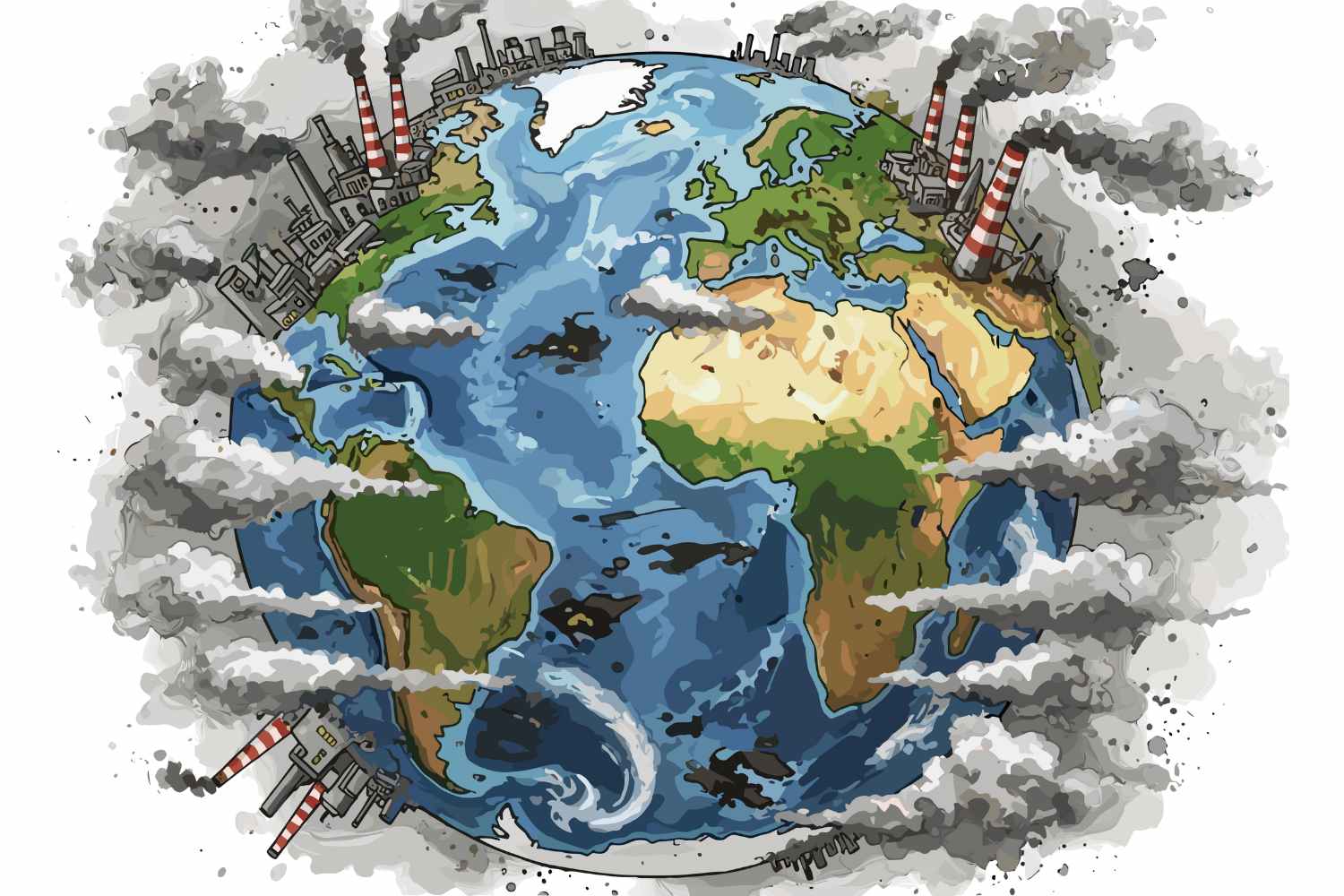
9 January 2026 was defined by Oxfam as “Polluter’s Day”. In ten days, the richest 1% of the world’s population has already emitted all the CO2 they would be allowed for the entire year if global warming was to be limited to 1.5°C. The richest 0.1% had already exceeded the limit on January 3.
The impact of these emissions goes far beyond statistics: tens of millions of people in poor and vulnerable countries will suffer the worst consequences, including heatwaves, droughts, floods and significant economic damage. Estimates from the international confederation of non-governmental organizations indicate that emissions from the richest 1% could cause 1.3 million heat-related deaths by the end of the century, while the economic damage accumulated in the poorest countries could reach $44 trillion by 2050.
10 days. That’s all it takes for the richest 1% to blow through a year’s worth of carbon. Pollutocrats are living large and burning fast, costing people and planet.
It’s time we hold the richest polluters accountable for the climate chaos they profit from.Sign the petition… pic.twitter.com/goMEEvBZWr
— Oxfam International (@Oxfam) January 10, 2026
How the carbon budget works
To understand the gravity of the situation, it is useful to know what is meant by carbon budget: it is the maximum amount of CO2 that can be emitted without exceeding a certain increase in global temperature. According to the United Nations Environment Programme’s Emissions Gap Report 2024, the compatible level of emissions in 2030 is approximately 17.8 gigatons of CO2. Dividing this figure by the projected world population of 8.5 billion people, each would have 2.1 tons of CO2 per year. The richest 1% emits on average 75.1 tonnes per person, i.e. approximately 0.206 tonnes per day. So it takes just over ten days to exhaust the annual budget of an average person.
Not just luxury: the role of investments
The emissions of the super-rich come not only from private jets, superyachts and villas, but also from investments in CO2-intensive companies. On average, each billionaire owns stakes in companies that produce 1.9 million tons of CO2 per year. A person from the richest 0.1% produces more CO2 in a single day than the poorest 50% of the world emits in a year. If everyone followed this model, the global carbon budget would run out in less than three weeks.
Political influence and lobbying
Economic power allows the super-rich to exert disproportionate influence on climate policies. At the recent COP in Brazil, the number of lobbyists from fossil fuel companies exceeded that of almost all national delegations, except for the host country. Nafkote Dabi, head of climate policy at Oxfam, stressed that wealth allows one to “exert unfair influence on decision-making and undermine climate negotiations”.
The measures suggested by Oxfam
To reduce emissions and rebalance responsibilities, Oxfam calls for targeted measures on the super-rich and the most polluting companies. Proposals include raising taxes on the income and wealth of the super-rich, taxing the excessive profits of fossil fuel companies, and measures against carbon-intensive luxury goods such as private jets and superyachts. The organization also indicates the need to rethink the global economic system towards more sustainable and equitable models, capable of protecting people and the planet.
The International Court of Justice recalls that countries have an obligation to reduce emissions to guarantee the right to life, health and a clean environment. According to Oxfam, limiting the emissions of the super-rich is not just a question of justice, but a necessary step to avoid catastrophic climate consequences.
