
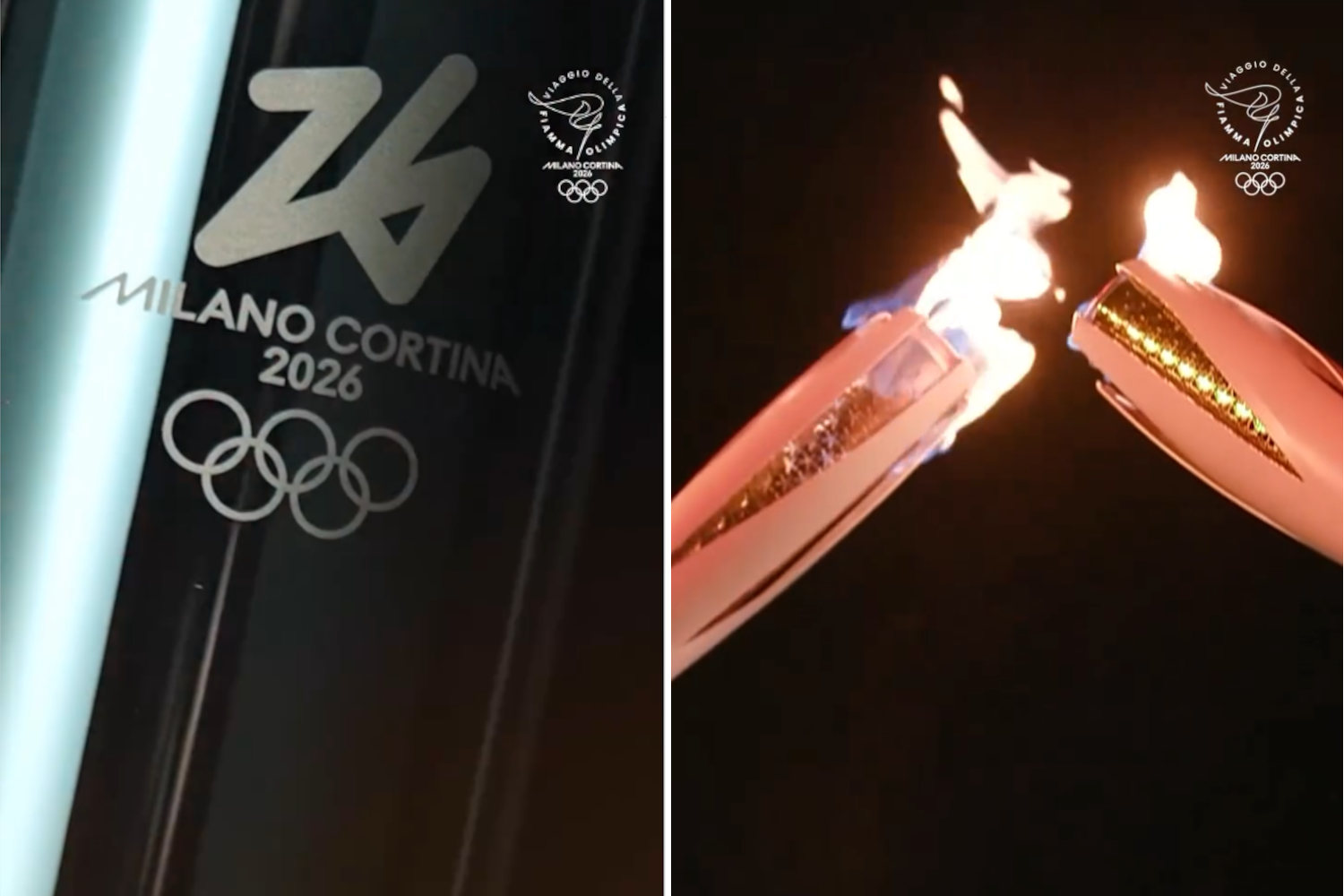
The Milan-Cortina 2026 Olympic Flame Journey will be a great collective narrative 12,000 km long, an itinerary that unites the country passing through 60 stage cities and over 300 municipalities. From 6 December 2025 to 6 February 2026, the Flame will pass through iconic locations and local communities, transforming every day into a widespread celebration of the Olympic spirit.
The route will begin with the lighting in Olympia, cradle of the tradition of the Games, and then arrive in Rome, from where the long Italian journey will start. A convoy of almost 200 metres, traveling at 4 km/h, will accompany the Flame towards unique landscapes: from large cities to villages, from symbols of Italian memory to places of civil rebirth.
View this post on Instagram
A symbolic itinerary between history, culture and rebirth
The route will pass through spaces recognizable all over the world: the Colosseum, the Trevi Fountain, the Duomo of Milan, the Grand Canal of Venice. But it will also pass through territories that tell of resilience, such as Amatrice or Scampia, remembering that sport can be a driver of social cohesion.
Each day will end with the lighting of the brazier in the host city, a moment of celebration that will involve residents and visitors. The Journey will reserve spectacular stages: the ascent to Punta Gnifetti on Monte Rosa, the passage to the Marmore Falls, the magic of the Amalfi Coast illuminated by torchbearers.
The return to Cortina d’Ampezzo, on 26 January 2026, will celebrate the seventieth anniversary of the 1956 Games. The conclusion will take place on 6 February, when the Flame will enter the San Siro stadium, marking the official start of the Olympics.
View this post on Instagram
Nico Acampora: an exceptional torchbearer
Among the most touching stories of the Journey will be that of Nico Acampora, founder of PizzAut, chosen as torchbearer. For Acampora, carrying the torch is not a simple recognition, but a gesture that amplifies the message that guides his project: giving dignity and a future to autistic children through real work.
His 200 meter run will be symbolically shared with the young people of PizzAut and their families. The Flame he will bring – he says – remembers “peace, friendship and hope in a more just worldValues that profoundly coincide with the mission of its inclusive reality, capable of changing public perception on autism and disability.
View this post on Instagram
The environmental impact: a still unresolved issue
Alongside the enthusiasm for the arrival of the Games, there is no shortage of concerns linked to the environmental impact of the planned works. For example, the felling of more than dozens of trees to make way for the bobsleigh track in Cortina d’Ampezzo caused a sensation (and horror).
Various associations – including Legambiente, WWF, CAI, Italia Nostra and others – have expressed strong alarm at the lack of a national Strategic Environmental Assessment (SEA) on infrastructure interventions that will involve fragile territories, many of which fall in areas protected by the Alpine Convention and the UNESCO Dolomites heritage.
Environmentalists remind us that the Games should be an example of ecological innovation, not a factor of further pressure on already vulnerable territories by underestimating the consequences on land consumption, mountain ecosystems and natural resources. The topic remains open, and will be decisive in evaluating how well Milan-Cortina 2026 will be able to reconcile the celebration of sport with responsibility towards the environment.
You might also be interested in:
