
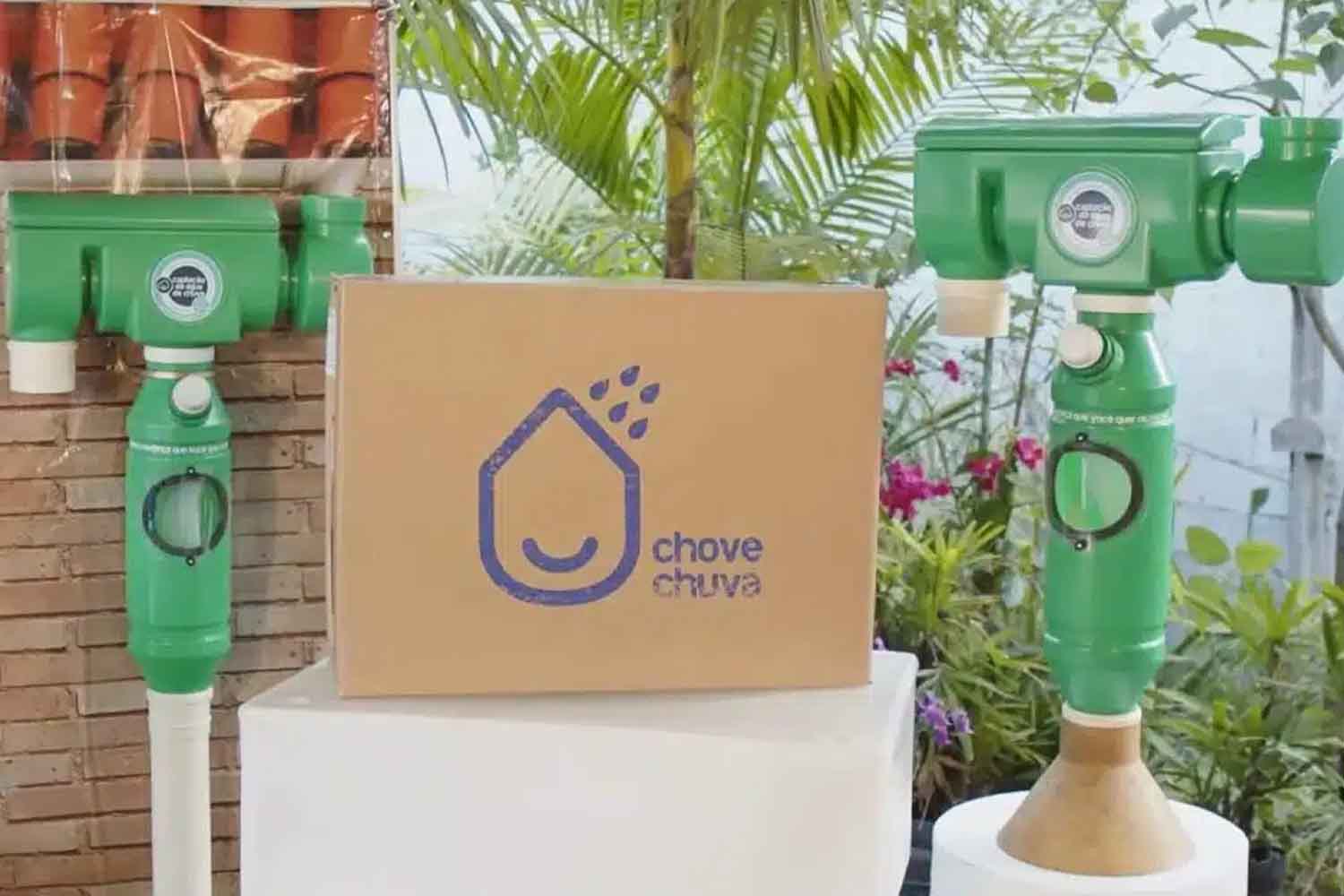
In Brazil, where periods of extreme drought alternate with torrential rains, rainwater is often the only resource available. This is why Chove Chuva took shape, a filter that is installed on the slope of the gutter and which allows you to obtain drinking water without resorting to electricity. It is a simple, economical system designed for those who cannot count on a constant water supply.
How it works
The mechanism is direct, almost intuitive: the water comes down from the roof, enters the device and passes through various passages that make it safe. The coarser residues, such as leaves, sand, insects, etc. are retained first. then the filter regulates the pH, an important detail because in many areas of Brazil the rain is very acidic.
From here, you enter the technological heart of the appliance: an automatic system introduces a microdosing of chlorine, compliant with Brazilian regulations, eliminating harmful microorganisms. The water then passes through finer filtration and finally reaches the tank, ready to be stored. All without electricity, an aspect that contributes to making it a virtuous example of frugal engineering.
According to the manufacturer, the water thus obtained can be used for:
In a country where a one hundred square meter roof can produce up to 15 thousand liters in a single downpour, the potential is enormous. Chove Chuva can filter 3,000 liters per hour, up to 900 thousand liters per year for homes with larger coverages. Numbers that in Italy seem almost unreal to us, but in Brazil they represent the difference between having water or not having it.
In many families, especially in the suburbs and rural areas, turning on the tap does not always mean finding drinking water. Chove Chuva was born precisely for this reason: to give an immediate, concrete response to the lack of clean water. It hooks onto the gutter, connects to the cistern and starts working. No complex systems, no difficult maintenance. It’s essential technology, designed to last.
You might also be interested in:
