
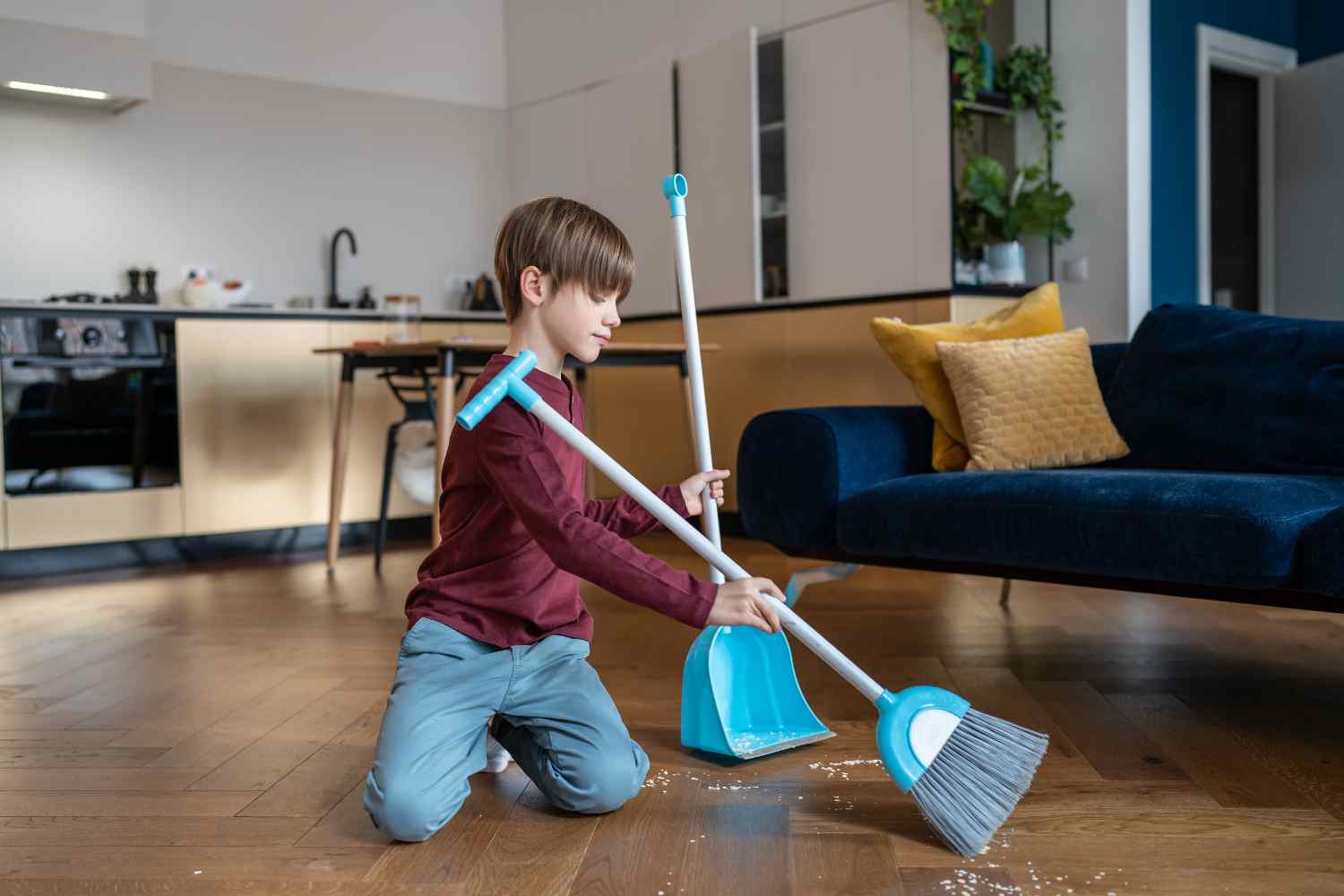
Starting from young people is essential to avoid conflicts related to household chores. The time and attention invested in teaching children to participate in daily activities repay in the long run, not only in terms of a cleaner house, but also for the growth of the children themselves.
Some researchers investigated this issue and published a document in 2019 involving more than 9,910 children whose parents reported the frequency with which they carried out the household chores.
The more they had done to kindergarten, the more likely it was that they reported feelings of social satisfactionacademic and life within the third grade.
On the other hand, the study discovered that the children who rarely performed the household chores were more likely to obtain scores in the lowest quintile in terms of prosocial skillsacademics, peer relationships and satisfaction in life.
Another study, published in the Australian Occupational Therapy Journal, has shown that children who regularly participate in household chores, such as preparing lunch or helping to cook, develop better executive skills, including a more efficient working memory and greater inhibitory control. Inhibitory control, or the ability to curb impulses and make more appropriate choices, is a fundamental competence for school and social success.
Finally, a study published in the occupational Therapy Journal of Research examined the benefits of household chores in young people with chronic pathologies. The results showed that those who regularly carried out domestic tasks had a more autonomous management of their health condition and better communication with the doctors compared to their peers who did not participate in household chores.
Parents should not make the mistake of underestimating what most children can do at home.
Start early and be consistent
Experts agree that it is essential to start early. Children aged 2 or 3 can already collect toys or clean the kitchen shelves. Consistency in the routines is essential: if children know what to expect and are regularly involved in these activities, they develop a strong sense of responsibility.
Avoid perfection
Don’t expect children to do everything perfectly. Rather, encourage them to participate and lood for their commitment, regardless of the result. Domestic affairs are an opportunity to learn, grow and develop social skills, not to achieve perfection.
Be specific with the instructions
Instead of giving general orders such as “clean your room”, try to provide more detailed instructions, such as “collect the dirty clothes and put them in the basket”, or “put the toys on the shelf”. The clarity in the instructions helps children better understand what is expected of them and feel safer in completing the task.
Here is a guide, age by age, to the affairs of which children are capable as they grow up, starting with young children and up to the age of age.
From 12 to 18 months
It depends on the child, but at 18 months most wants to help. It makes them feel good to do things. For example, if they left the pieces of the puzzle on the floor, you can say: “Oh my God, look at the floor! We can put away that puzzle!”
It is important lay the bases starting from 12 months. It is not about forcing them. In reality they love to help when the tasks are suitable for age and simple.
In the bedroom, the little children canor put their dirty clothes in the basketremove the socks, take the pajamas from a drawer at the bottom. In the bathroom they can brush your hair, wash your hands, hang a towel and brush your teeth with a supervision.
From 18 months to 3 years
From 18 months to 3 years they begin to follow the parent and imitate everything he does. At the age of 3, many children are able to dress themselves with a little help.
The little ones can help to redo the bed, sweep the floor, water the plants, wear a coat or hang it to a hook and even wash the dishes.
From 4 to 5 years
When a child reaches the age of 4, he can regularly be entrusted to him Responsibility of some routine chores.
At the age of 4, children should be able to bend the laundry, measure and mix the ingredients for cooking, help cook, put the clothes in the drawers, dry after being in the bathroom.
From 6 to 12 years
At the elementary schoolmost children are ready to help prepare dinner, put away the shopping, take a pet a pet and keep your room clean alone with occasional help.
At the age of 7 or 8, children should be able to manage the laundry by putting dirty clothes in a basket, and then in the washing machine and dryer.
From 13 to 18 years
Once in middle school and beyond, the average child it should be able to carry out the chores that adults makehow to clean the bathroom, wash the car, rake the leaves, mow the lawn and prepare simple meals, like a sandwich,
Therefore, it is clear that pushing children to engage in tasks suitable for their age will make them safer than themselves, autonomous and positive in life.
