
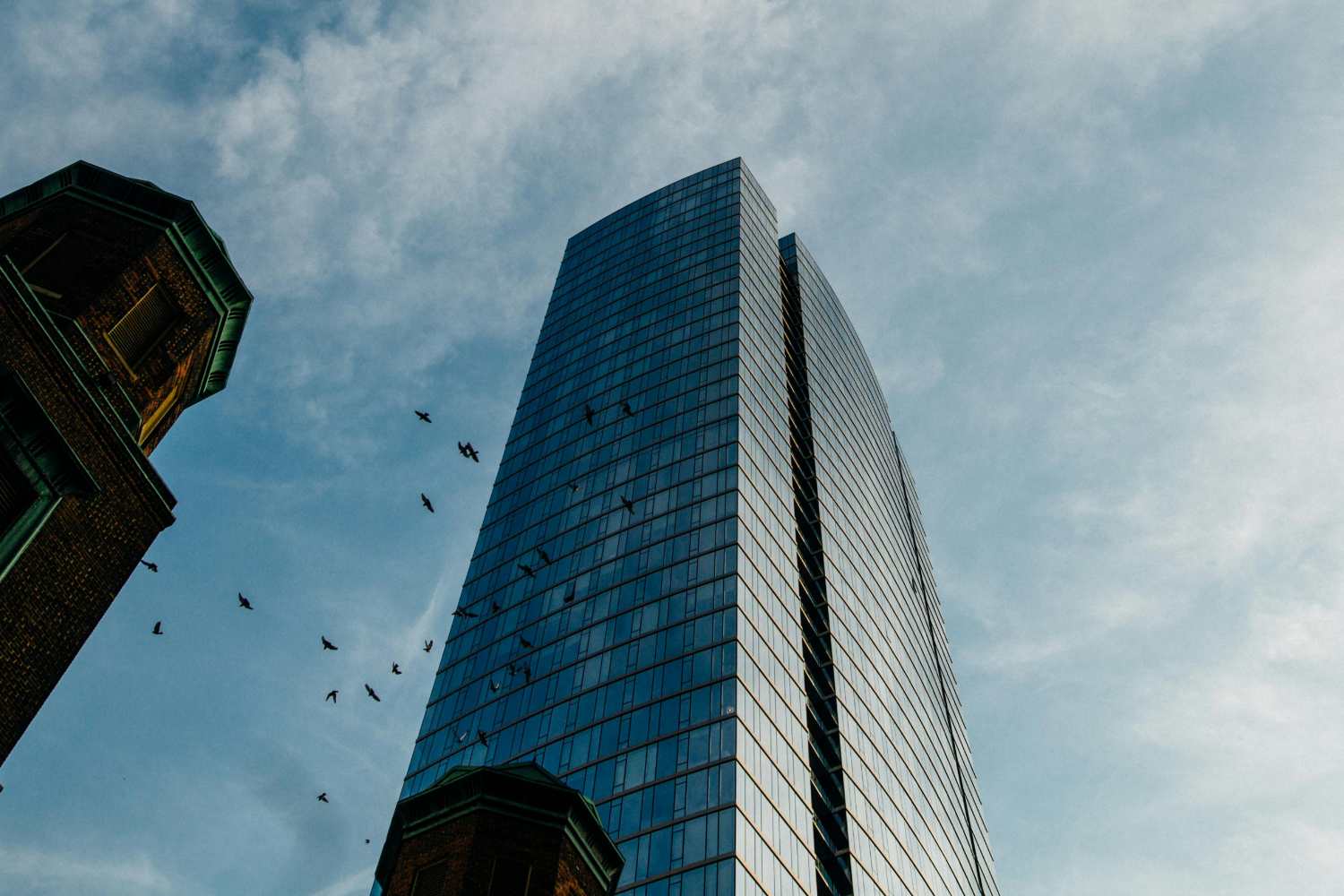
Every year, in the silence of our cities and countryside, a real massacre strikes the avifauna: the impact against glass and transparent surfaces. This threat, little perceived by humans, represents one of the most serious pressures on bird populations.
According to Lipu’s estimates, in Italy alone buildings with glass windows cause the death of 15-30 million birds every year, while in countries such as Germany and the United States the numbers reach impressive figures, reaching 115 million and up to almost a billion victims respectively. It is not just transparency that determines the danger: reflective materials, which duplicate trees, sky and vegetation, create a deadly illusion.
The case of the peregrine falcon of Naples
Among the most emblematic cases that has brought the problem to light is the one reported last July by numerous Neapolitan citizens: a young peregrine falcon, born in spring and belonging to the population that nests near the Maschio Angioino, was found dead at the foot of the large windows of the subway elevator. The specimen, a symbol of freedom and speed – capable of reaching over 350 km/h in a dive – lost his life against a surface that, for humans, appears harmless, but which for him proved fatal.
Why glass is so dangerous
But why does all this happen? The reason is that the visual structure of birds does not allow them to distinguish between a real surface and a reflection. For them, a reflected sky is an opening, a multiplied tree is a possible support. The consequence is an almost always fatal collision, especially for species such as birds of prey, woodpeckers and passerines.
Even when the impact does not cause immediate death, the animal can be injured, stunned or unable to fly, becoming easy prey. The expansion of transparent architecture – shelters, noise barriers, curtain walls – has transformed a limited phenomenon into a global crisis.
Possible solutions
Despite the seriousness of the situation, the measures to prevent these accidents are known and already extensively tested. The Swiss Ornithological Station of Sempach, together with Lipu, proposes effective strategies for bird-friendly design. Research shows that simple dot or stripe markings, applied with continuity and regular spacing, can drastically reduce the risk of impact.
However, it is useless – and sometimes misleading – to rely on the silhouettes of birds of prey, which do not produce real benefits. The solutions can be integrated into new buildings or added as retrofits to existing structures, avoiding costly interventions and above all saving lives.
What to do when a bird hits a glass window
In the case of an injured or stunned bird, it is essential to act calmly and competently: place it in a perforated box, in a dark and quiet environment, without food or water. After an hour or two the box should be uncovered in an open place to let it fly away. If the animal fails, it must be entrusted to a Wild Animal Recovery Center (Cras). At this link you can find the list of facilities divided by region.
You might also be interested in:
