
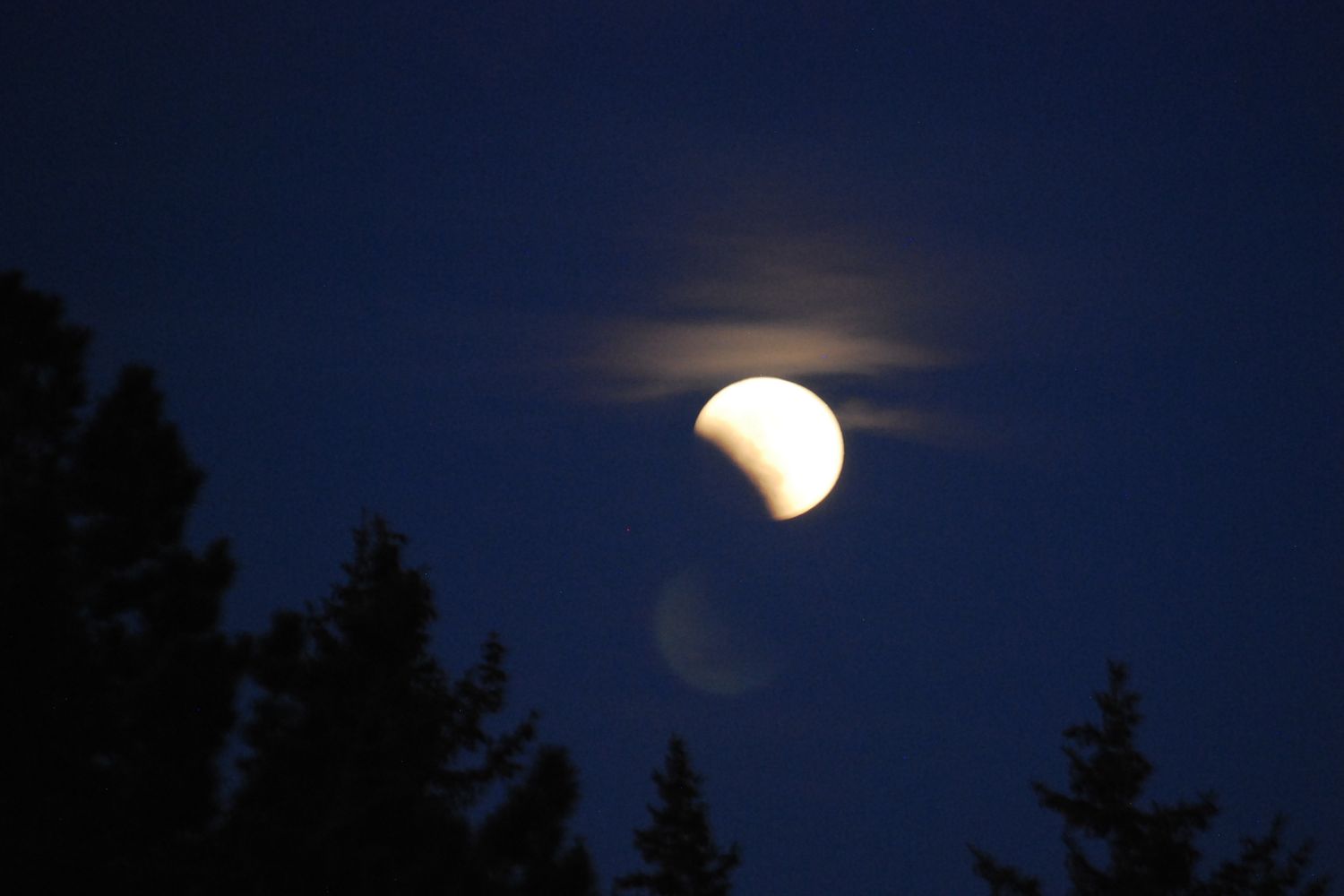
The August 28th let’s not forget to admire thepartial eclipse of the Sturgeon Moon: our satellite will appear “eaten”, but not like a less than full moon. Here’s how to admire the event that, weather permitting, will be visible to the naked eye also in Italy. Don’t miss it!
What is partial lunar eclipse
A partial lunar eclipse occurs when the shadow of the Earth, illuminated by the Sun, partially obscures our satellite, at the moment in which the latter is in the “full” phase while the Sun, Earth and it are aligned in this order, with the Sun illuminating the Earth, which in turn partially projects its shadow on our satellite.
The phenomenon is perhaps less spectacular than the romantic total lunar eclipse red moonbut still fascinating: our satellite will in fact appear as if it were no longer in a flood phase, but “eaten” in a few tens of minutes.
©Timeanddate
Why Sturgeon Moon
The protagonist of this wonderful event will be the Sturgeon Moon: The full moon in August is so called in American tradition because of the abundance of fish in it Great Lakes typical of this period. But August is also traditionally the month of the wheat harvest and that is why this moon is also known as Wheat Moon (the symbol of this moon is in fact also the ear of wheat).
And sometimes it is also said Red Moondue to thereddish halo which sometimes surrounds it due to the summer heat. However, it has nothing to do with the “real” red moon, i.e. our satellite in total eclipse which actually becomes red as, not reached by the direct light of the Sun, it is illuminated only by solar rays “filtered” by the Earth’s atmosphere which only allows the visible red component to pass through.
Because the partial lunar eclipse will be on August 28, 2026
The date of the partial lunar eclipse is not causal: eclipses, in fact, never come alone, and in fact on August 12th the world admired the spectacle oftotal solar eclipsereturned to Europe after 27 years (the last was the unforgettable eclipse of 11 August 1999).
The phenomenon crossed Greenland, Iceland and northern Spain: in the Iberian peninsula, in particular, totality was visible in various areas of the northern half of the country, in a band from west to east, from Galicia to the Balearic Islands.
And unfailingly after two weeks, the partial lunar eclipse arrives.
How to admire the partial Sturgeon Moon eclipse on August 28, 2026
©Timeanddate
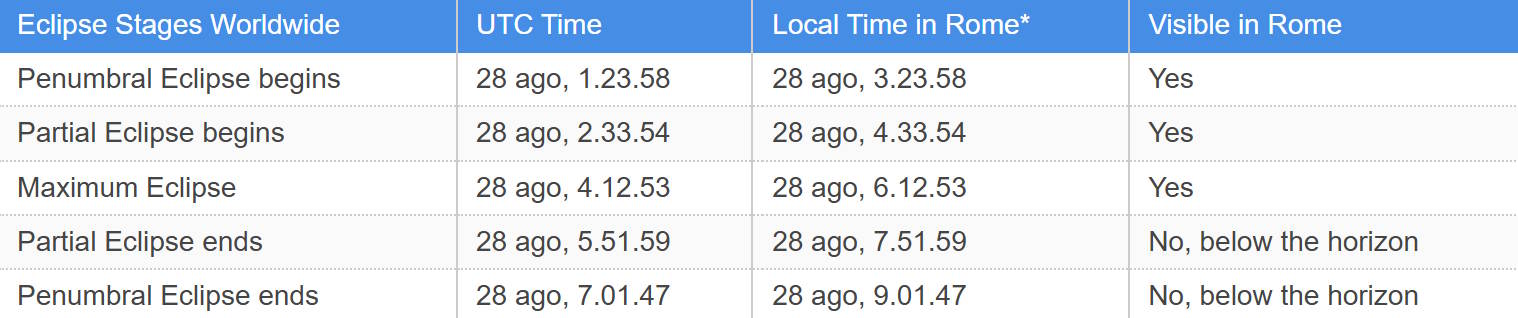
The partial lunar eclipse, weather permitting, will also be largely visible in the Italian skies: the first part, thepenumbral eclipse (the “faded moon”) will begin at 3.23 am Italian time, while the true partial eclipse at 4.33, to reach the maximum at 6.12. The end of the partial and penumbral eclipse will instead be below the horizon, and therefore invisible to our eyes.
©Timeanddate
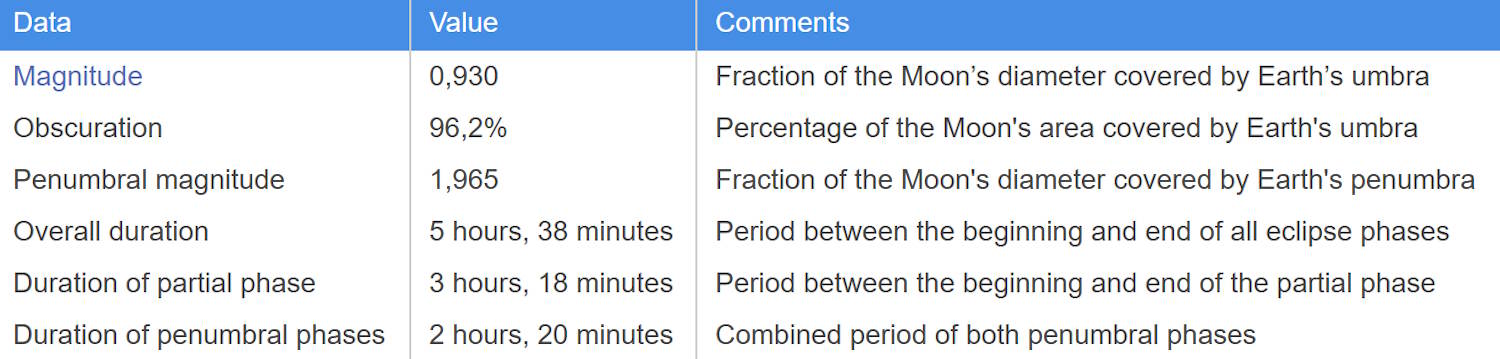
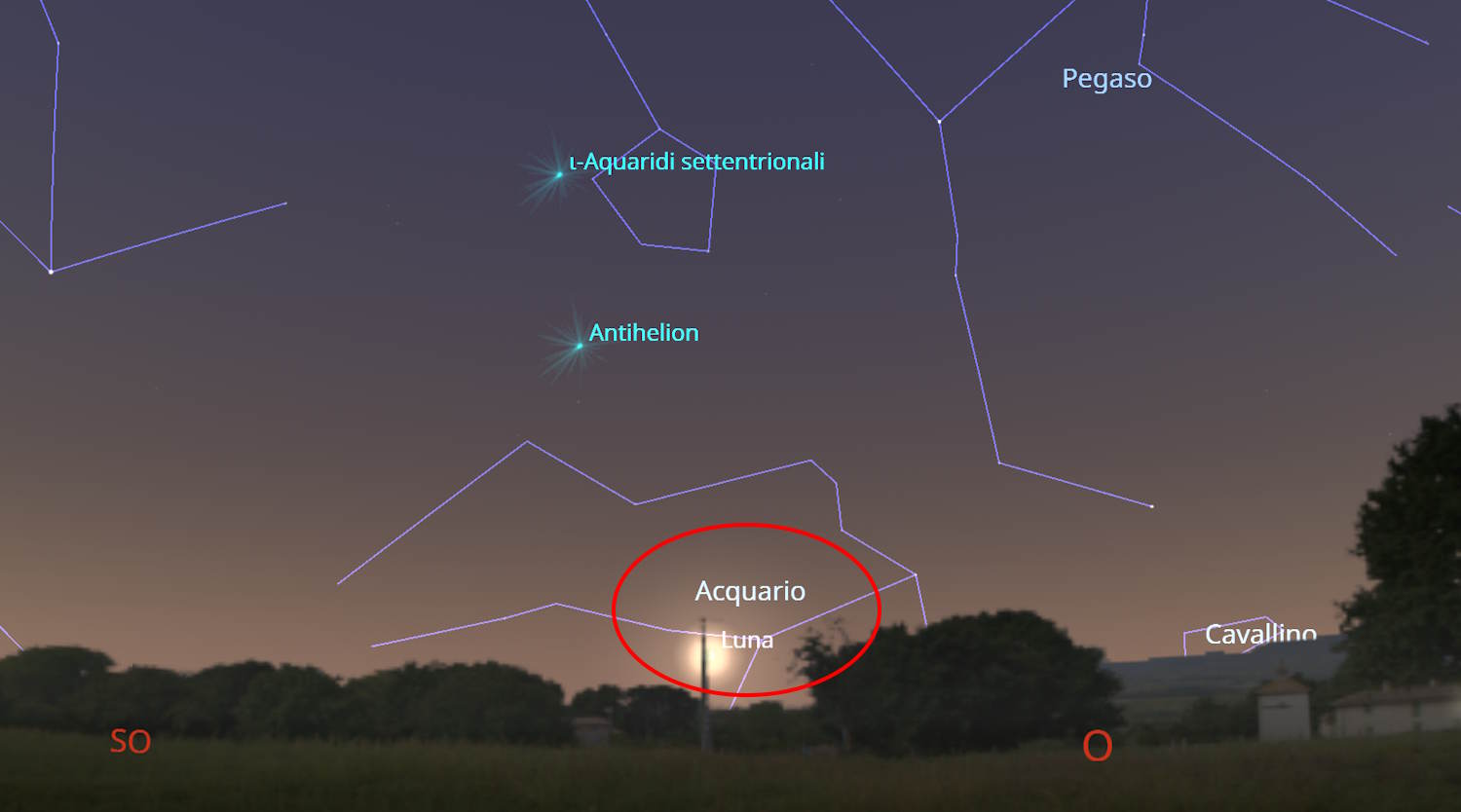
The coverage of our satellite will be very high indeed, reaching a considerable peak of 96.2%for a total duration of 5 hours and 38 minutes (of which just under 3 visible to us). We should turn our gaze towards the constellation of Aquarius, on the West – South-West horizon (on the map the sky of August 28, 2026 at approximately 6.00 am).
©Stellarium
Don’t miss it!
Sources: UAI / Timeanddate / Moongiant
