
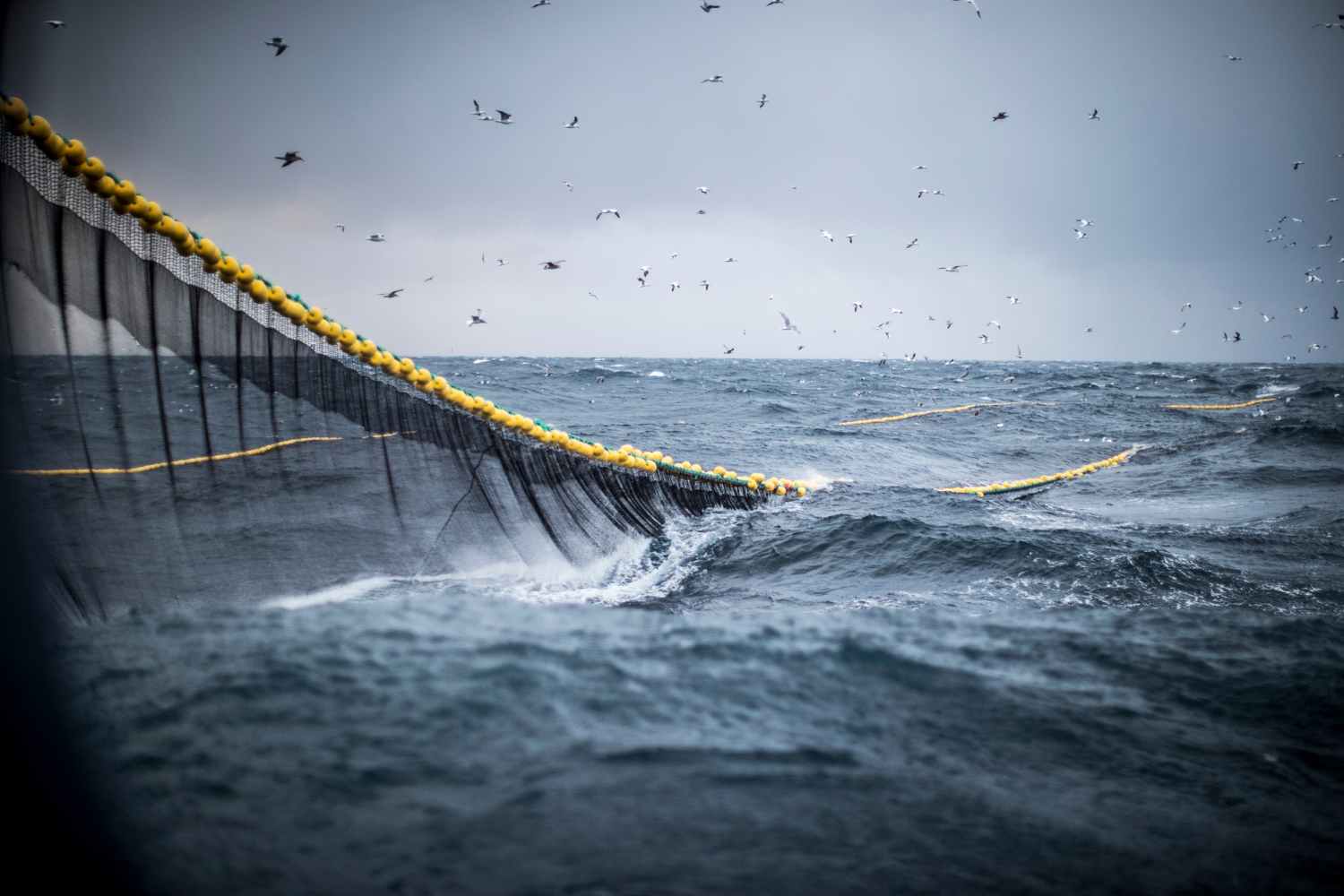
Almost 40% of English waters are formally classified as marine protected areas. On paper, a bastion for biodiversity. In fact, a line drawn on maps that does not stop networks hundreds of meters long or the intensive exploitation of resources. The Greenpeace UK numbers tell a different story from the institutional one: between 2020 and 2024 over 1.3 million tonnes of fish were caught within these areas.
Just beneath the surface of our seas, right here in the UK, lies an extraordinary world of marine life, from schools of colorful fish to dolphins and seahorses, but it is suffering a level of exploitation far beyond what we would tolerate on land. – underlines Chris Thorne, head of the oceans campaign at Greenpeace UK. The government claims large areas of UK waters are protected, but the reality is a national scandal.
Giant networks, deep impacts
The largest share comes from pelagic trawling: more than a million tonnes taken with equipment capable of intercepting entire schools without distinction. Added to these are approximately 250 thousand tonnes captured with bottom trawling, an even more invasive technique that drags heavy nets onto the seabed, destroying complex habitats formed over decades or centuries. The result is twofold: on the one hand the ability of ecosystems to regenerate is drastically reduced, on the other the marine food chain is compromised. It is not just a question of quantity fished, but of the quality of the environments that remain.
Species in free fall
Several key fish stocks are showing worrying signs, as the Guardian explains well. North Sea cod, Irish Sea herring and mackerel are at critical levels, whilst continuing to be commercially exploited. The decision of a large British supermarket chain to suspend the sale of mackerel is a concrete signal: the risk of collapse is no longer theoretical. This picture highlights an obvious short circuit: the areas created to encourage the recovery of ecosystems still host activities that accelerate their degradation.
Firm rules, active fishing
Britain’s marine protected area system has existed since the 1980s and now has dozens of designated sites. In 2020, new rules were supposed to strengthen protection, introducing more stringent limits on fishing in sensitive areas. Years later, however, many measures – in particular the ban on bottom trawling – are still in the consultation phase. Meanwhile, large fishing vessels continue to operate precisely where protection should be greatest. This is where the criticism from environmental organizations focuses: without effective restrictions, the designation becomes meaningless.
A European issue
The British case is not isolated. The model of “paper” protected areas concerns several European seas, including the Mediterranean. The distance between declared objectives and actual management emerges as one of the main obstacles to the protection of marine biodiversity. For Italian readers, the topic is anything but distant. The same dynamics – pressure from industrial fishing, regulatory delays, difficulties in controls – are also found in our waters. And the signs are similar: declining stocks, fragile ecosystems, conflicts between conservation and economic interests.
Protection or compromise?
Marine protected areas work if they become spaces truly removed from intensive exploitation. Otherwise, they risk becoming tools of communication rather than conservation. The UK data asks a direct question: how much is protection that doesn’t change practices on the ground worth? The answer, for now, seems to come from the networks that continue to ply even the theoretically most protected seabeds.
