
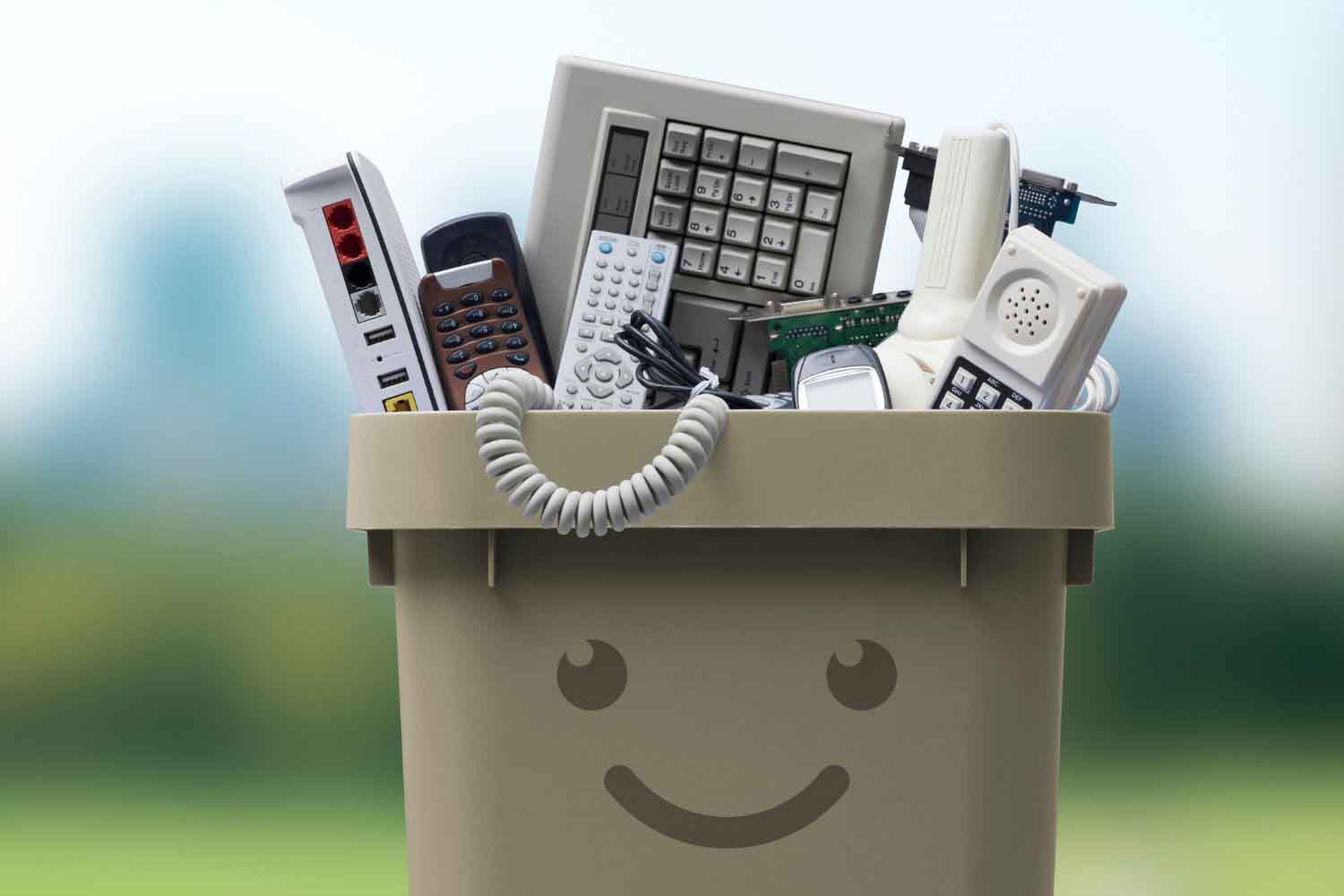
First comes the phone charger that we had three models ago, then the orphaned television remote control, the silent earphones, the old mouse, the electric razor that has lost the will to turn on, the battery-powered toy that ended up in a box together with the instructions for a printer that has now disappeared. Small WEEE have this somewhat clandestine life: they disappear from the radar, they occupy a corner, they seem too insignificant to deserve a trip to the ecological island and too “technological” to end up in the wrong bag. So they remain there, in a sort of domestic purgatory made up of full drawers and postponed good intentions.
Yet there is much more inside those minute wastes than their size suggests. WEEE, i.e. waste electrical and electronic equipment, are all those objects powered by electricity or batteries that you want to get rid of because they are broken, old or outdated. The symbol of the crossed out bin says a simple thing: those products follow a specific supply chain, with dedicated collection and treatment, because inside there may be recoverable materials and components that need to be managed carefully.
The drawer weighs more than it looks
The request to make collection easier comes very clearly from citizens. In the Ipsos-Legacoop survey presented at the national meeting of the Observatory on the ecological transition in cities, more than one interviewee in two considers the increase in the collection of small electronic waste through dedicated eco-points to be very important. In the same survey, the circular economy appears among the most important urban priorities: 89% of those interviewed indicate it is important to make production and consumption more circular, reducing waste and encouraging recovery and reuse.
Here the eco-points become interesting precisely because they take away from the citizen the most tiring part of the correct gesture: organization. It’s one thing to know that the old charger must be disposed of as WEEE, it’s another to find a nearby, accessible, visible point, perhaps in front of a school, in a local market, in a library, near a stop or in a public space already crossed every day. The difference between collected waste and forgotten waste often comes down to those three extra minutes that no one wants to spend.
The 2025 Annual Report of the WEEE Coordination Center shows that in Italy the collection of domestic electronic waste has started to grow again: 366,891 tonnes collected in 2025, with an increase of 2.4% compared to 2024 and an average figure of 6.22 kg per inhabitant. The growth speaks of a system that is moving, even if the share of small devices remains the one that most needs proximity, because it lives less in garages and much more on bedside tables.
Small WEEE eco-points, when the city stops asking for patience
In the WEEE system there already exist municipal collection centres, distribution grouping places and disposals linked to the “one for one” and “one for zero” methods, i.e. the collection of the old device when a new one is purchased or, for smaller devices, even without purchase under certain conditions. In fact, the WEEE report reminds us that waste delivered by consumers can also pass through distribution centers, next to municipal centers accessible to citizens.
Urban eco-points can do a different and very concrete job: intercept what escapes the traditional supply chain because it is too small, too dispersed, too easy to ignore. A light bulb, an old electric toothbrush, a USB stick, a pair of headphones, a cable, a small blender, a digital alarm clock. Tiny objects, sure. Multiplied by millions of homes, they become a scattered and silent mine.
The Ipsos-Legacoop survey also says something else: citizens are asking for clear rules, stable objectives, public funding, adequate technical skills, information and involvement of local businesses. An eco-point left there without maintenance risks becoming sad street furniture. A well-designed eco-spot, however, can change a tiny habit and make it normal.
Less invisible waste, more circular city
The collection of small WEEE through eco-points also has a cultural value. It shifts the idea of electronic waste from the large bulky appliance to the light, almost automatic gesture. It makes us understand that the circular economy also involves objects that we have stopped seeing. The magazine in the drawer seems harmless precisely because it sits still. Instead it contains recoverable materials and, if abandoned in the wrong collection, can become a problem in waste management.
The theme is part of a broader request for cities capable of better adapting to the climate crisis, consuming fewer resources and treating materials as something to be put back into circulation. In the same survey, 85% of interviewees consider it important to promote climate adaptation to reduce the risks and impacts of flooding and heat waves, while 82% indicate the mitigation of climate change through the progressive reduction of greenhouse gas emissions. Circularity, therefore, is perceived together with urban greenery, protection from the heat, water management, and the quality of public spaces.
The eco-points for small WEEE fit into this framework with a rare advantage: they are understandable. They ask citizens to empty a drawer and deliver to the right place what has been sitting there for months, perhaps years, among faded receipts and empty batteries. And that’s where the city can become smarter without making a big noise. A clearly visible slot, a clean container, a clear indication, a withdrawal that works. Sometimes circularity begins like this, with an old battery charger that stops being a domestic fossil.
You might also be interested in:
