
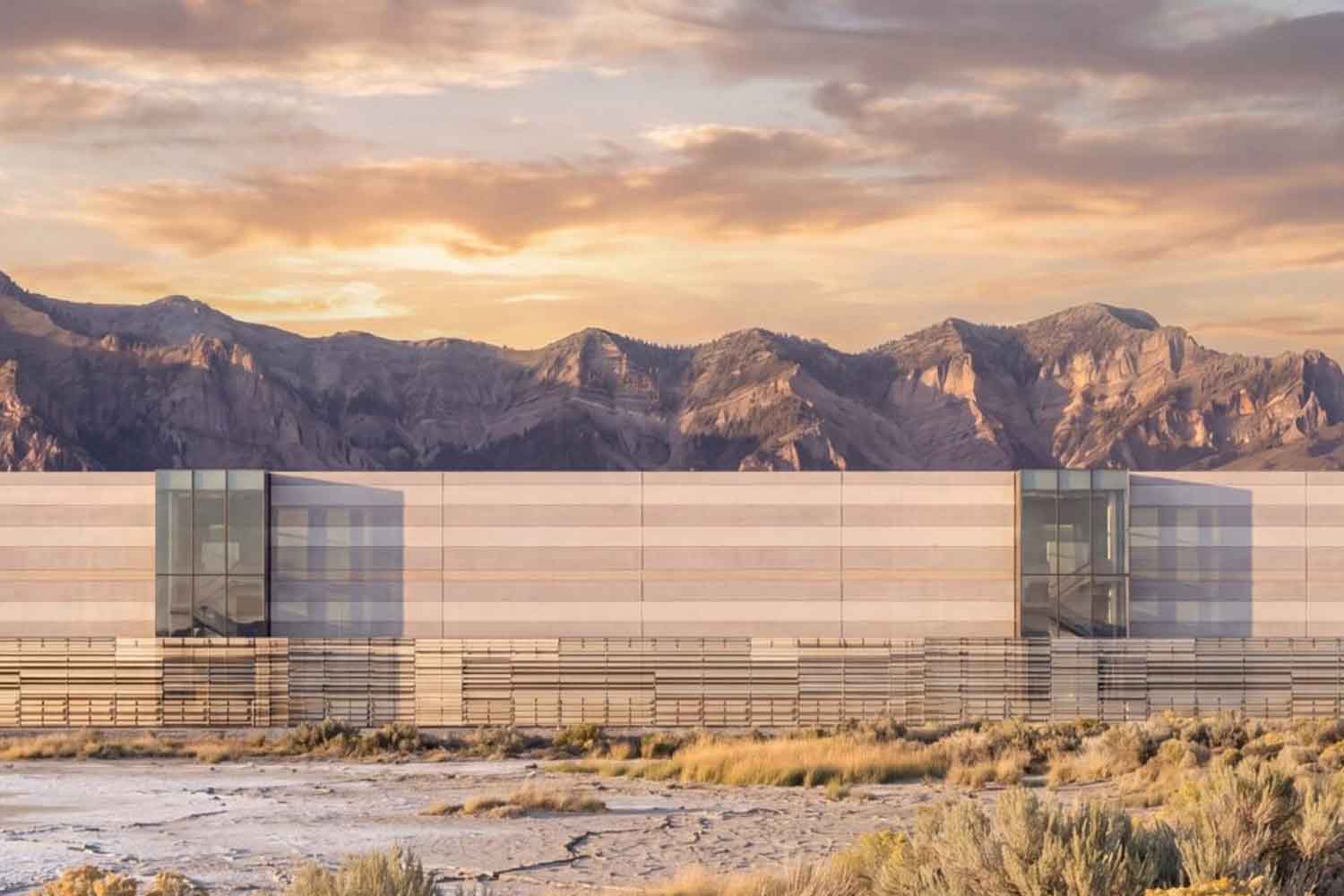
In the Utah desert, artificial intelligence has a much less immaterial aspect than we like to tell ourselves: gas, pipes, fans, disputed water and a valley that risks becoming even hotter. The project is called Stratos and should be born in Box Elder county, north of the Great Salt Lake, the large salt lake that has already been at the center of a very serious environmental crisis for years.
On paper, it’s a campus to power cloud computing, artificial intelligence and defense-related operations. In practice it is a gigantic infrastructure: the total area indicated in the official documents reaches around 40 thousand acres, over 16 thousand hectares, even if the authorities specify that much of the land would remain free and that the data center would occupy only a fraction of the area. The project has received the green light from the Military Installation Development Authority of Utah and Box Elder County, but the path remains long: environmental authorizations, air, water, discharge and water rights permits are still needed.
A 9 gigawatt machine
The number that made environmentalists, residents and scientists jump out of their seats is this: 9 gigawatts. According to available estimates, Stratos would consume an enormous amount of energy, almost double the peak electricity demand recorded in Utah in 2025. The promoters explain that the plant would produce energy directly on site, using natural gas from the nearby Ruby Pipeline, so as not to burden the local electricity grid, so residents’ homes would not have to compete with servers for electricity.
But the heat remains. Because a data center of that size doesn’t just consume energy: it returns it to the environment in the form of heat. Robert Davies, a physicist at Utah State University, estimated an overall heat load of about 16 gigawatts, adding the energy needed for the data center and the waste heat from the gas power plant. In more brutal terms, the equivalent of 23 atomic bombs a day being dumped into the local environment. A strong comparison, sure. But it serves to do a simple thing: remove that clean patina of a light word from the cloud. Here the cloud would have turbines, gas, industrial fans and hot air.
According to the same preliminary analysis, the system could raise temperatures in the Hansel Valley by 2 to 5 degrees Fahrenheit during the day and by 8 to 12 degrees Fahrenheit at night. In Celsius, it means about 1-3 degrees during the day and 4-7 degrees at night. Hot nights, in arid environments, are a serious problem: night cooling helps the condensation of humidity, a small vital reserve for plants, soil and animals. If that margin also disappears, the desert becomes even more deserted.
Water, gas and dust
The project’s promoters insist on one point: Stratos would use a closed-circuit cooling system, with fluid circulating in sealed pipes and being reused. Official documents talk about water used mainly for initial filling and maintenance, without continuous sampling. The water would come from existing private water rights and, according to officials, not from the Great Salt Lake.
The fragile point is right there: in the Utah desert even a technical detail about water becomes political. An initial request to change water rights was withdrawn on May 6, with plans to resubmit it with new information. Each new question will reopen a window for public comment, but in the meantime the residents have already taken action, because trust cannot be created with a statement.
Then there are the emissions. Utah Clean Energy estimated that, if powered by combined-cycle gas turbines, the project could produce 30.2 million tons of CO2 per year, increasing the state’s emissions by 55%. With reciprocating internal combustion engines, the estimate would rise to 41 million tons, equivalent to a 75% increase. These are preliminary numbers, based on available public information. However, they are enough to bring AI back into heavy matter: fossil fuels, nitrogen oxides, carbon dioxide, water for energy production.
Meanwhile, the economic promise is strong: thousands of jobs in construction, stable employment, new tax revenues, infrastructure. The county talks about millions of dollars and benefits for schools, roads, emergencies. It is the classic great work package: development, work, national security, future. Except that here the future passes next to a receding lake and a valley where the night temperature could rise like a broken roller shutter in the middle of August.
The local protest, in fact, has already exploded. Hundreds of people participated in the public meetings and some of the opponents denounce risks to water, air, noise, fauna, landscape and health. Kevin O’Leary, investor also known in the United States for Shark Tankaccused some critics of being professional or AI-amplified protesters. An accusation that has only lit the fuse more, because in those parts the issue is much less abstract: those who live there want to know what will happen to their water, their air, their nights.
Stratos explains the material side of artificial intelligence well. Every response generated in a few seconds needs energy. Every model trained somewhere takes up space, drinks resources, produces heat. In the Utah desert this stops seeming like a metaphor. It becomes a gas power plant, a demand for water and an entire valley waiting to understand how much heat it will have to swallow.
You might also be interested in:
