
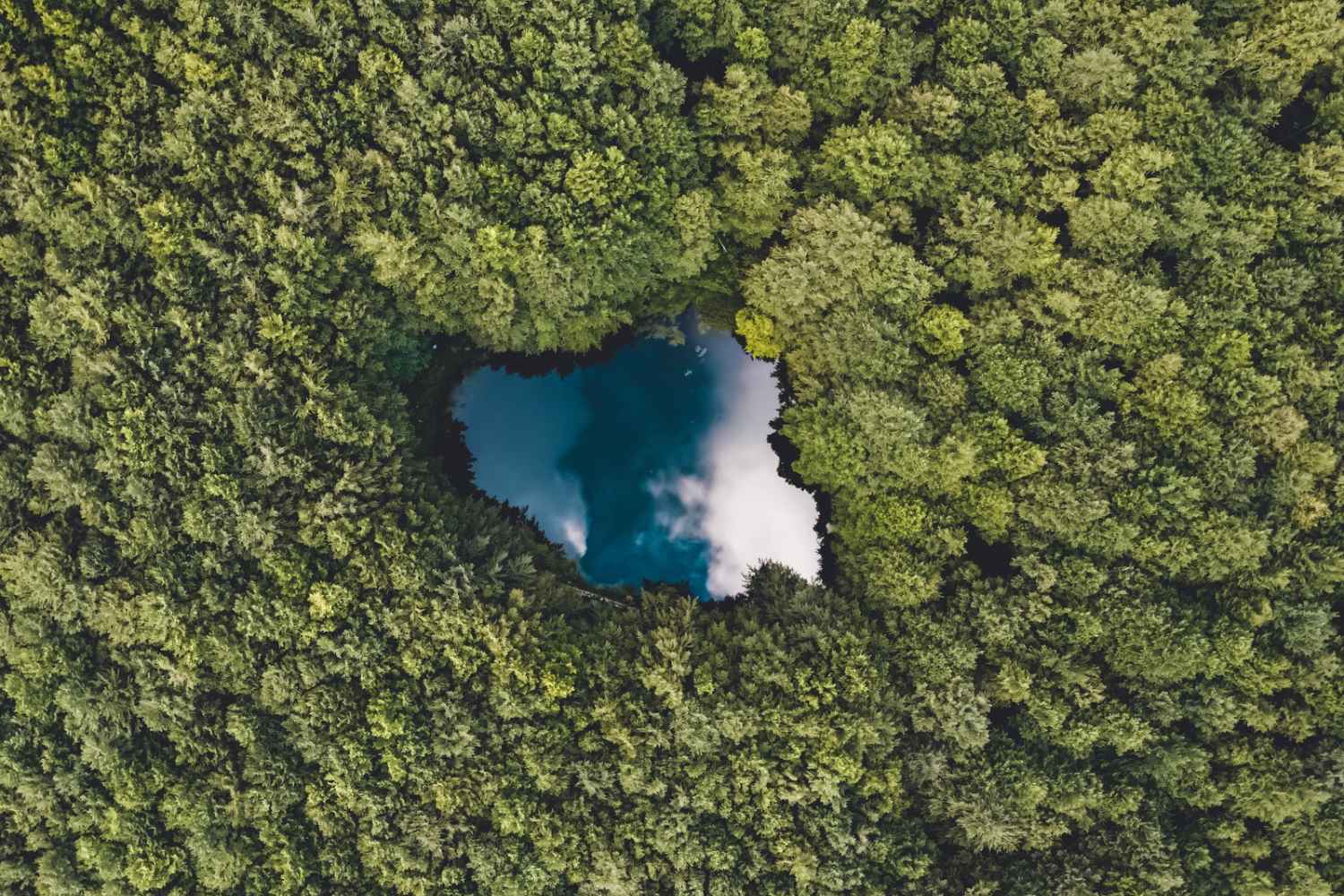
Emilia-Romagna, a region famous for its gastronomy and its cities of art, reveals a surprisingly green soul, especially in its Apennines. A recent study by the Emilia-Romagna Region has highlighted a record of woodiness which sees the territories of the Emilia Tourist Destination – Visit Emilia as the undisputed protagonists, with the provinces of Parma, Piacenza and Reggio Emilia acting as the leaders.
@Gianmarco Bozzia
The green heart of the Emilian Apennines
The most wooded municipalities: a record for Visit Emilia
According to the new table of woodland coefficients, approved by the Emilia-Romagna Region (determination no. 6273 of 31 March 2026, based on the 2025 regional forestry map), the three municipalities with the highest percentage of territory covered by forest are all located in the Visit Emilia area. On the podium go:
The first two are located in the Alta Val Taro, in the province of Parma, while the third is located in the upper Val Trebbia, in the Piacenza area. This data is not isolated: 7 of the 10 greenest municipalities in the entire Emilia-Romagna and 14 of the top 20 are located between Parma, Piacenza and Reggio Emilia. In these three provinces, 31 out of 132 municipalities boast forest cover exceeding 50% of their surface area.
Not just primates: widespread biodiversity
In addition to the podium, other municipalities in the Emilian Apennines show high percentages of woodland. We find Cerignale (PC) with 81.2% and Zerba (PC) with 80.4%, followed by Compiano (PR) (79.3%), Bardi (PR) and Berceto (PR) (both 78.0%), Valmozzola (PR) (77.9%) and Ferriere (PC) (77.6%). These areas represent a true mosaic of valleys – Val Taro, Val Ceno, Val Trebbia, Val Nure, Val d’Aveto, Valli del Parma and Enza – where the forest is not a simple outline, but the landscape itself.
As Simone Fornasari, president of Visit Emilia, underlines, «These numbers confirm what those who live and those who visit our mountains have always known: the Emilian Apennines are a large inhabited forest. Having the regional podium and seven of the top ten most wooded municipalities is a source of pride, but above all a responsibility. These woods are a heritage of biodiversity, water, clean air, and are also the reason why so many travelers choose to walk, cycle and stop in our villages.”
Visit Emilia: a certified sustainable tourism model
The natural richness of these territories fits perfectly with another significant achievement: Visit Emilia recently obtained certification from the Global Sustainable Tourism Council (GSTC). This international body sets global standards for sustainable tourism, and Visit Emilia has become the largest certified destination in the Western world, covering the provinces of Parma, Piacenza and Reggio Emilia with their 8,324 km² and approximately 1.28 million inhabitants.
The GSTC certification evaluates stringent environmental sustainability criteria, from the protection of parks to the management of natural resources. The Tuscan-Emilian Apennines, with its Tuscan-Emilian Apennines National Park and the UNESCO MaB Biosphere Reserves (Tuscan-Emilian Apennines and Po Grande), play a crucial role, demonstrating a concrete commitment to safeguarding a heritage that is both to be admired and preserved.
This recognition is the result of the «Sustainable Emilia» project, which involved a year of work and numerous participatory meetings in the area, with the release by the certification body Vireo and the accompaniment of Virtou.
The next time you immerse yourself in the paths above Bedonia, in the Alta Val Trebbia or on the Ventasso ridge, you will know you are in the pulsating green heart of Emilia-Romagna. An experience that invites you to breathe deeply, appreciating the beauty and vitality of a region that has been able to make its nature not only a resource, but a true model of sustainable development for the future of tourism.
