
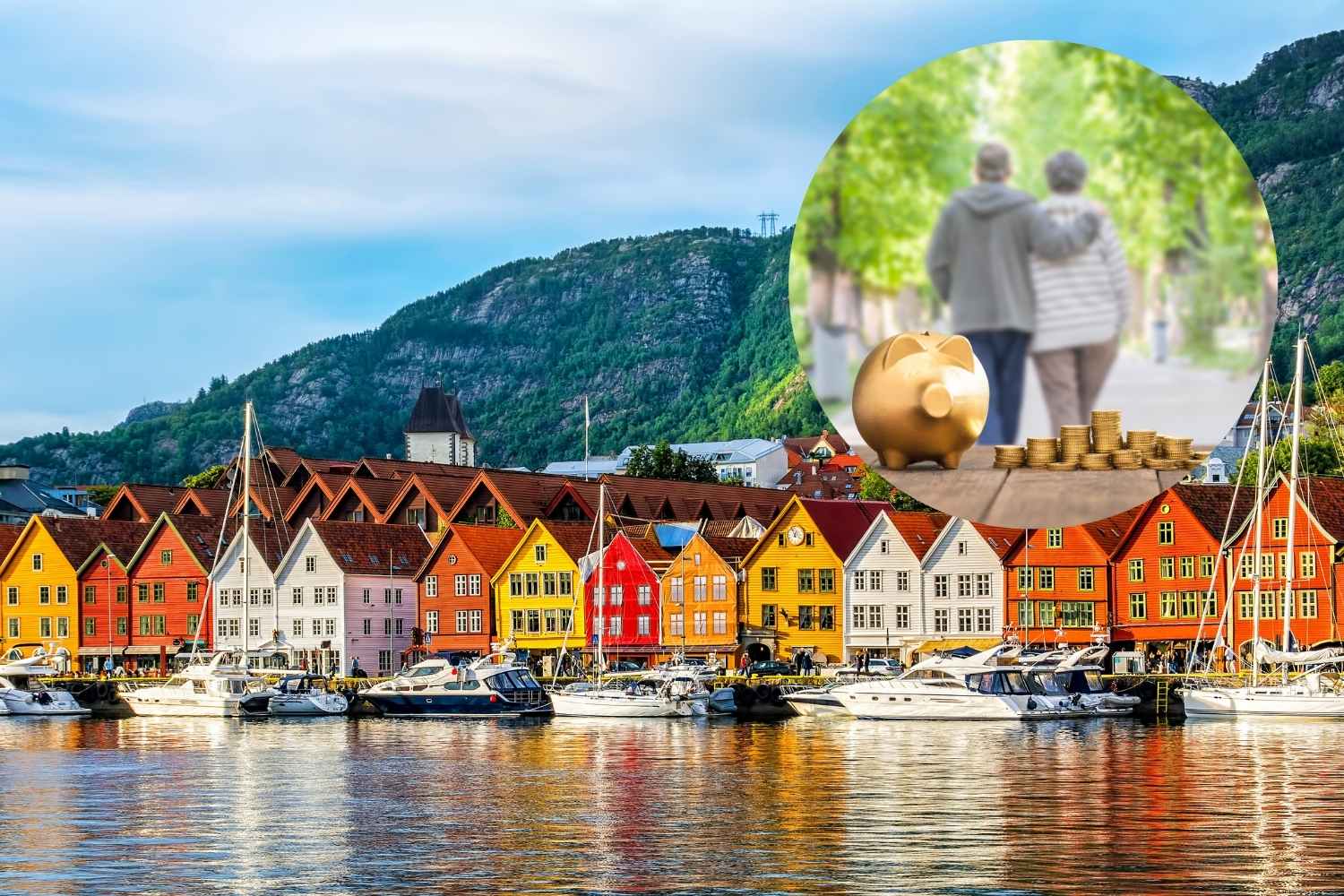
Retirement is no longer synonymous with immobility and sacrifices, on the contrary, for many people it represents a second life, an opportunity to move where the cost of living is sustainable, the services work and the environment offers serenity. More and more people are choosing to leave their country of origin to discover destinations that guarantee economic stability and concrete well-being. But what are the best places to face this phase of life with peace of mind?
The answer comes from the Global Retirement Index 2025, the annual study by the French investment bank Natixis that analyzes the preparedness of 44 advanced economies to support an aging population. The report offers a detailed snapshot of living conditions for pensioners, based on concrete data and measurable indicators.
How the Natixis index works
Since 2012, the Global Retirement Index has assessed retirement security through 18 indicators divided into four key areas:
The dominion of Northern Europe
The 2025 ranking rewards Northern Europe without hesitation. Norway, Ireland, Switzerland, Iceland, Denmark and the Netherlands occupy the top six positions, followed by Australia, Germany, Luxembourg and Slovenia. These countries share some key elements: advanced welfare, strong social cohesion and the ability to support an elderly population without risking economic stability.
The Nordic systems demonstrate that it is possible to build inclusive societies, where those who have worked a lifetime can rest with dignity, a discourse that has nothing utopian about it, because it is founded on concrete models, based on precise political choices, targeted public investments and a culture of solidarity that pervades the institutions.
Norway, a pensioner’s paradise
With a score of 83%, Norway takes first place. The healthcare system works excellently, unemployment is very low and the income distribution is balanced. The sovereign fund fueled by oil revenues supports a welfare system that offers top-level services without compromising public finances.
Since 2012, Norway has never dropped from the top three positions in the ranking, a consistency that demonstrates a structural solidity that goes beyond individual governments and economic contingencies. Those who choose Norway know they will find a stable, safe environment that is attentive to the needs of the elderly.
The Rise of Ireland

Ireland ranks second thanks to consolidated economic stability in recent years. Inflation is under control, economic growth is proceeding at a rapid pace and fiscal policies protect citizens’ savings. The healthcare system also shows continuous improvement, which has helped make the island an attractive destination for anyone seeking financial security and general well-being.
Switzerland, Iceland and Denmark: nature and quality
Three nations representing different but equally effective models. Switzerland excels for the efficiency of its healthcare system and high life expectancy, Iceland stands out for its social cohesion, low levels of crime and attention to environmental sustainability, while Denmark focuses on innovation, quality public services and mutual trust between citizens and institutions.
In all three cases, the balance between material well-being and quality of life is evident. They are not perfect countries, but they have built systems that work for those who age.
Small states, big results
The Netherlands and Luxembourg maintain high positions thanks to stable economies and a governance capable of responding quickly to the needs of the elderly population. Slovenia closes the Top Ten, demonstrating that even Central European countries can build effective social protection networks.
The difficulties of large countries
Among the major economies, only Germany enters the Top Ten. The United Kingdom (14th), Canada (20th), the United States (21st) and South Korea (22nd) occupy lower positions. The size and complexity of these states seem to make it more difficult to guarantee economic stability and widespread well-being.
Marked inequalities, prolonged inflation and fiscal instability compromise the economic serenity of pensioners in large economies, which struggle to offer the social cohesion that characterizes the Nordic nations.
And Italy? Lights and shadows on retirement in the Bel Paese
Italy ranks 29th in the Global Retirement Index 2025, gaining two positions compared to the previous year while maintaining an unchanged score. The strengths of our country concern Health (22nd) and Quality of Life (24th), while the most significant improvement comes from Material Wellbeing, which rises to 27th place thanks to the reduction in unemployment.
On the health front, Italy shines for life expectancy, taking eighth place in the world as the effects of the pandemic ease. The results for water and sanitation (9th) and environmental factors (19th) were also excellent.
The real Achilles’ heel remains the Finance area, where Italy ranks 40th for the third consecutive year. Fiscal pressure (42nd), public debt (41st) and dependency on the elderly (41st) represent structural critical issues that weigh on the sustainability of the pension system. The aging population reduces the workforce, while youth emigration threatens future economic growth, creating a vicious circle that is difficult to break.
Positive notes come from inflation, where Italy takes first place, and from interest rates (17th). In summary, the overall picture shows a country that guarantees a good quality of life, but which struggles to offer long-term financial solidity to its pensioners.
The top 10
We leave you with the top 10 positions in the ranking drawn up by the Global Retirement Index:
- Norway
- Ireland
- Swiss
- Iceland
- Denmark
- Netherlands
- Australia
- Germany
- Luxembourg
- Slovenia
