
While much of Rome’s south-eastern suburbs face ground temperatures exceeding 46 degrees every summer, there are areas of the city where the heat remains at decidedly more bearable levels. They are photographed by two satellite analyzes linked to Legambiente’s national campaign “Che calda che fa”: the first, signed by the Scientific Office of Legambiente Lazio, covers the period 2014-2024; the second, created with RSE as a technical partner, updates the data to 2015-2025. Both measure the average daytime temperature reached by surfaces — not that of the air — in the months of June, July and August.
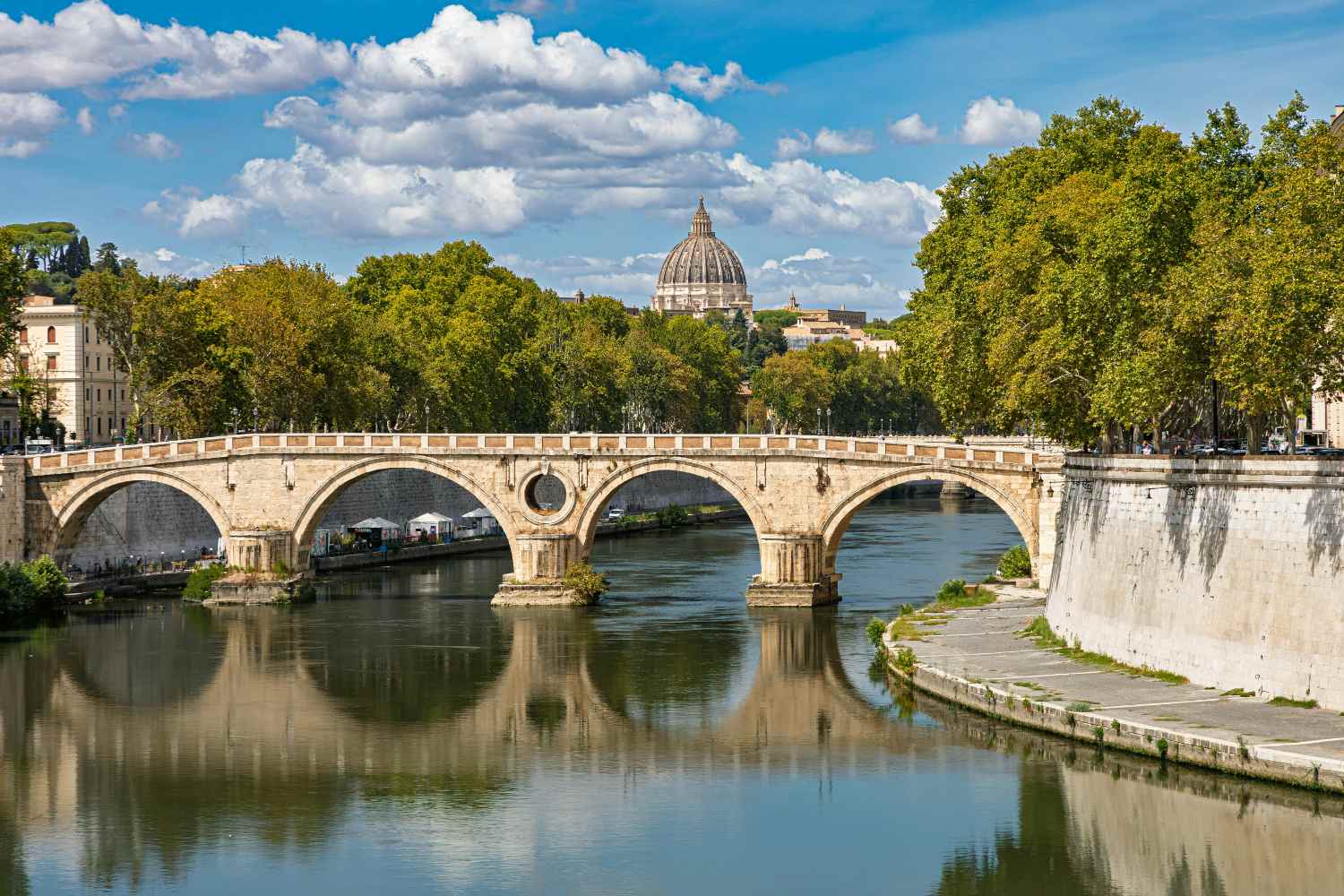
The common denominator of the cooler areas is always the same: large expanses of greenery, trees that provide shade, proximity to the sea or the Tiber and low density of concrete.
Natural areas: the real refuge from the heat
The absolute lowest temperatures are recorded in the large estates and pine forests of the city, far from traffic and construction:
The first report by Legambiente Lazio, relating to the decade 2014-2024, identified the coldest points of the entire city in Castel Porziano, in the pine forest of Castel Fusano, in the Trionfale area (Valle dell’Insugherata Nature Reserve) and in Villa Ada, even within the Grande Raccordo Anulare: a confirmation, in the most recent update, of the key role of green trees in mitigating the heat island urban.
The coast: the sea lowers the temperature
The coastal strip is also confirmed as one of the coolest areas, with noticeable differences even between the various neighborhoods of Ostia:
The figure for Ostia Nord is particularly significant: almost eight degrees lower than the hottest points of the city, demonstrating how much the sea breeze contributes to mitigating heat accumulation.
The cooler semi-central neighborhoods
Even outside the large green areas, some residential areas remain below 40 degrees, thanks to lower building density:
And the historic center?
The historic centre, although not appearing among the coolest areas of all, still maintains lower values (41.98°C) compared to the eastern suburbs, thanks to more widespread greenery with trees and less congested traffic compared to the peripheral arteries. A fact that overturns the cliché according to which the heart of the city is automatically the warmest: in Rome, if anything, it is the eastern and south-eastern suburbs – from Ciampino to Torre Angela – that suffer the most, thanks to the lack of greenery and the distance from the sea and the Tiber.
Because these areas remain cooler
The factors that all the cooler areas of the city have in common are always the same: presence of trees and shading, which according to the estimates cited in the reports can reduce the average surface temperature by up to half a degree for every 5% increase in tree cover; proximity to the sea or waterways; low density of artificial surfaces and limited vehicular traffic. On the contrary, the hottest areas of Rome share the opposite characteristics: strong urbanization, scarcity of greenery and distance from natural elements that could mitigate the heat.
Sources: “The hottest neighborhoods in Rome in the last 10 years” (Legambiente Lazio report, 2014-2024 data); report of the campaign “It’s so hot!” of Legambiente with RSE as technical partner (satellite data 2015-2025).
