
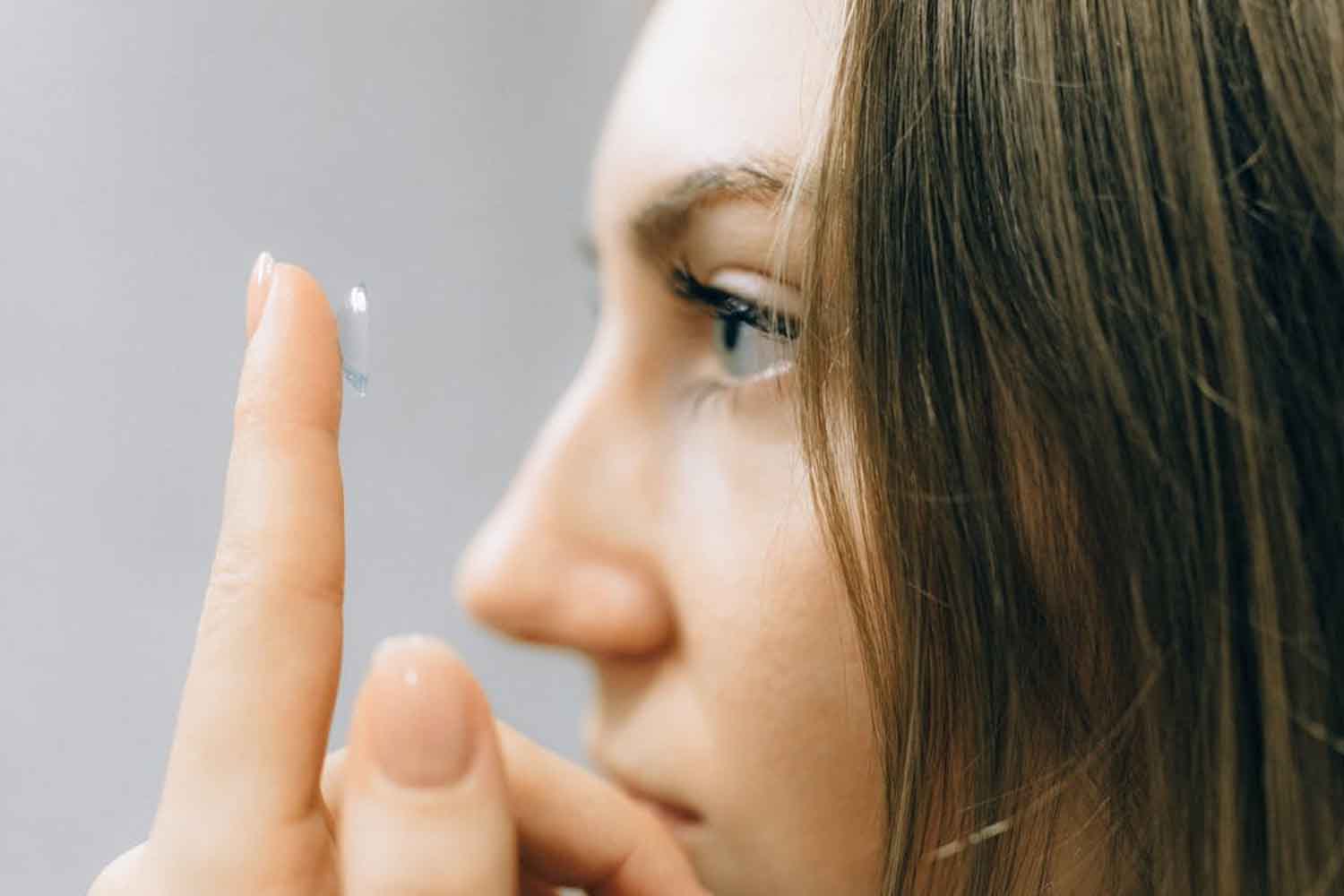
A contact lens usually helps you see better. In this case the idea is more subtle: using the eye as a small gateway to the brain, with light, targeted electrical impulses, almost as invisible as the device that produces them.
A group of researchers from Yonsei University, in South Korea, has developed a soft and transparent lens designed to stimulate the retina and influence, through visual circuits, some brain areas involved in mood regulation. The study, published on Cell Reports Physical Scienceconcerns a technology that is still experimental: for now it has been tested on animal models, with promising results after three weeks of treatment. The road towards possible use in people remains long and will require very rigorous clinical tests.
From the retina to the brain
The retina belongs to the central nervous system and communicates directly with the brain. The researchers’ hypothesis was born from this anatomical relationship: stimulating the eye to reach, in a less invasive way, the circuits linked to mood.
The lenses were designed with ultra-thin electrodes made of gallium oxide and platinum, materials chosen to keep the device flexible, transparent and suitable for the surface of the eye. The stimulation uses a principle called temporal interference: two electrical signals travel separately and are activated only at the point where they meet, concentrating the effect in the desired area.
The image used by the researchers themselves is simple: two weak beams of light which, by overlapping, create a more intense point. Something similar happens with electricity. The electrodes remain on the lens, while the useful stimulation is concentrated deeper, on the retina.
Promising results, with caution
In laboratory testing, animals treated with these lenses showed improvement in some behavioral, neural and biological signals associated with depression. After three weeks, the researchers observed an effect comparable to that of fluoxetine, the active ingredient in Prozac, along with a restoration of connectivity between the hippocampus and prefrontal cortex, areas involved in emotional and cognitive processes.
Changes in biomarkers were also recorded: reduction of inflammatory molecules in the brain, decrease in corticosterone in the blood and increase in serotonin levels compared to the control group. They are interesting data because they concern multiple levels together: behavior, brain activity and biological response.
Caution, however, remains an integral part of the news. Animal experiments are used to understand whether a path makes sense, safety and potential. Arriving at a therapy that can be used by people requires other steps: tests on larger animals, long-term safety evaluations, clinical studies, comparison with already available therapies and attention to possible side effects. A device applied to the eye and connected to brain stimulation will have to pass very strict controls.
A frontier still far away
This research is part of the field of neuromodulation, i.e. the use of electrical or magnetic stimuli to modify the activity of the nervous system. Today, for some mood disorders resistant to traditional treatments, techniques such as transcranial magnetic stimulation or, in selected cases, more invasive approaches already exist. A contact lens would have obvious appeal: it would be small, wearable, theoretically easier to use.
The researchers also imagine future applications for anxiety, addictions and cognitive decline. For the moment we are in the territory of preclinical research, where a good idea has yet to prove itself to be safe, stable and truly useful in real life.
The eye, in this research, is treated as something more than a surface to be corrected with a lens. It becomes a possible gateway to the brain. An everyday object, soft and transparent, is transformed into a small bioelectronic device. To the eye it seems like almost nothing. Inside, though, it brings a huge question about how some therapies might change in the coming years. For now it remains there: on the research bench, with encouraging results and many tests ahead.
You might also be interested in:
