
“Europe is suffocating under the weight of its own emissions”. This is what emerges from the new 2025 ranking of Ener2Crowd, the Italian crowdfunding platform specialized in energy efficiency projects, renewable energies and environmental sustainability. On the podium of the most polluting cities on the continent there are Moscow, with over 141 million tons of equivalent CO₂, Istanbul (87.4 m) and St. Petersburg (53 m).
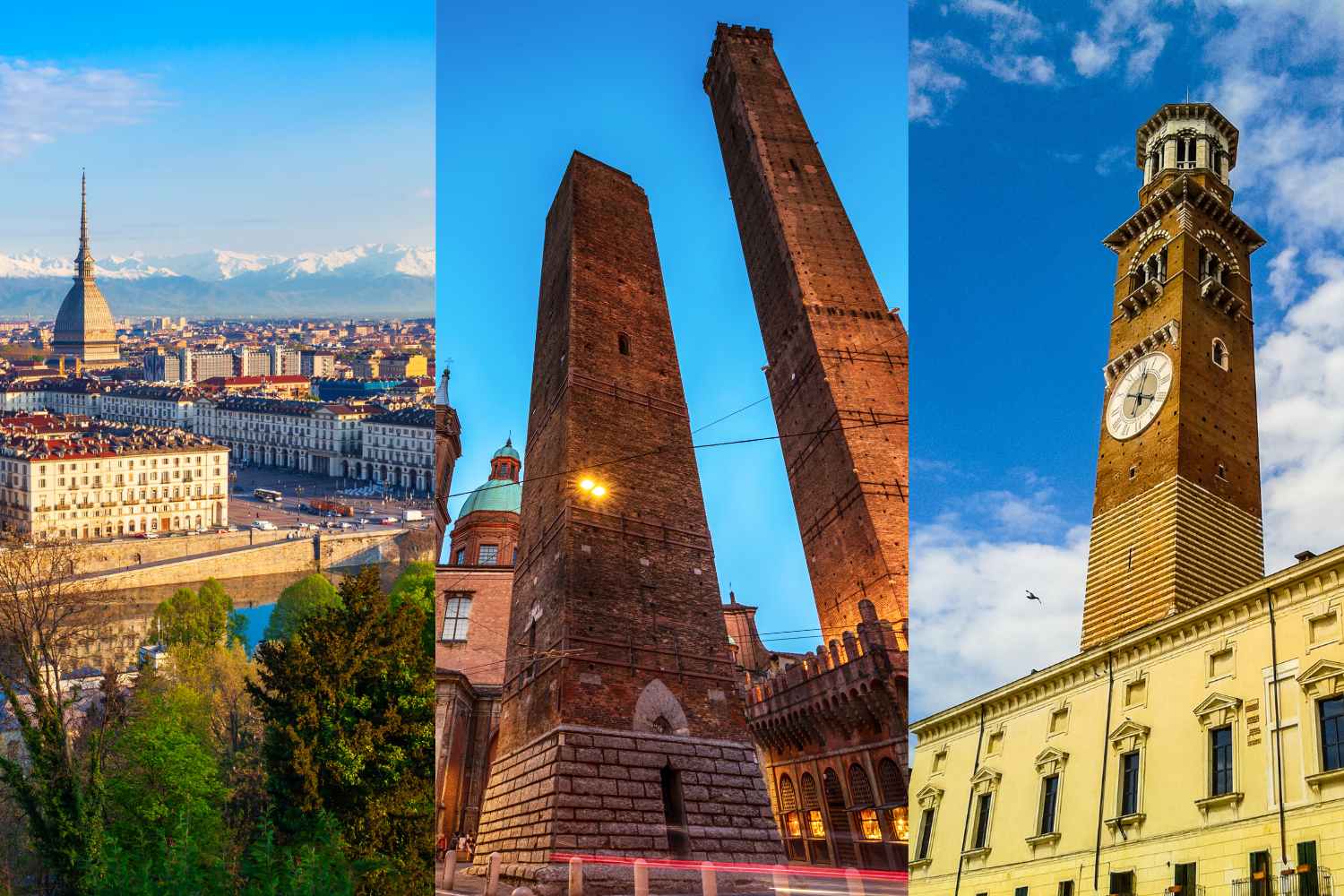
Italy is also involved: Turin is the most polluting seventh city in Europe, with about 23 million tons of Co₂ entered into the atmosphere every year, more than metropolises such as Paris or Amsterdam. Bologna is twelfth with 7.3 million tons. Twenty -twoths is Piacenza, with 1.6 million tons.
The urban paradox: little space, many emissions
Cities are just 2% cover the earth’s surface, but are responsible for 85% of global emissions. A figure that explains how urban centers are at the same time productive poles and main engines of the climatic crisis.
Ener2Crowd analysts remember that 90% of large world cities are already exposed to risks such as floods, heat waves, water crises and infrastructure damage.
The Italian primacy
In Italy the primacy is up to Milan and Turin, the first two more polluting cities in the country. Immediately behind you find Monza, Como and Padova.
“Turin, in addition to being the most polluting in Italy, is also the second most polluting city, immediately after Milan”, underline the analysts of Ener2Crowd. These urban centers are also the most vulnerable to extreme heat, aggravated by the emissions they produce.
Extreme heat: the direct consequence of emissions
“The extreme heat we are experiencing is not an exception, but the most tangible face of the climatic crisis,” said Niccolò Sovico, CEO of Ener2Crowd. The heat wave brought by the anticyclone Caronte was an evident example. Turin, for building density, traffic and geographical conformation, is an emblematic case of cities that contributes massively to emissions and which at the same time pays a high price in terms of livability.
What would serve (and how much it costs)
According to Paolo Baldinelli, Ener2Crowd Executive Chairman, to hit the climatic objectives would be used 600 billion euros more every year to finance clean energy projects and reduce emissions by 45% by 2030. Without a rapid action, extreme heat, water crisis and sanitary problems risk becoming normal in our cities.
Moscow, Istanbul, Turin: different contexts, but united by the same responsibility. The cities are today the most polluting realities and at the same time the most affected by the effects of climate change.
