
There are those who defend the Amazon from illegal mining, those who protect the forests of the Congo and those who pass on ancestral knowledge to prevent entire ecosystems from disappearing. They are women and men who have been fighting on the front lines against deforestation for years, often without sufficient resources and with their safety constantly threatened. Now six of them have received international recognition. The International Union for Conservation of Nature (IUCN) has appointed the first six Ambassadors of Indigenous Peoples for Primary Forests, choosing as many leaders from Brazil, Peru, the Democratic Republic of Congo, Gambia, Indonesia and Thailand.
The nomination was announced during the COP17 on biodiversity, underway in Yerevan, Armenia, from 19 to 30 October 2026. A recognition that aims above all to bring back to the center of environmental policies those who, for generations, have taken care of some of the most precious ecosystems on the planet.
Because there is a reality that is too often ignored: indigenous populations are among the main protagonists of forest conservation, yet they continue to be poorly represented in decisions that affect their own territories.
Six stories of resistance, from the Amazon to the Asian forests
The new ambassadors were selected from 73 applications submitted by 69 organizations. The choice was guided above all by the concrete contribution to the protection of primary forests, together with the commitment to defending territorial rights and traditional knowledge.
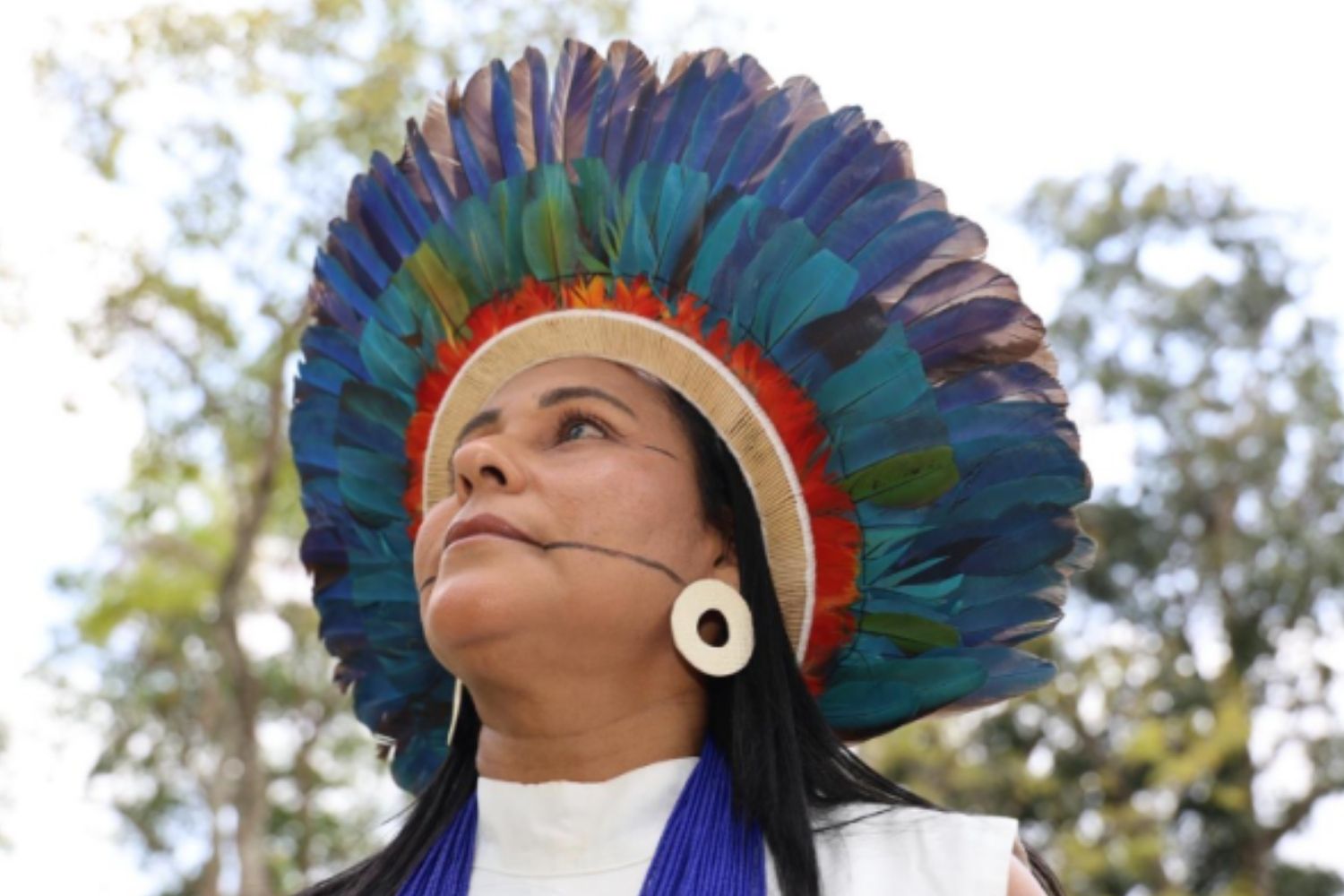
Among them is Puyr dos Santos Tembé, representative of the Tembé people in the Brazilian Amazon. For years it has worked to strengthen the management of indigenous lands in the Alto Rio Guamá and promote the recovery of ecosystems through community seed collection, cultivation of native species and agroforestry systems.
@Marcos Santo/IUCN
His commitment demonstrates how protecting forests can go hand in hand with creating sustainable economic opportunities for communities.
In Peru, Julio Cusurichi Palacios, Shipibo-Conibo leader from the Madre de Dios region, fights for the defense of the Amazon and the rights of indigenous populations. A fundamental part of its activity concerns the protection of territories inhabited by communities living in voluntary isolation or who have only had initial contact with external society, particularly vulnerable to intrusions and the exploitation of natural resources.
On the other side of the ocean, in the Democratic Republic of Congo, Joseph Itongwa Miukumo, Bambuti Mabuluko leader, works to obtain greater recognition of the territories managed by indigenous peoples and local communities. His contribution was also important in bringing the requests of these populations into national policies dedicated to biodiversity and forest management.
Then there is Herkulanus Sutomo Manna, Dayak Iban leader of the Sungai Utik community, in West Kalimantan, Indonesia.
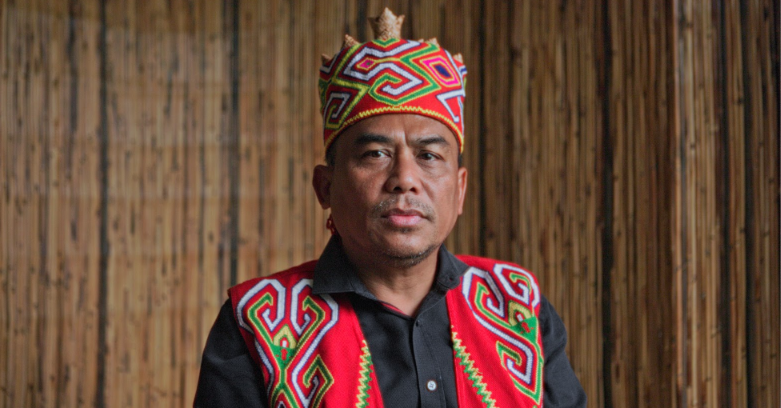
@Kynan Tegar/IUCN
Here the protection of the forest passes through a system that combines traditional rules, community surveillance, participatory mapping and agricultural practices passed down for generations. A model in which the conservation of nature is closely linked to the survival of culture and collective identity.
Maimuna Jawara, Manding leader of Gambia, instead works to safeguard traditional ecological knowledge between the Senegambia region and the Greater Virunga landscape in East Africa. Her work concerns the protection of sacred groves, mangroves and medicinal plants, with particular attention to the role of women in the management of natural resources.
The group is completed by Pirawan Wongnithisathaporn, an indigenous Karen activist from Thailand, committed through the Asia Indigenous Peoples Pact to bringing the demands of indigenous communities into international negotiations on climate and biodiversity. At the heart of its work are land rights, community forest management and the participation of indigenous women and girls in decision-making processes.
Six different paths, united by the same belief: protecting a forest also means defending the people, cultures and knowledge that made its conservation possible.
Primary forests are disappearing and we cannot simply replant them
But why is it so crucial to protect these forests? Primary forests are ecosystems that retain their natural characteristics and in which no significant alterations due to human activities are visible. These are complex environments, developed over very long periods, which host an extraordinary variety of animal and plant species.
According to data reported by the IUCN, approximately 1.18 billion hectares of primary forests remain in the world. These ecosystems can store 30 to 70% more carbon than other types of forest, helping to limit the accumulation of carbon dioxide in the atmosphere. But their role doesn’t stop there. Primary forests help regulate the water cycle, protect soils, influence the climate and help reduce the effects of extreme events such as floods and droughts. They are also irreplaceable habitats for many species. Yet they continue to disappear under the pressure of intensive agriculture, infrastructure expansion, deforestation, mining and illegal resource exploitation.
It is estimated that approximately 30% of the primary forest cover present before industrialization has already been lost. The problem is that a primary forest cannot be recreated simply by planting new trees.
A reforestation intervention can certainly contribute to the recovery of a degraded territory, but it is not able to quickly reproduce the ecological complexity of a forest that has developed over the centuries. The relationships between plants, animals, fungi and microorganisms, as well as the characteristics of the soil, take a very long time to form. This is why protecting forests that are still intact is as essential as recovering those that have already been damaged.
Defending forests also means recognizing the rights of indigenous peoples
The IUCN recognition brings attention to another aspect often overlooked in the environmental debate: we cannot seriously talk about biodiversity conservation without also addressing the issue of the rights of indigenous populations. Several studies have highlighted how territories managed by indigenous communities can experience lower levels of deforestation and forest degradation, thanks to land management systems and practices developed over generations.
Yet these populations often find themselves at odds with enormous economic interests, from the logging industry to mining, to the expansion of large-scale cultivation and criminal organizations. Making their work even more difficult are the lack of funding, the weakness of legal protections and, in some territories, threats and violence against those who defend the environment.
“Around the world, indigenous leaders work tirelessly to defend our primary forests, often with limited resources, inadequate legal protections and grave risks to their own security,” said Grethel Aguilar, IUCN Director General.
Aguilar also underlined how guaranteeing the territorial rights of indigenous populations and respecting their traditional knowledge represents one of the most effective tools to protect forests and biodiversity. It is therefore not just a question of obtaining better environmental results, but also of recognizing rights, dignity and justice to communities that are too often excluded from decisions on the future of their lands.
