
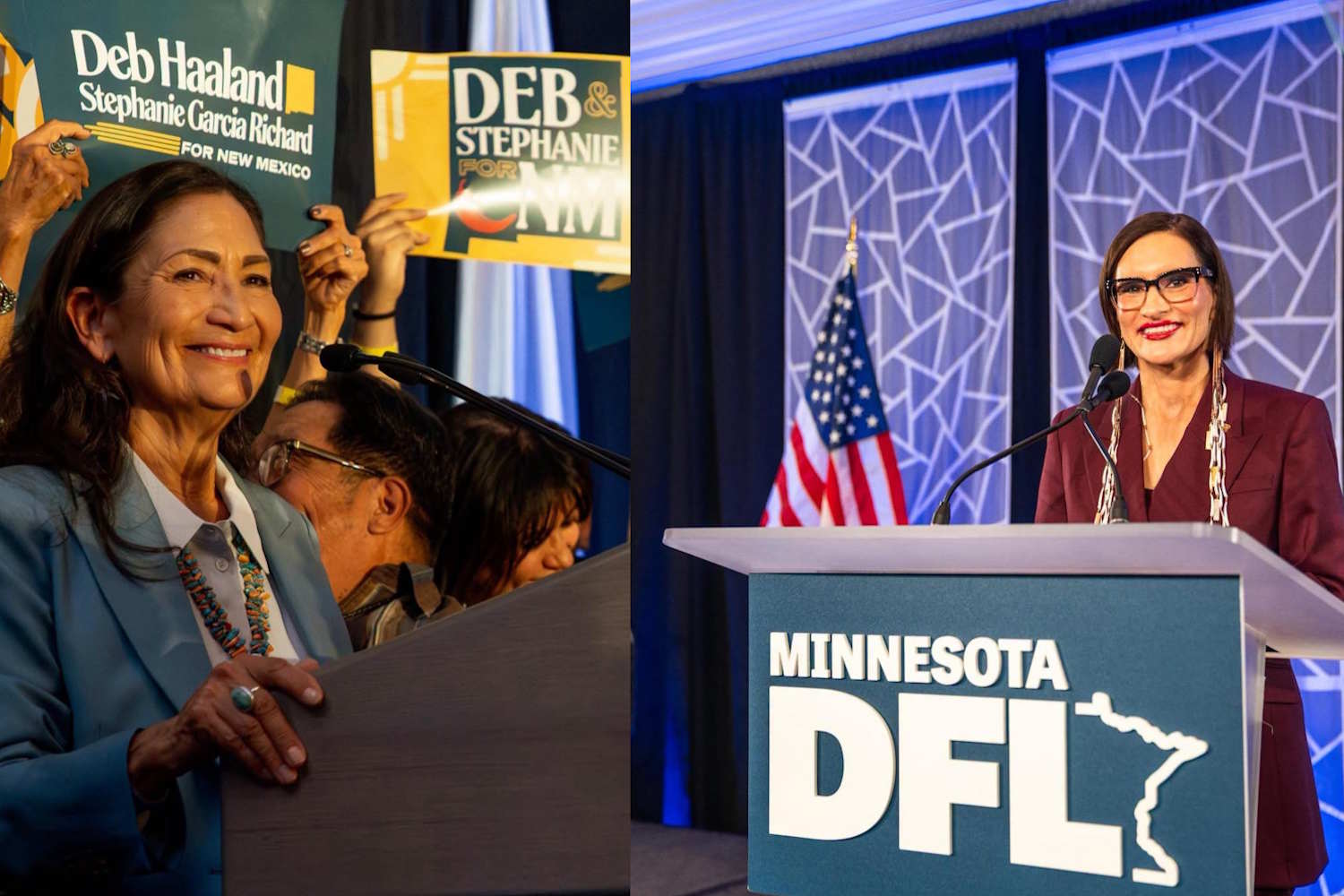
It took centuries for a Native American woman to sit in the United States Senate. And equally so that a woman belonging to an indigenous community could lead an American state.
They are Peggy Flanagan And Deb Haalandwho signed a historic victory in the midterm elections: Flanagan was elected senator in Minnesota, defeating the Republican Michele Tafoya, while Haaland won the race for the governorship of New Mexico against the Republican Greggory Hull.
For Native American communities, long excluded from the places where political decisions are made, it means finally seeing recognized a presence that has too often been ignored in the history of the United States.
View this post on Instagram
Peggy Flanagan, the first Native American woman in the Senate
Peggy Flanagan, 47, belongs to the White Earth Band of Ojibwe community, one of the indigenous peoples of Minnesota. Already deputy governor of the state, she built her political career dealing with rights, education, families and access to essential services.
With the victory on Michele Tafoyaformer sportscaster and Republican candidate, becomes the first Native American woman elected to the federal Senate. He will take the place of Democrat Tina Smith, who has decided not to run again.
Before the vote, Flanagan had expressed a specific hope: that indigenous girls, looking at her candidacy, could imagine a future in politics for themselves too. A message that today takes on an even more concrete meaning: for the first time, a Native American girl will be able to see a woman from her community represented in the upper house of Congress.
View this post on Instagram
Deb Haaland, from history to Congress leading New Mexico
For Deb Haalandbelonging to the Laguna Pueblo community, is not the first time a glass ceiling has been shattered.
View this post on Instagram
In 2019, she was, along with Sharice Davids, one of the first two Native American women to enter the House of Representatives. In 2021, she had become the first Native American person to hold a federal government position as Interior Secretary in Joe Biden’s administration.
Now comes another first: she is the first Native American woman elected governor in the history of the United States. Haaland defeated Greggory Hull, former mayor of Rio Rancho, to win the leadership of New Mexico.
A victory that goes beyond politics
Native American men had already held positions as governors and senators. Women, on the other hand, had never achieved these roles. Until today. A victory, therefore, in every respect: two indigenous women at the top of American politics on the one hand, and finally the right of their communities to be heard and represented, even in issues concerning tribal sovereignty, territories and natural resources.
For centuries, in the States, attempts have been made to erase the language, culture and identity of the Native American peoples. Thousands of children were torn from their families and sent to boarding schools where they were forbidden to speak their own language and practice their own traditions. Entire communities have been persecuted, deprived of their lands and forced to fight to preserve their memory.
The victories of Peggy Flanagan and Deb Haaland take on a truly immense meaning in light of this. Two women belonging to those peoples, marginalized by American institutions for generations, today come to occupy roles that no Native woman had ever held before.
For centuries, Native American women have helped preserve languages, cultures and traditions, facing discrimination and battles for the recognition of their rights. Today two of them enter places of power that have remained inaccessible for too long.
