
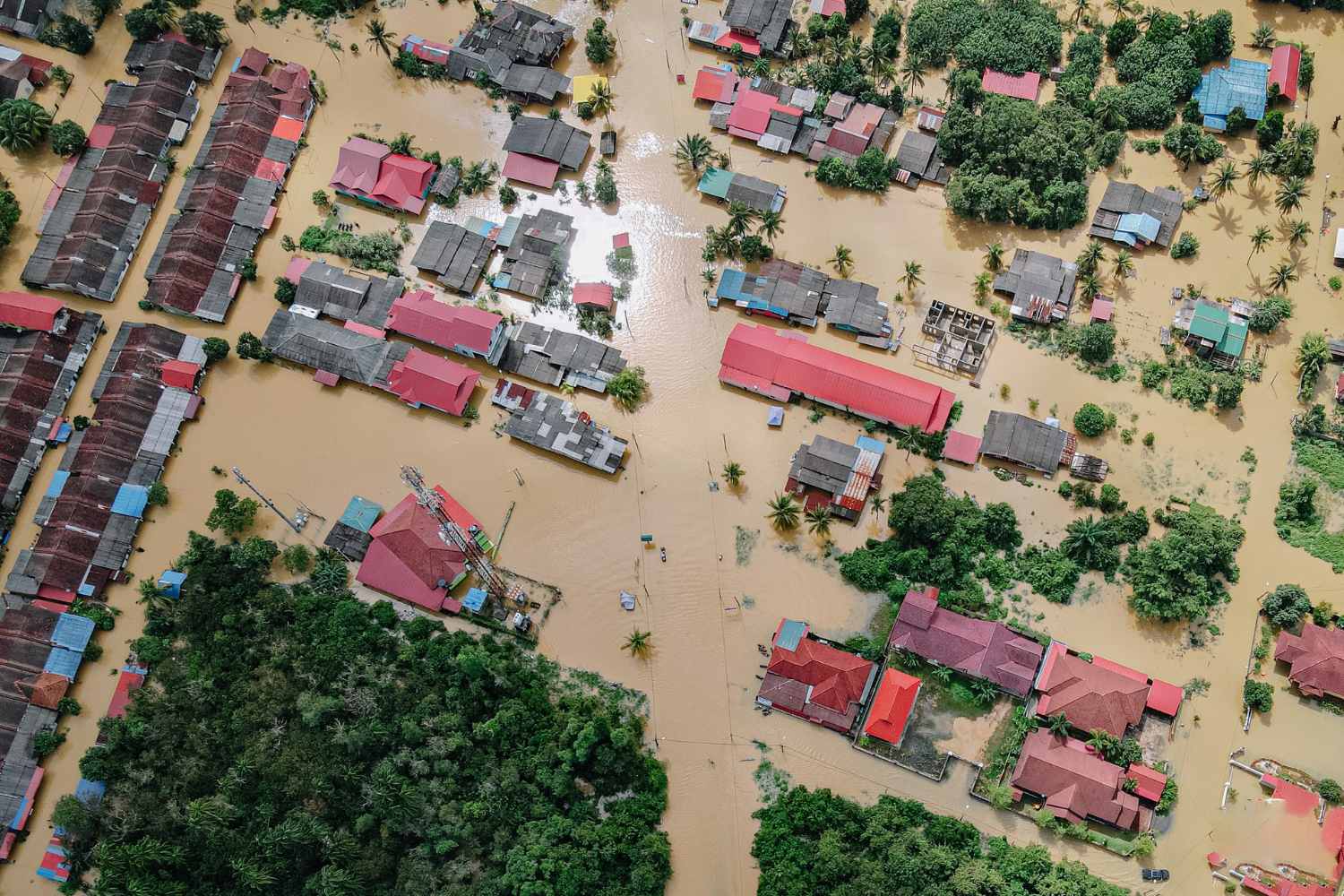
Belém, Brazil. In the city overlooking the Amazon, COP30 opens with a message that leaves no room for ambiguity: the climate crisis is no longer a future risk, but a permanent condition of the present.
Germanwatch, an independent organization based in Bonn, has chosen this symbolic context to present the Climate Risk Index 2026 (CRI), one of the most anticipated and influential reports on the topic. The analysis covers thirty years of extreme events, from 1995 to 2024, and the verdict is unequivocal: 832,000 victims and 4.5 trillion dollars in economic losses.
Behind the numbers there is a story of vulnerability and imbalances. The CRI not only measures the violence of weather events, but the ability of countries to prevent, mitigate and recover from them. It is in this intertwining of climate and structural fragility that the geography of global risk is drawn.
In the long term, Italy ranks 16th among the most affected countries. This is not a simple statistic: it is the sign of growing vulnerability in a continent that is warming at double the world average. The heat waves, floods and droughts of recent years show how the Mediterranean is now an epicenter of the climate crisis.
Climate Risk Index 2026: Manifestations of extreme weather events have become too common in a new reality worldwide
Climate change raises contributes to transforming unusually extreme events into ongoing threats, creating a new normalhttps://t.co/MPCRfgXxv1
— Clean Energy Wire (@cleanenergywire) November 12, 2025
The cost of thirty years of extreme events
In the period 1995–2024, weather disasters resulted in more than 9,700 extreme events.
Heat waves and storms each caused about 33% of total casualties, while the latter held the record for economic damage — accounting for 58% of overall losses, about $2.64 trillion.
Floods, however, remain the phenomena that affect the greatest number of people: almost half (48%) of the population involved in extreme events in the period analyzed.
2024 was the warmest year on record. For the first time, the global average temperature has consistently exceeded the threshold of 1.5°C above pre-industrial levels. From Asia to Europe, heat waves have shattered local records and put the health of millions of people at risk.
Attribution science confirms that 74% of extreme events analyzed in recent years have been amplified by anthropogenic climate change. In 2024 alone, 41 additional days of dangerous heat were added for billions of individuals.
Global inequality: who pays the highest price
The CRI 2026 confirms a now structural disproportion: the countries of the South of the world, the least responsible for emissions, are those that suffer the worst impacts.
In the long-term ranking (1995–2024), Dominica, Myanmar and Honduras appear at the top. Six of the ten most affected countries fall into the lower-middle income bracket, none among the high-income economies.
The main cause is not only greater geographic exposure, but lower capacity to adapt and respond. The report highlights how many low-income nations remain stuck in a vicious cycle: high vulnerability, limited resources and fragile infrastructure.
Data gaps — especially on heat waves in sub-Saharan Africa — suggest that the real impact in poorer countries is even underestimated.
Europe and Italy in the grip of risk
As anticipated, Europe is now the fastest warming continent: double the global average since the 1980s. This trend fuels a sharp increase in heat waves, droughts and extreme precipitation.
In this context, Italy ranks 16th in the world for climate risk in the long term (1995–2024). A positioning that brings it together with advanced but exposed economies such as France (12 °C) and the United States (18 °C).
The events of 2024 demonstrate this: the heat wave that hit the Mediterranean in July would have been “virtually impossible without climate change” and is now 1.7–3.5 °C warmer than pre-industrial levels.
The drought in Sicily and Sardinia in September, with strong impacts on agriculture and water supplies, saw its probability increase by 50% due to climate alterations of human origin.
The report also highlights a risk management problem in high-income countries. In Italy, as in much of Europe, the response often remains reactive: action is taken after the emergency rather than prevention. An approach that amplifies impacts and increases costs.
The case of the floods in Spain in 2024, where timely warnings did not translate into effective local actions, is emblematic of this systemic fragility.
COP30: between legal obligations and political duties
CRI 2026 arrives at a crucial time. The COP30 in Belém is not just a technical negotiation, but a test bed to see if the international community is able to bridge the gap between words and resources.
Germanwatch identifies four priorities:
Adding to the urgency, in 2025 the International Court of Justice (ICJ) clarified that states have legal obligations to prevent and mitigate climate damage, including the duty to provide resources for adaptation and losses.
The Germanwatch index is indeed a list of data but also and above all a reminder of collective responsibility. If the climate crisis is the new normal, global politics and the global economy must adapt at the same speed. The alternative is to continue counting — year after year — the victims and costs of a risk that is no longer an emergency but our new everyday life.
