
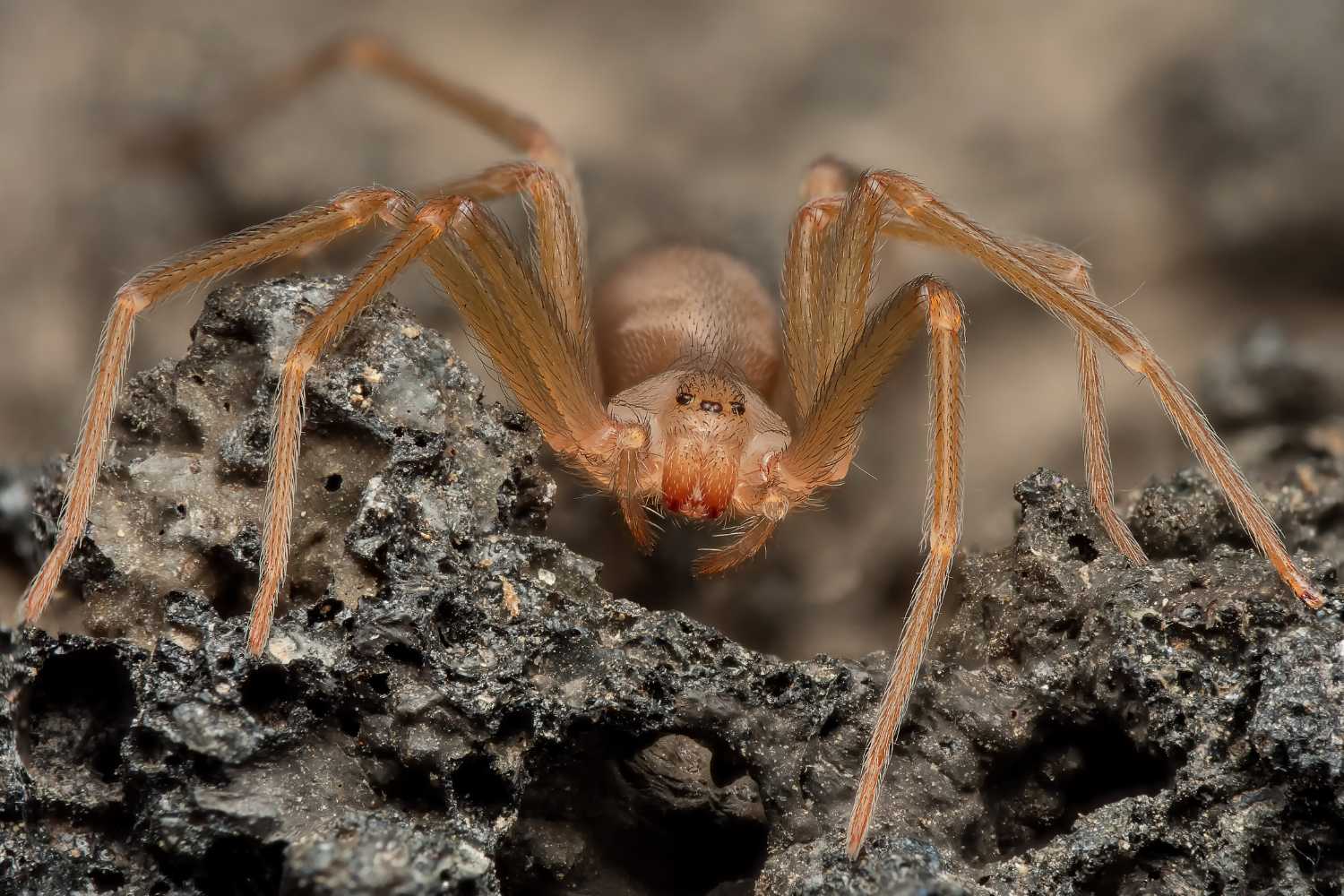
Small, silent and often ignored, lives in the shade of cellars and attics, between dusty boxes and old furniture. He does not have the bright colors of a butterfly, nor the threatening air of a hornet, even if he hides much more than an insidia.
We are talking about the violin spider, an arachnid belonging to the family of Sicarids Which, despite not having the aggressive nature, can cause important reactions if it comes into contact with human skin.
A discreet and inconspicuous guest
The violin spider – scientific name Loxosceles ruffescens – It is small in size: the body rarely exceeds the centimeter and the thin legs give it a fragile air. The curious name derives from a dark violin -shaped stain designed on the back. He does not like light, he prefers to take refuge in hot and repaired places, and often shares domestic spaces with us without being noticed.
The behavior is peaceful: it does not attack first and the bite usually occurs when feeling threatened. The problem is that, if this happens, the consequences can be series.
The bite and possible reactions
Unlike many insect bites that cause only a little itching, the bite of the violin spider can trigger much more intense reactions. The poison contains substances that damage tissues and can trigger skin necrosis. In the milder cases, the affected area becomes red, swollen and sore; In severe cases, an ulcerative lesion that takes weeks to heal can appear.
Symptoms do not always appear immediately: sometimes they spend hours before the skin starts to change color and hurt. Some people, especially those with a more fragile immune system or small children, can manifest fever, general malaise and nausea.
How to recognize it
Learning to recognize the violin spider is the first step to reduce risks. In addition to the characteristic violin -shaped stain, it has six eyes arranged in couples – an unusual detail, since most spiders have eight – the body is light brown or yellowish in color and the legs, long and thin, do not present evident hair.
It is active above all at night, which is why it can be easily hidden in shoes left in the cellar, under pile of clothes or inside work gloves. A habit that can transform any moment – how to put your shoes in the morning – into an unpleasant encounter.
Where lives
In nature he is in dry and repaired environments, but over the years he has learned to live with man. He loves the little disturbed places of the house: behind the paintings, among the slots of the battiscopa, inside the cartoons in the attic. It can also survive in the apartment, where she finds shelter and food thanks to the presence of small insects.
In Italy it is widespread in almost all regions, with a greater presence in the areas with a mild climate. The arrival in homes often takes place accidentally, transported by boxes, used furniture or firewood.
What to do in case of bite
If you suspect that she has been bitten by a violin spider, the first thing to do is to keep calm. Wash the wound with soap and water, apply ice wrapped in a cloth to reduce swelling and pain and go to the emergency room as soon as possible. A timely intervention can limit damage and accelerate healing.

It is useful, if possible, to capture the spider in a container and bring it with you, so as to allow doctors to identify the species. Avoid home remedies in the most absolute way the result of improvisation: in this case, the “do it yourself” can worsen the situation, better to contact the medical staff.
Prevent it is better than cure
Prevention passes from small precautions. Before wearing shoes and clothes left in the cellar or garage for a long time, shake them well, keep the less frequented spaces of the house clean and order, try to avoid the accumulations of unused boxes and objects. If you live in areas where the violin spider is particularly widespread, you can evaluate the possibility of sealing the cracks and entrance points.
Another advice is to install mosquito nets and protective networks in the most vulnerable points. It may seem an excessive measure for such a small animal, but the tranquility of knowing that they have reduced the risk is worth the effort, without forgetting the usefulness of these barriers in keeping the large mosquitoes, flies and other unwanted guests.
A small danger not to be underestimated
The violin spider is not the monster of horror films, and its bite is not lethal in most cases. It is, however, a guest of whom it is good to meet aspect and habits, so as to coexist safely: a little more attention is enough to avoid a very little desirable close encounter.
Don’t you want to lose our news?
