
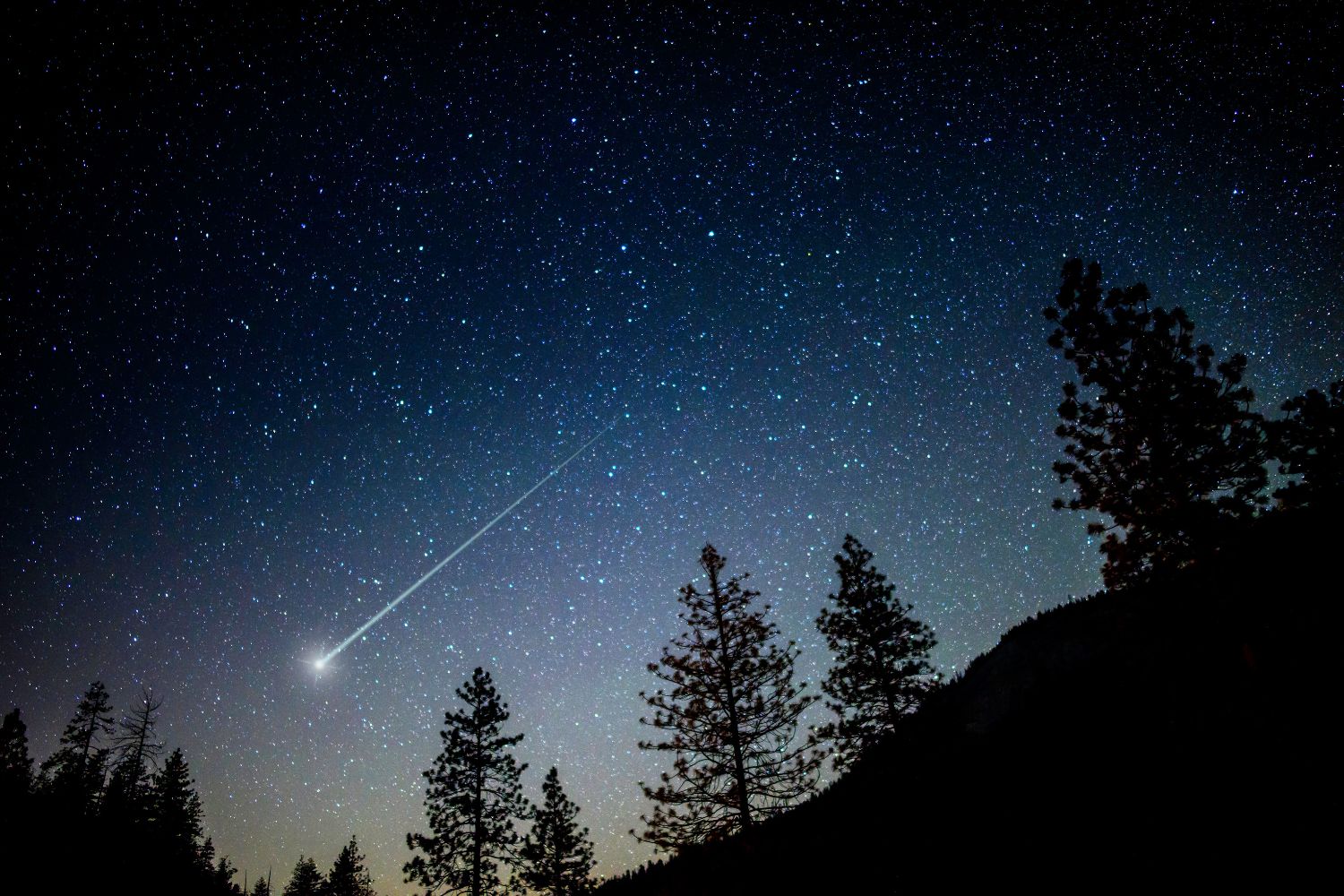
That special night We are about to live to greet August and welcome in September! After midnight they will shine the The Aurigidi Theta Aurigidi stars and before dawn Venus ”will immerse himself” in the Stellar Ambasso M44. Everything will be perfectly visible to the naked eye Tonight, we don’t miss it!
The falling stars
As the UAI explains, approaching the end of the month the Theta-Aurigidimeteors that reach their maximum in the night between 31 August and 1 September, with the radiant, or the point from which it seems that the meteors start, in the constellation of theCharioteer from which they take the name (on the map the Heaven of 1 September at around 1.30).
These shooting stars are very fast and, although rather rare (frequently about 6–10 per hour), they can always give us some beautiful and romantic surprise. We then take into account that on August 31st our satellite will be at First quartertherefore his disorder will be limited, offering us a greater probability of admiring some star “falling” in heaven.
The Venus conjunction – Pirection of the nativity scene
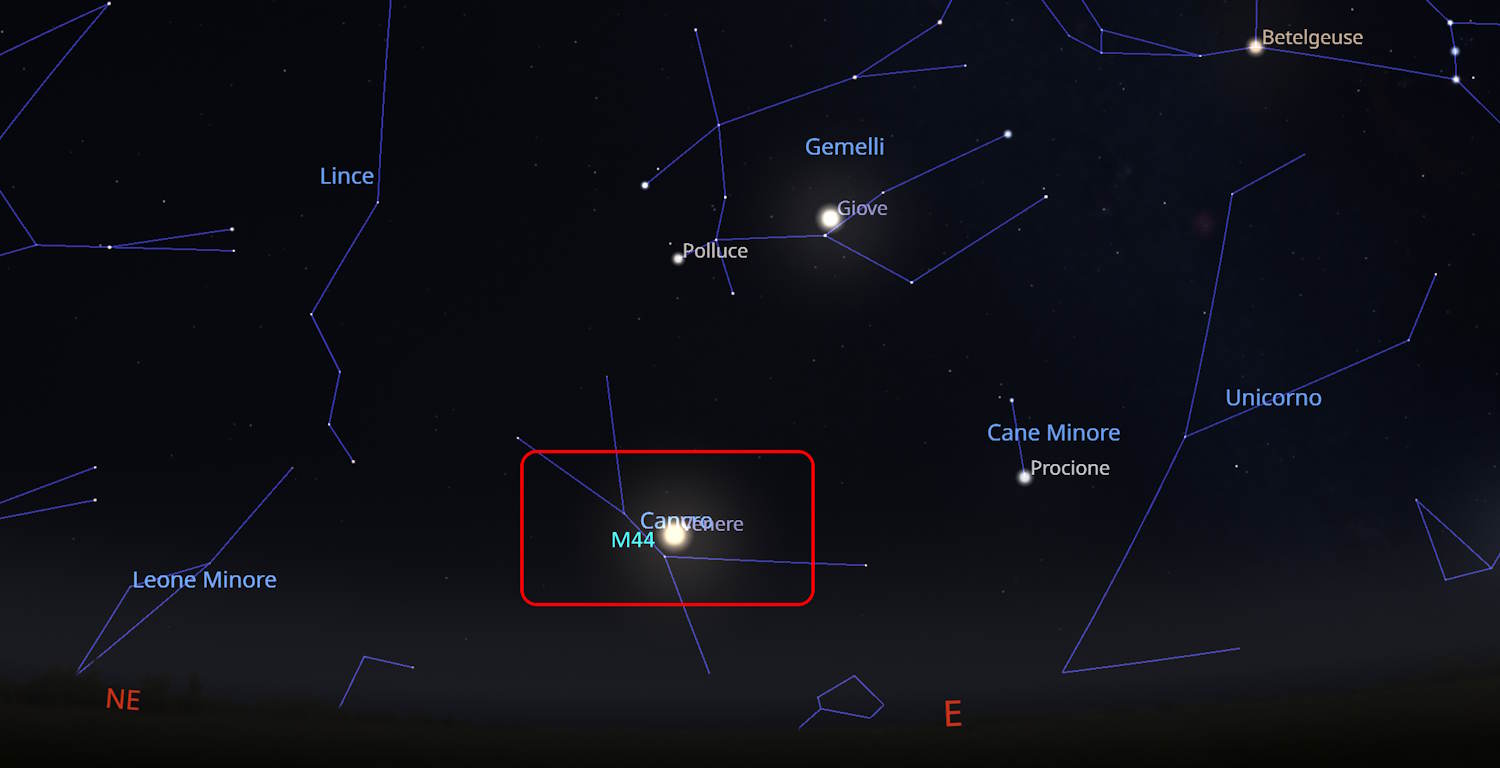
But it does not end there, because just before dawn on September 1st, Venus will cross the stellar cluster M44, also called open stellar cluster of the cribgiving us a show that, with a little luck, could also be seen to the naked eye (on the map the Heaven of 1 September 2025 at about 5.00).
Venus In fact, it is notoriously a planet of the Solar system easily identifiable without instrumental aids and, as Starwalk reportstheCrib clusterlisted in Messier catalog Like Messier 44 or M44, it can be identified in the Cancer constellation Also naked eyeas it is the Third object of luminous Messier Messier After the Pleiadi and the Andromeda galaxyand the second object Deep-Sky closer in the catalog after the Pleiadi.
In reality, however, with a naked M44 eye it can appear as a blurred bright spot in dark places without light pollutionand, reading the maps well, you can see even in less ideal conditions. But to better observe the stars, however, above all clearly distinct, it is preferable at least equip yourself with a good binoculars.
In addition, M44 is a open clusteras his stars, born approximately in the same period from the same gigantic molecular cloud, are linked together in a lasso way, and is rather “young” in astronomical terms, with an age included Between 600 and 700 million years (for comparison, our own Solar system About 4.6 billion years ago formed).
Let’s get ready for one special night with a double show And let’s not forget the desires!
Sources: UAI/AUGUST/UAI/SEPTEMBER
