
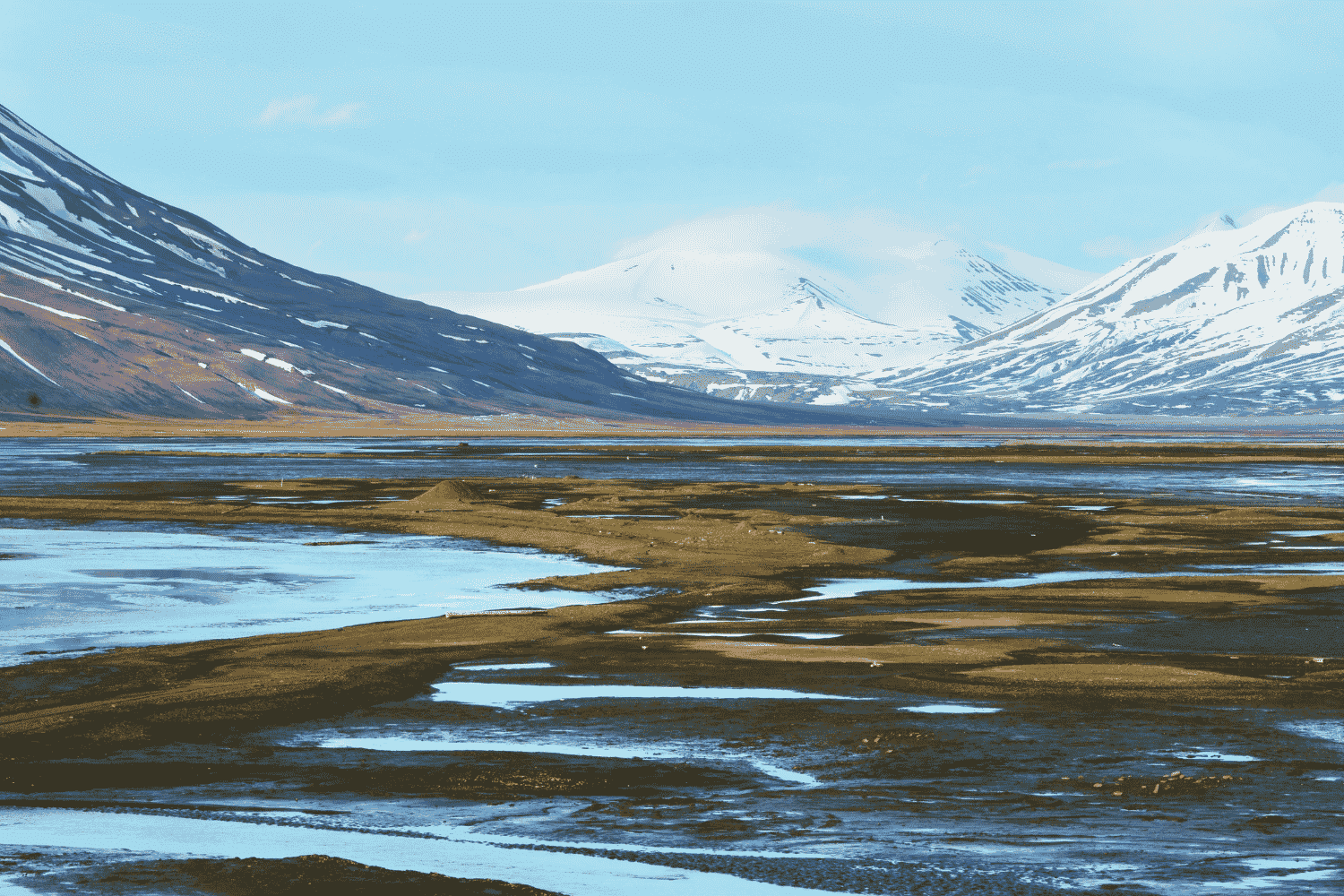
The glacier moves and shatters the rocks on which it flows. If those rocks contain trapped methane, movement can release it, and the water flowing at the base of the ice carries it downstream, to the rivers that arise from the melt. On Svalbard this process can bring the gas to concentrations up to 425 times higher than those in equilibrium with the atmosphere. This is demonstrated by a study published in Nature Communications, based on 148 samples collected in 19 rivers fed by as many glaciers of the Arctic archipelago.
The methane identified in the samples is almost never produced by microorganisms and is formed underground when the organic matter buried in the rocks is transformed by high temperature and high pressure, a process which in the area mainly affects formations rich in oil shale present under some glaciers. To distinguish it from biologically derived methane, the researchers compared the composition of carbon isotopes, variants of the same element that behave slightly differently depending on the origin of the gas, along with other hydrocarbons present in the samples. Only three of the 19 rivers showed a predominantly biological signature where they exited the glacier.
The role of rocks and water at the base
In the 19 rivers analyzed at the front of the glaciers, the point where the ice ends, methane concentrations ranged from 9 to 1700 nanomoles per liter, with an average of 244. The type of rock under the glacier alone explains more than half of the variability observed at the different sites. If to this figure we add the quantity of ice that is already at melting temperature at the base, a condition that allows water to flow and circulate, while the colder ice remains stuck to the ground, the ability to explain the differences between one glacier and another rises to 75%.
The phenomenon is accentuated when a network of channels forms under the glacier through which the water flows more actively. The three rivers with the highest concentrations (Penckbreen, Vallåkrabreen and Bakaninbreen) come from glaciers that have recently undergone sudden phases of advance, called surges. In these episodes the water pressure at the base increases sharply, and this seems to favor the release and transport of the methane accumulated in the underlying rocks.
Across the entire archipelago, researchers estimate that glaciers release between about 180 and 380 tons of methane each year, an underestimate because some of the gas can escape before it is measured, and because measurements do not necessarily capture the methane accumulated during the winter.
The gas continues to arrive even after the end of the glacier
In more than two thirds of the rivers studied (68%), the highest concentration of methane is not recorded at the front of the glacier but further downstream. For researchers, this indicates a further contribution from groundwater, which, flowing through the permafrost, i.e. the ground that remains frozen all year round, can intercept and transport more methane.
This balance could change as glaciers retreat. In the early stages of retreat, more water at the base tends to help release the gas. But when the ice thins further, some glaciers can cool until they freeze to the ground below, blocking the circulation of water: in that case the transport of methane from the rocks would decrease, while the role of groundwater could become more relevant.
The study therefore highlights a previously little-considered source of Arctic methane, linked to how much gas can be released from the subsoil when the ice changes and water begins to circulate at the base of the glaciers. Svalbard, the authors explain, is a particularly clear case because many of its glaciers rest on rocks rich in organic matter, but the same mechanism, they add, could also apply in other glacial regions with similar geology.
