
A plant that asks for nothing, but gives a lot
Just seeing it growing at the edge of a forest or along a dry stone wall is enough to understand that it doesn’t need anyone. The dog rose does not wait for someone to water it, fertilize it or protect it from the cold. It grows on its own, expands, flowers and bears fruit following its own rhythms, indifferent to conditions that would put any other ornamental plant in crisis.
Yet, despite this apparent simplicity, it is anything but banal. It is a shrub with an arched shape, with long, flexible branches that curve outwards and hooked thorns that serve both as defense and as an anchor among the vegetation. A structure designed by nature to last and expand.
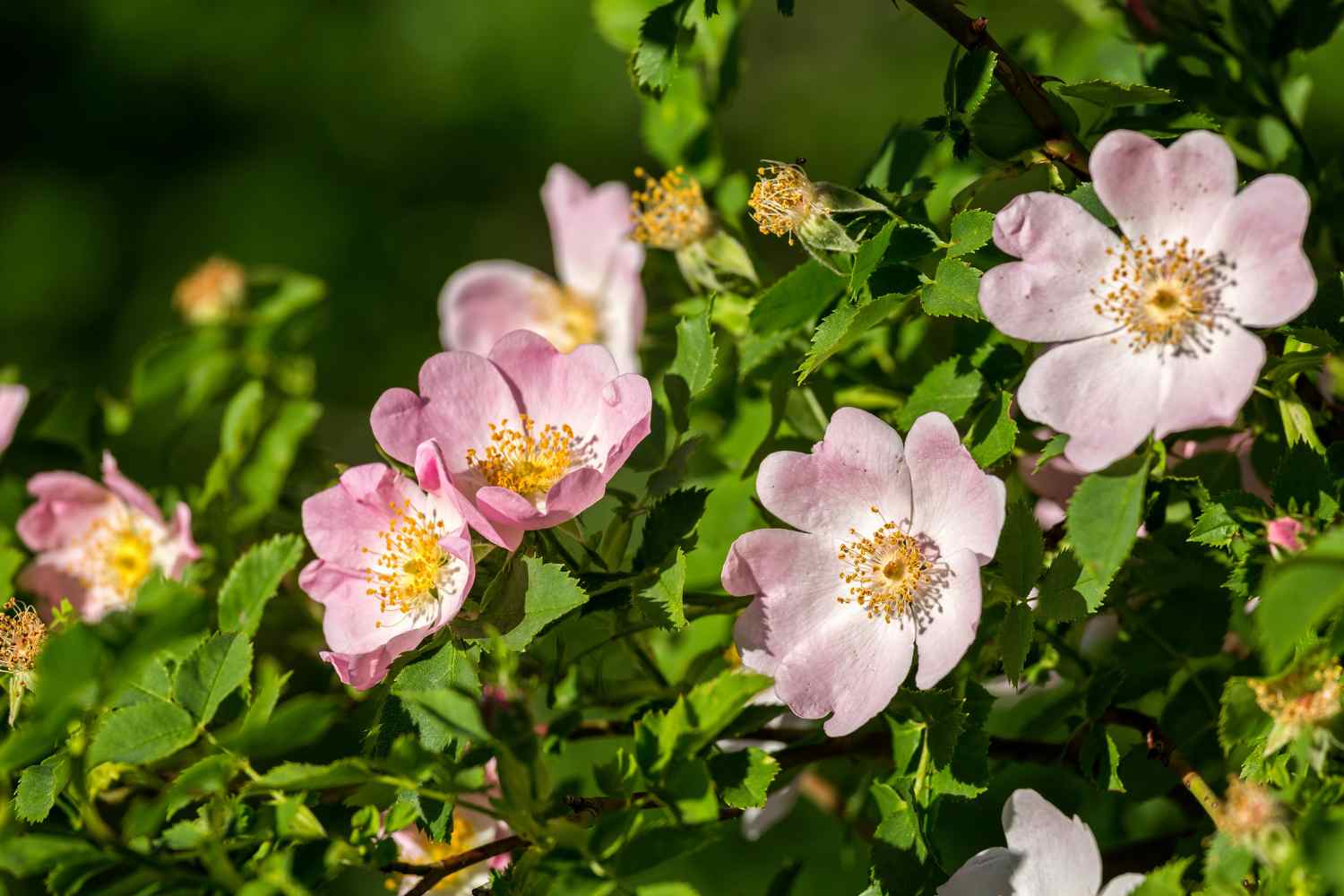
It grows in poor, stony and calcareous soils. It tolerates drought, tolerates frosts, resists winds. Its ability to adapt depends on deep roots and a stoloniferous nature that allows it to colonize new areas with disarming ease. In spring and early summer, it produces simple five-petalled flowers: nothing elaborate, but an essential beauty that works perfectly.
A miniature ecosystem
To define it as “just a plant” would be an understatement. The dog rose is, in all respects, a micro-ecosystem.
Its tangled branches provide a safe haven for numerous bird species to nest. The thorns keep predators away, transforming these shrubs into real natural forts. During flowering, the flowers become a generous source of pollen for bees and pollinators — which is far from a given, considering that many highly selected ornamental roses produce very little of it.
The larvae of several butterfly species feed on its leaves, placing it in complex food chains. And when autumn arrives, its fruits become a precious resource for birds and small mammals, precisely when food is scarce. The plant nourishes and in exchange receives the dispersion of the seeds: a perfect balance, without waste.
Rose hips: small fruits with enormous value
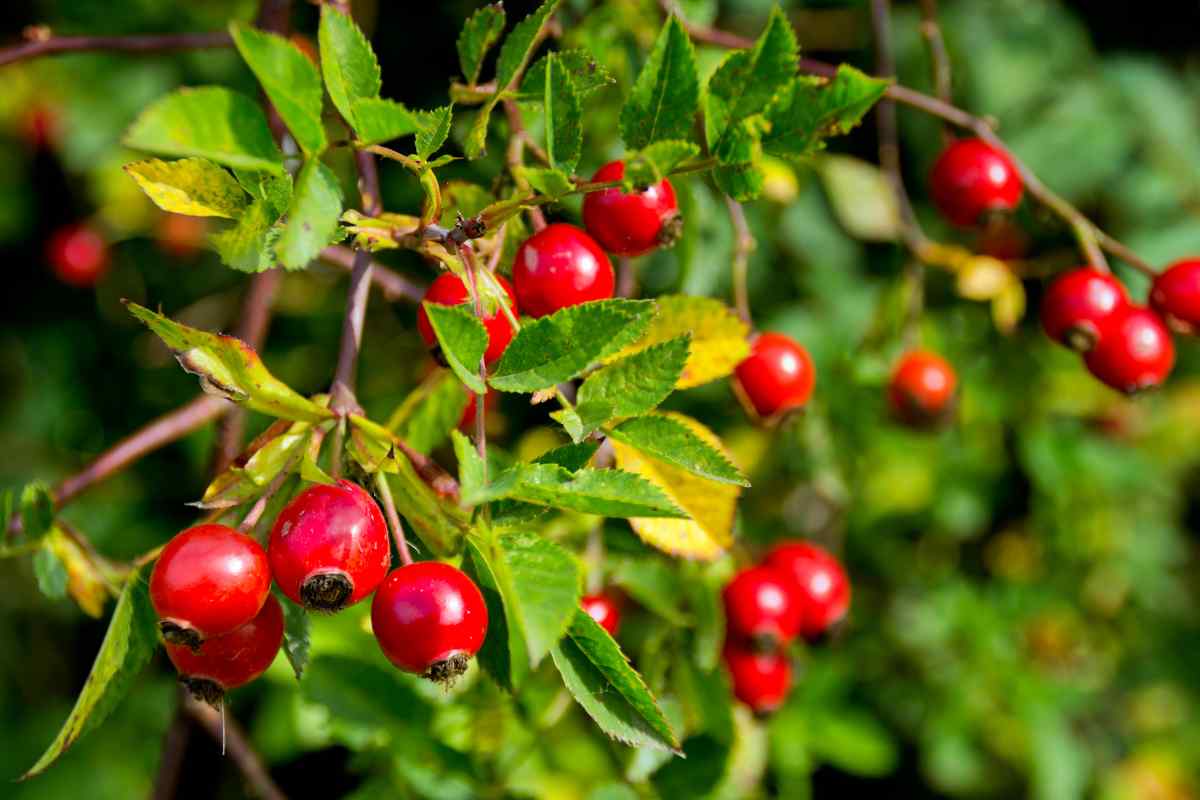
After flowering, rose hips appear, the bright red fruits that ripen in autumn and remain on the branches for most of the winter. They are perhaps the best-known element of the Dog Rose, and for good reason.
From a nutritional point of view, they contain a concentration of vitamin C that far exceeds that of citrus fruits. Added to this are anthocyanins, flavonoids and other bioactive compounds which make it an interesting ingredient both in cooking and in phytotherapy.
Popular tradition has used them for centuries in the preparation of infusions, syrups and jams. In periods of food scarcity they represented a precious dietary supplement, easily accessible to anyone living near the countryside or the woods.
Harvesting takes place when the fruits are ripe but still firm. After the first frosts they become softer and sweeter, but also more delicate to handle. A detail not to forget: inside the rose hips there are small seeds covered with irritating hairs, which must be carefully removed during preparation. It’s something experienced pickers have always known.
The invisible base of many garden roses
There is an aspect of the dog rose that non-experts are unlikely to know: it is one of the most used rootstocks in nurseries.
Many ornamental roses, especially the most delicate and refined varieties, are grafted onto Rosa canina roots precisely because its root system is robust, adaptable and capable of thriving even in difficult conditions. Grafting an ornamental variety onto this base means transferring part of its vigor to it, making it more resistant, longer-lived and less demanding.
In a certain sense, the dog rose is the foundation on which many of the roses we admire in gardens stand. An invisible but indispensable presence.
How to insert it into the garden — if you are willing to change perspective
Introducing the dog rose into a garden requires a change of mentality. It is not a plant to be controlled, but to be accompanied.
It lends itself perfectly to natural or “wild” garden contexts: it can form defensive hedges thanks to its thorns, or be left free to grow along the boundaries of the land. It doesn’t need fertilizer — poor soil is fine. Irrigation is reduced to rainwater. Maintenance is limited to occasional work with hedge shears, using thick gloves due to the hooked thorns.
Illnesses rarely affect her. Powdery mildew and scab may appear, but they rarely compromise the health of the plant. It is, in essence, an ideal choice for those who want a beautiful, functional and low-impact garden, without having to dedicate hours each week to maintenance.
An ancient bond with the territory
The name “canina” derives from an ancient popular belief according to which the plant could cure rabies – a theory that modern science has never confirmed, but which testifies to how present this species was in the imagination and daily life of European rural communities.
Over time it has been used in the most diverse ways: from herbal remedies to artisanal weavings with flexible branches. Even today it is the subject of study for the properties of its extracts, but its deepest value remains that of a wild plant rooted in the territory, capable of recounting an ancient relationship between man and nature.
Learning to recognize it in the woods, or choosing to give it space in the garden, is a small gesture with a precise meaning: choosing a more authentic gardening, where nature is not something to be tamed, but to be listened to.
