
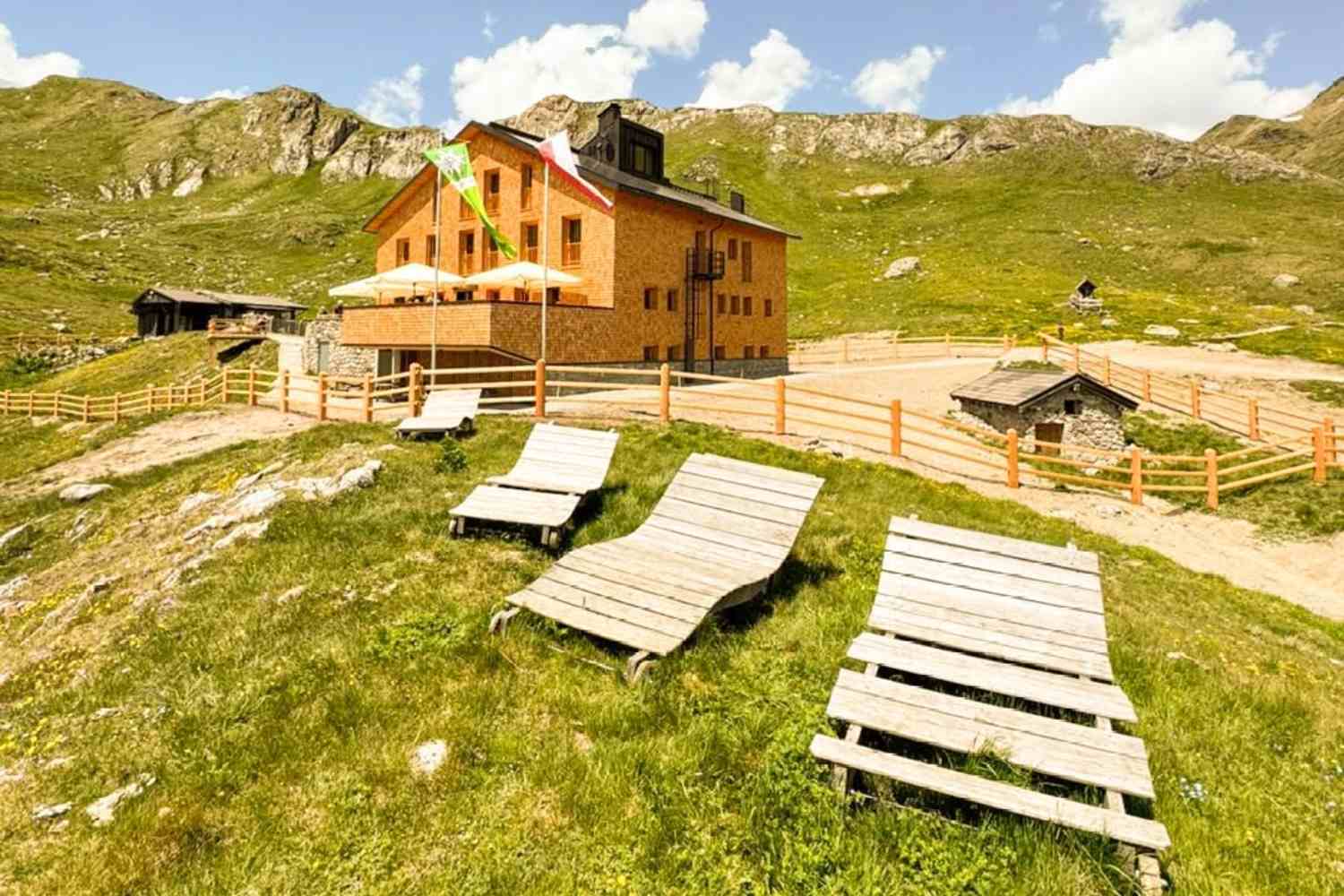
At 2,256 meters above sea level, on the border between Val Venosta and Switzerland, the Sesvenna Refuge has chosen to go in a stubborn and opposite direction compared to the transformation of Alpine garrisons into five-star hotels. After a major renovation which ended in November and which required the stop of activities for the entire summer season of 2025, the facility managed by young people Indira Habicher and Georg Messner on behalf of the Alpenverein Südtirol (Malles section) has reduced its capacity from 78 to 58 beds. As explained by Elmar Knoll, vice-president of the German-speaking Alpine club and coordinator of the renovation project, the choice to remove twenty beds arises from the precise desire to avoid overcrowding in a fragile territory, marked by the overtourism which hits the autonomous province of Bolzano hard.
View this post on Instagram
Energy sustainability and return to essentiality
The architectural intervention deliberately did not focus on the addition of commercial tourist attractions such as infrared saunas, fine wine lists or gourmet dishes. The real innovation concerned the achievement of energy efficiency through the complete elimination of propane gas, replaced by a solar panel system on the roof and by a thermal system powered by a local hydroelectric power station whose water boilers work like real thermal batteries.
The proposed experience aims to recover the original spirit of mountaineering and for this reason the managers have maintained the traditional style of the structure, enhancing the wood, the stone and the historic stube. To allow the passage of vehicles during the works, it was necessary to temporarily widen the path that goes up from Slingia, a hamlet of the municipality of Malles Venosta, but Elmar Knoll reassured that by autumn the route will return to its original dimensions.
View this post on Instagram
The conviviality of the single table versus the hotel model
The management of the common spaces rejects the rigidity of the valley bottom restaurants: guests dine together around a single large table, transforming the meal into an opportunity for collective socializing. This philosophy is part of the debate raised by Antonio Montani, national president of the CAI, and confirmed by the research of Professor Riccardo Beltramo of the University of Turin.
The study highlights how many tourists expect the same comforts at the summit as the resorts at the bottom of the valley, with the risk of distorting the social and emergency function of the refuges. The Sesvenna Refuge, however, demonstrates that the true attraction of high altitude lies in the essentiality and respect for the limits of the Alpine environment.
View this post on Instagram
