
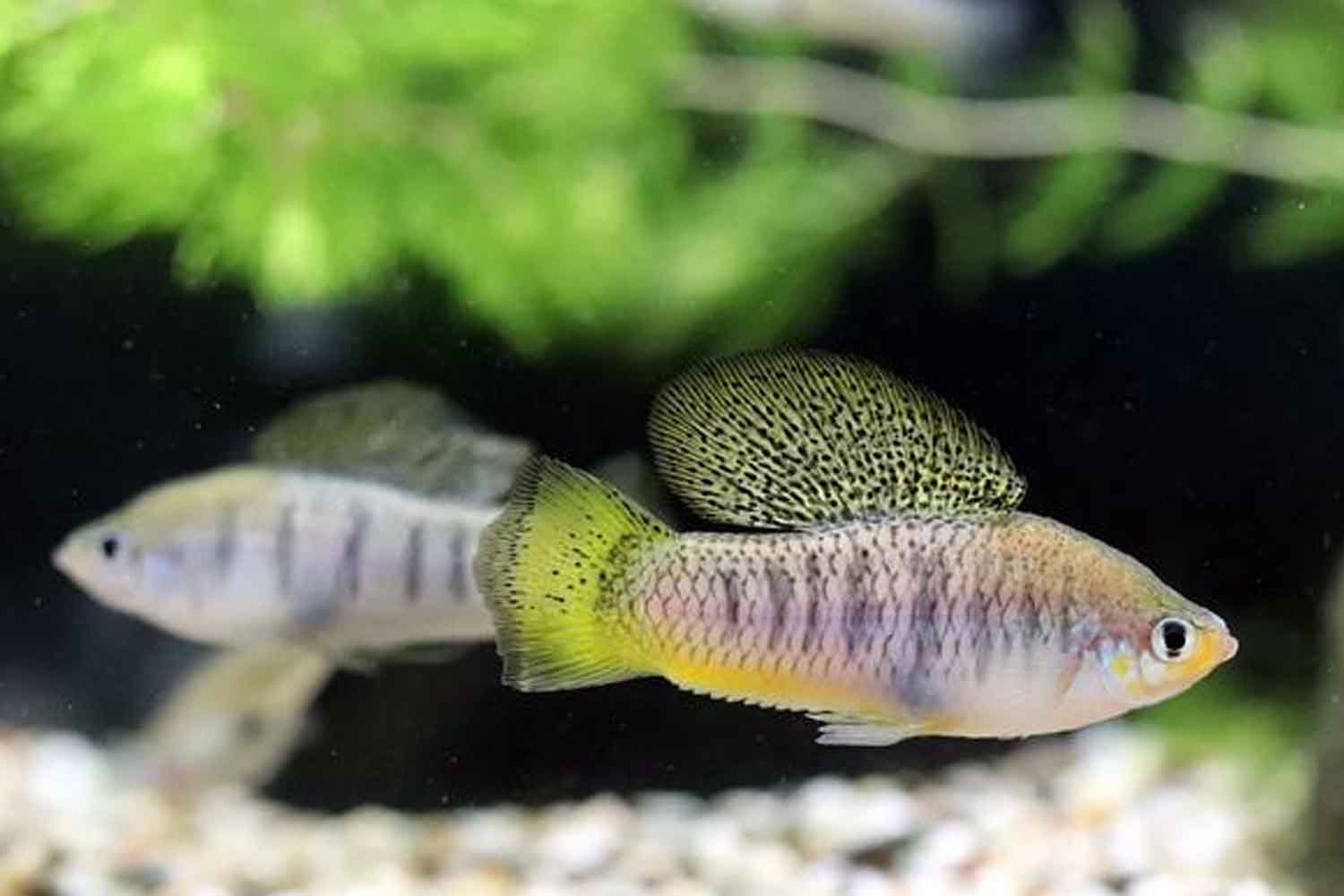
Downstream from the town, the Río Calnali changes face. The water becomes cloudier, nutrients and heavy metals increase, and two species of small fish begin to mix much more than normal. Females struggle to recognize males of their own species because their olfactory system is damaged. It happens in the Mexican region of Huasteca, in the state of Hidalgo. Here a group of researchers studied the highland sword holder (Xiphophorus birchmanni) and the highland sword holder (Xiphophorus malinche)two freshwater fish related to guppies and platies kept in aquariums.
The work, published in the magazine Current Biologyshows a very clear relationship between the worsening of water quality, damage to the olfactory organs and the increase in mating between the two species.
Downstream from Calnali the water changes
The researchers analyzed several points along four rivers in the Huasteca, a mountainous area where natural areas, farms, fields and inhabited centers coexist within a short distance.
The most evident situation emerged in the Río Calnali, which runs through a town of around 3,000 inhabitants. Upstream from the town centre, X. birchmanni And X. sad they still remain genetically recognizable. Downstream, however, a population appears composed largely of hybrid fish.
In the same section, turbidity, nitrates and phosphates increase. The analyzes also detected higher concentrations of copper, lead and cadmium. The change occurs in a few kilometers. Two distinct populations live before the town. After water passes through the urbanized area, genetic boundaries become much more blurred.
The researchers sequenced the DNA of thousands of specimens and also analyzed the pregnant females and their embryos. The results indicate that in the most contaminated stretch the choice of partner depends much less on belonging to the same species.
To choose a partner they use smell
The males of the two species have some visible differences. The highland swordholder retains the typical pointed extension of the tail, similar to a small sword. The highland swordtail has a larger dorsal fin. For females, however, sight represents only part of the recognition system. Chemicals circulate in the water that communicate species, sex and reproductive availability. To read them you need an intact sense of smell.
In the fish collected downstream from Calnali, the researchers found a strong reduction in olfactory cilia, the thin structures that intercept molecules dispersed in the water. The nasal tissue also had many more mucus-producing cells, a sign of persistent irritation.
The simplest comparison is that of a congested nose. For a fish, however, losing its sense of smell means losing one of the main tools with which it orients itself, finds food and recognizes a possible mate. With weakened chemical signals, females have greater difficulty distinguishing males of their own species. Interbreeding increases and, generation after generation, an increasingly mixed population is born in the river.
The authors remain cautious about the precise causes. Water contains several contaminants and damage could result from their combined action. The observed sequence remains clear: where the water quality worsens, the olfactory tissue is more damaged and hybridization increases.
Hybrids can develop serious diseases
Hybridization is part of evolution and can appear even in healthy environments. In this case, however, it is favored by an environmental alteration and involves two species with some already known genetic incompatibilities.
Previous studies have shown that certain combinations of genes from both species can increase the risk of melanoma. Another research published on Nature in 2024 it identified an even more serious problem. In some hybrids, the genes present in the cell nucleus are incompatible with the DNA of the mitochondria, the structures that provide energy to the cells.
This combination can block the development of embryos or cause serious metabolic disorders in young fish. Some specimens are born with difficulties in cellular respiration, heartbeat and energy production, to the point of developing lethal conditions.
Also of concern is the possible loss of the two original species. If interbreeding continues at this frequency, the hybrid population can take over and progressively absorb both.
Biologists talk about species collapse: two distinct groups end up merging into a single population. Biodiversity is reduced without a sudden die-off and without dead fish along the shore. It disappears slowly, through mating. In the Río Calnali the pollution has reached the noses of the fish. From there everything else started to change too.
