
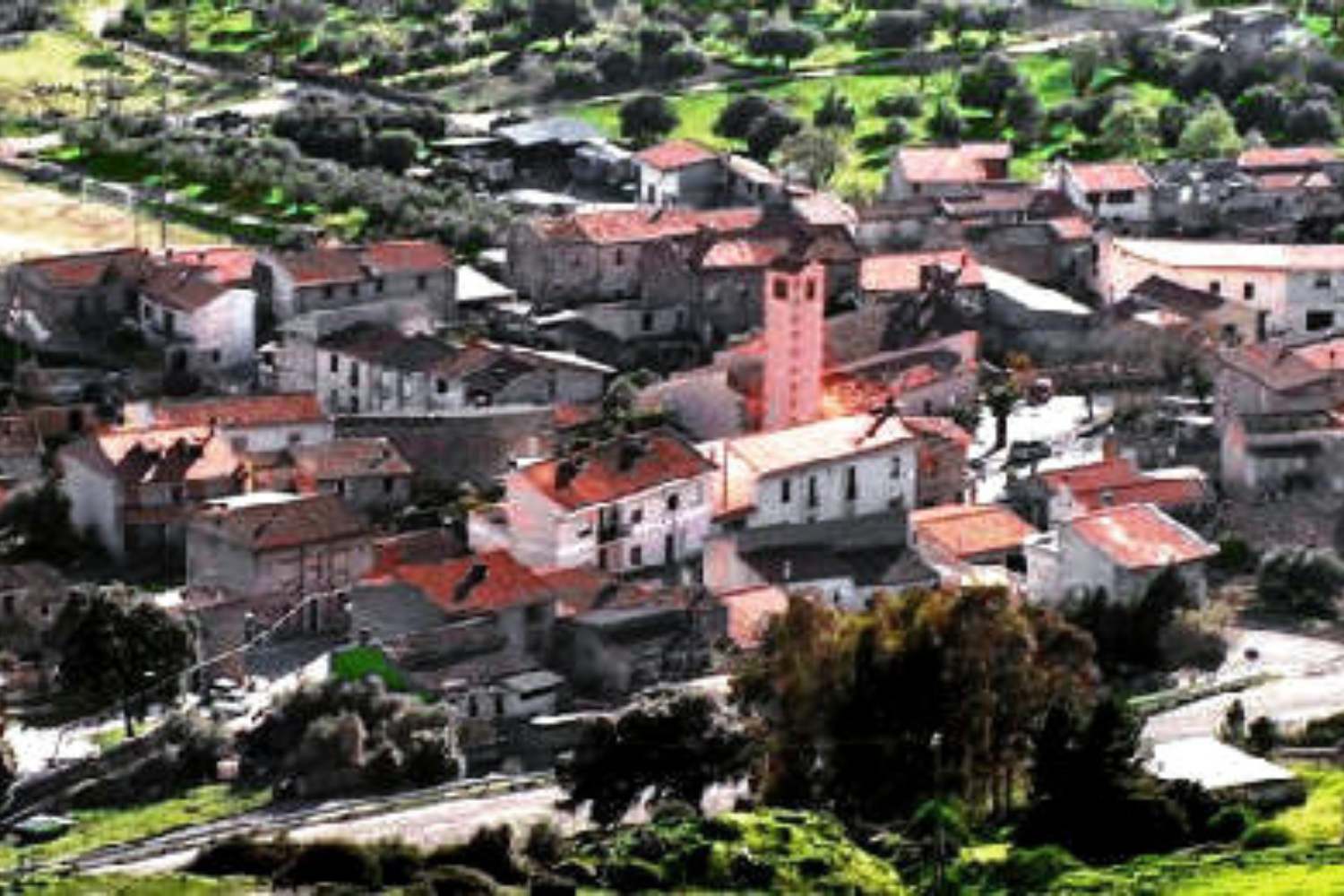
Just over three hundred inhabitants, a handful of dark stone alleys and a sky that is almost no longer seen in Italy. We are talking about Allai, a Sardinian town in Barigadu in the province of Oristano, which has just obtained a record that few would have bet on such a small centre: it is the first Italian village to boast the international certification of “Village of the Stars”, issued by the Fundación Starlight of the Institute of Astrophysics of the Canary Islands. The honour, recognized internationally by the International Astronomical Union, UNESCO and the World Tourism Organisation, rewards territories where light pollution remains below minimum thresholds and where there is a concrete strategy to enhance the celestial heritage. Not a superficial certificate, in short, but the seal of a journey that lasted four years.
Four years of turning off the lights
The municipal administration has redesigned public lighting from scratch, replacing the old systems with technologies that direct the flow downwards and eliminate upward dispersion, the main cause why, in residential areas, the stars can be counted with the naked eye on the fingers of one hand. In the meantime, panoramic benches dedicated to the observation of the constellations have appeared, accompanied by celestial maps, arranged in three characteristic points of the village. The work was conducted with the support of the Planetarium of L’Unione Sarda and two astrophysicists, Flavia Dell’Agli of INAF in Rome and Manuel Floris of the Planetarium itself, who in Allai organized observation evenings, conferences and photographic workshops open to citizens, schools and enthusiasts from across the island.
Darkness as a resource
With the Allai certification it enters a restricted international network and joins the only two “Star Parks” already present in Italy, namely the Astronomical Observatory of Saint-Barthélemy, in Valle d’Aosta, and the GAL Hassin astronomical park in Isnello, in Sicily. The difference is that an inhabited historic village obtains the title, not a simple and isolated observation site. It seems clear how environmental protection is seen as a possible driver of development for an internal territory marked by depopulation, and the main challenge is astrotourism, in which a “slow”, curious traveller, who goes up to the Barigadu to do what is now precluded elsewhere (looking up and seeing the Milky Way) becomes normality.
