
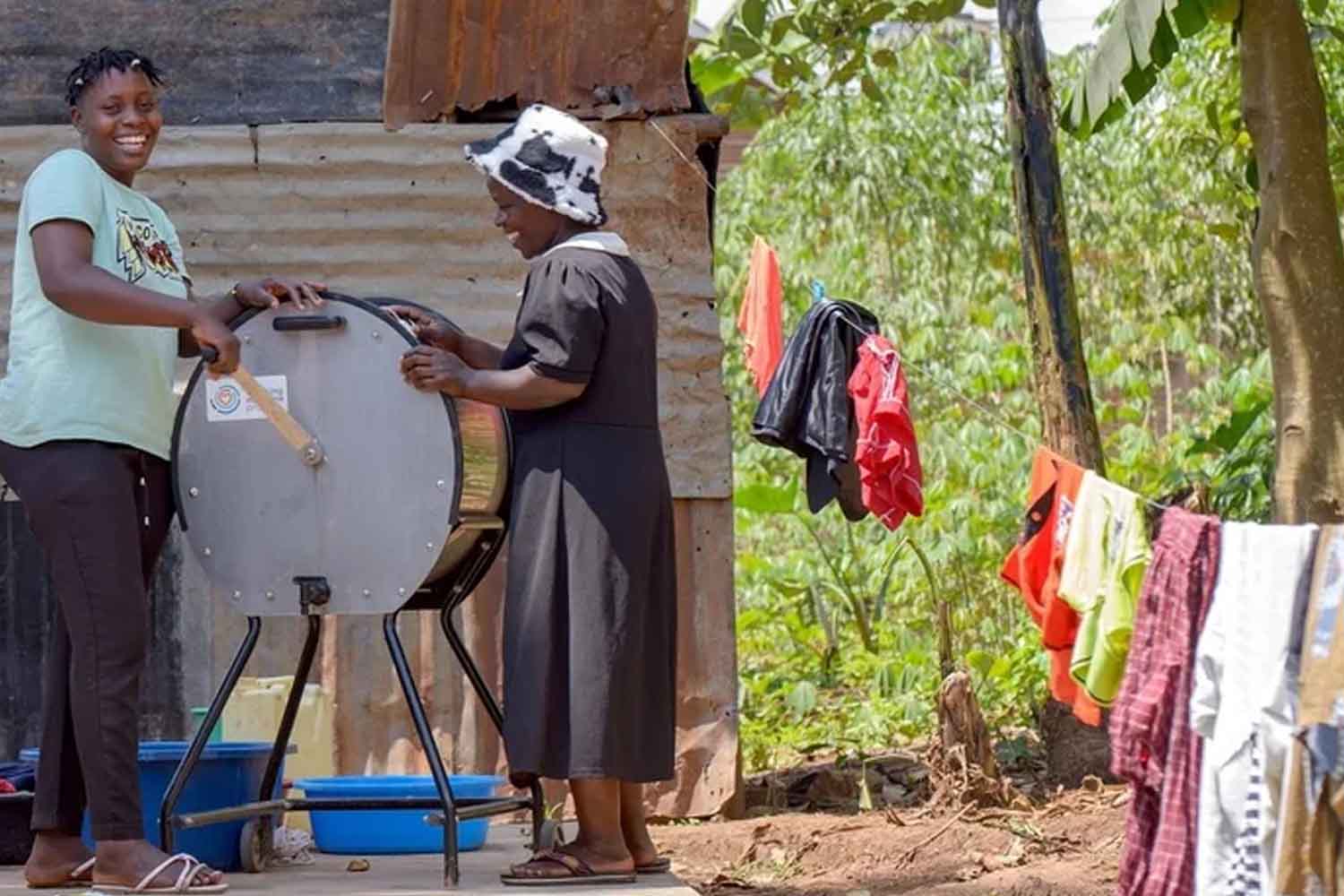
The idea of doing laundry without plugging in and without wasting liters and liters of water seems like something out of a survival manual, but it’s much more real than it seems. Is called Divyaone washing machine without electricity portable and designed by Washing Machine Projectand is attracting the attention of those who live in rural areas, in emergency contexts or simply want to cut consumption and environmental impact.
The device enters the scene with a very concrete promise: -50% of water used And -75% time compared to hand washing. A saving which, in many contexts, can make the difference between being able to wash your clothes or giving up altogether.
How it works
The heart of Divya is simple: a stainless steel drum, a crank that you turn by hand and no connection to the electricity grid. It doesn’t matter if the power goes out, if the area is not served or if you find yourself in a refugee camp: it continues to turn. It arrives disassembled, in “flat package” style: it can be assembled easily, like a DIY piece of furniture, and is equally easy to repair because it does not require proprietary parts or expensive interventions. Few components, few faults, zero assistance to chase.
And the water? Here the difference is huge: the design optimizes each rotation of the drum, reducing the need for water 50%. A fact which, in a world where billions of people do not have regular access to drinking water, weighs more than any comfort. Divya is therefore born to conjugate sobriety, autonomy And effectivenessno frills: just what you need to clean the laundry without waste.
Why Divya can truly improve the lives of communities (and beyond)
The main features impress with their practicality:
It is not a rival to our home washing machines: it is a concrete answer for those who cannot afford a traditional appliance or live without a reliable network. In many communities, it means giving back time and dignity especially to women, who often carry the burden of daily laundry on their shoulders.
Of course, capacity is limited and you still need a water source. But in rural villages, camps for displaced people or isolated areas, Divya represents real change.
