
For years, the scientific community has tried to answer a question as simple as it is complex: do the beats of the heart follow an order or are regulated by the case? Today, thanks to a research conducted by a group of scholars from the University of Pisa, we know that our heart beats regularly. And this discovery could have important implications for the diagnosis and prevention of cardiovascular diseases.
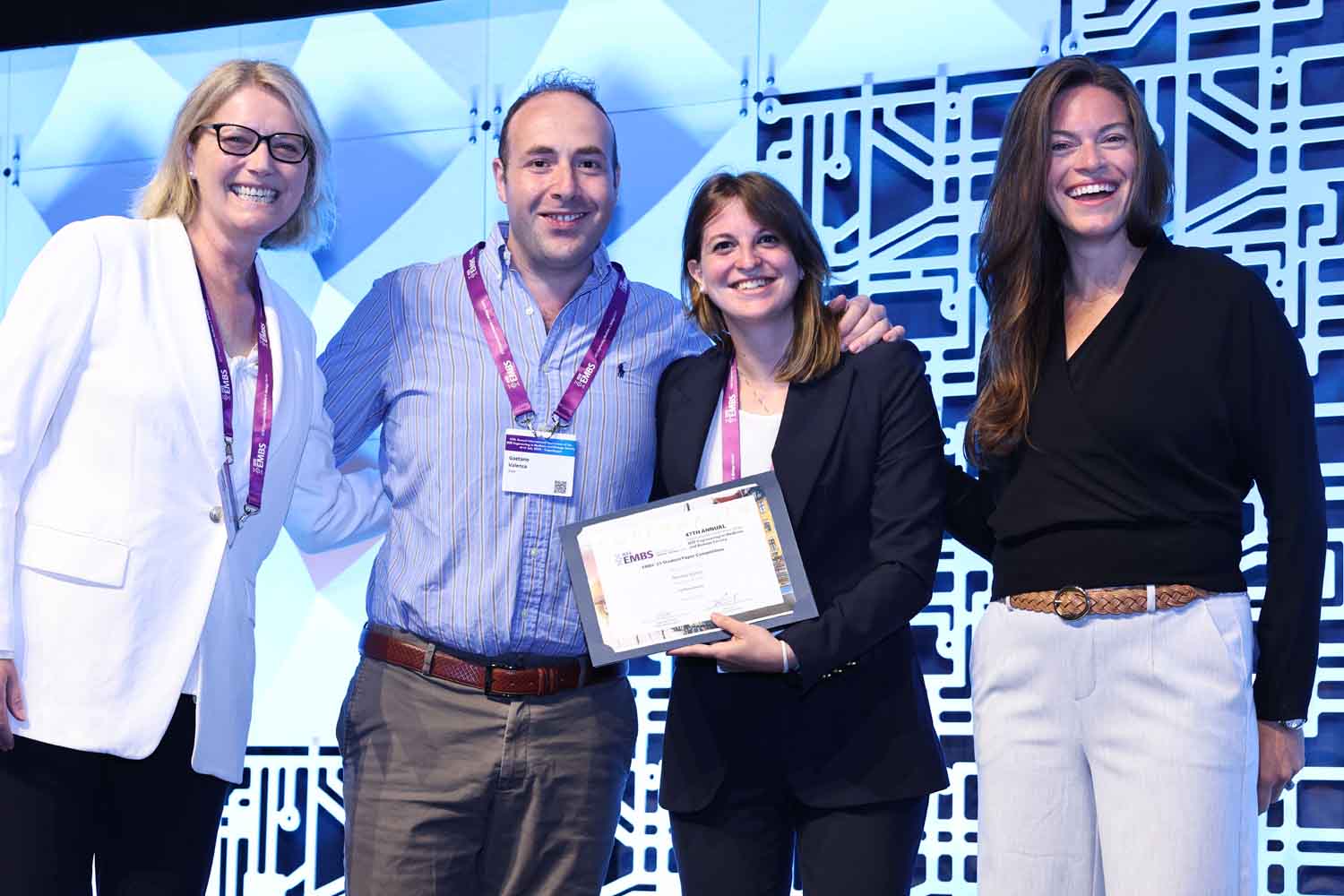
The work received the Best Student Paper Award at the Embc 2025 International Conference, organized by the International Biomedical Engineering Company, overcoming research from over 70 countries.
What does the heart really say?
The project was born from the collaboration between the Department of Information Engineering and that of Mathematics of the University of Pisa. The basic idea was simple: to use mathematics tools to interpret a series of data obtained from electrocardiogram, in particular the so -called cardiac frequency variability (HRV). It is the sequence of the intervals between one beat and the other, a sort of “language of the heart” which contains many information on our physiological state.
Martina Bianco, a doctoranda in biomedical engineering with a degree in mathematics, has developed a method to understand if this sequence follows a predictable logic or if you change chaoticly:
During my thesis I developed an algorithm to distinguish between a regular and a chaotic system. Applying it to real data, full of physiological noise, was a challenge. But the result was clear: the heart follows regular behavior.
In simple words: the beats of the heart, although influenced by many factors (nervous, hormonal, respiratory), are not casual. And if we know the way they work, we can use it to predict risk situations.
A step forward to predict cardiovascular diseases
According to Gaetano Valenza, professor of bioengineering and supervisor of the project, this discovery opens an important door:
Understanding that the heart behaves regularly allows us to look for new biomarkers, that is, useful tools to evaluate in advance if a person is at risk of cardiovascular diseases. And this could make the difference in terms of prevention.
Claudio Bonanno, professor of mathematical physics, also underlines the value of this collaboration between different disciplines:
The prize goes to Martina’s work, but also to that of Andrea Scarciglia, with whom we started years ago this research. It is a beautiful demonstration of how mathematics can have a concrete impact on health, especially when it works together with engineering and medicine.
Don’t you want to lose our news?
You may also be interested in:
