
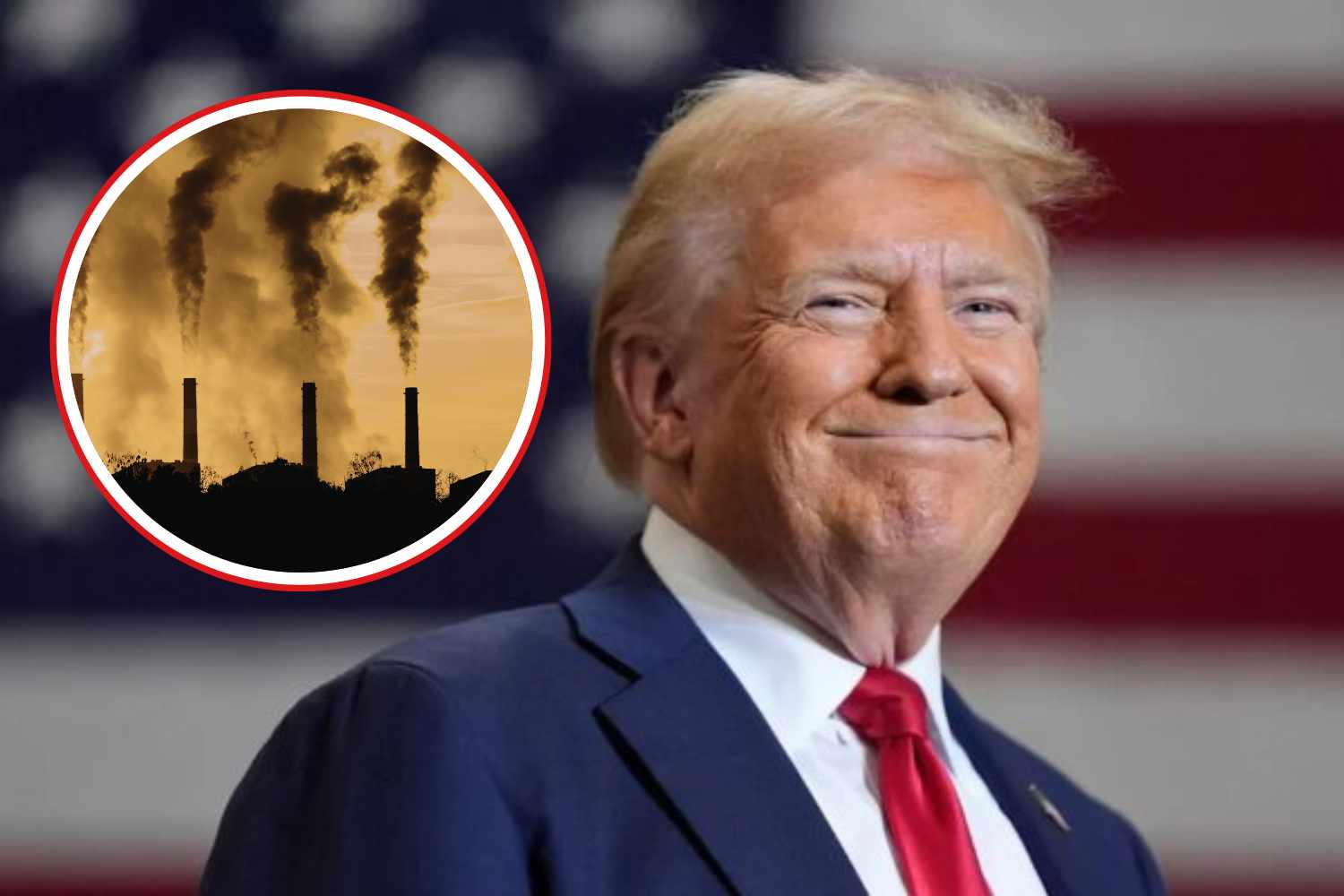
Here we go again: the Trump administration takes a new step backwards on US climate policy. The Environmental Protection Agency (EPA) has announced the repeal of CO₂ emission limits for coal and gas power plants introduced under Joe Biden’s presidency, also opening up the possibility of blocking future federal climate regulations aimed at the energy sector.
The decision, included in Partial Repeal of the Carbon Pollution Standards for Fossil Fuel-Fired Electric Generating Units signed by Lee Zeldin, it arrived during the G20 energy ministers’ summit in Houston and is part of the White House’s broader strategy aimed at reducing environmental regulations, which it has always considered an obstacle to energy production.
A choice that immediately reignited the conflict over the future of American energy: on one side those who talk about industrial relaunch and energy security, on the other those who denounce a step backwards in the fight against the climate crisis.
“End the war on coal”: the White House line
According to the Trumpians, eliminating constraints on emissions will allow the States to build new energy infrastructure more quickly and respond to the growing demand for electricity, also fueled by the expansion of data centers for artificial intelligence.
EPA chief Lee Zeldin argued that the measure will “cut red tape” and encourage new investment in the sector. And furthermore in the ranting press note also that:
Under President Trump’s leadership, the United States is demonstrating that it can protect human health and the environment by growing our economy and delivering projects. Clear, timely, and predictable permits give businesses the confidence to invest, create opportunities for American workers, and help turn good ideas into real projects.
A position also reiterated by the Department of Energy: Undersecretary Kyle Haustveit declared that the measure marks the end of what he called the “war on coal”, defining it as a “reliable, convenient and safe” source.
The previous legislation wanted by the Biden administration provided for a reduction in greenhouse gas emissions from power plants of approximately 1 billion tons by 2047, through the obligation for some plants to adopt systems to capture emissions before they reach the atmosphere.
According to Trump, canceling the rules will save industries about $370 million in compliance costs.
Environmental and public health organizations obviously dispute this assessment, arguing that the environmental and health costs of the choice could be much higher. The electricity sector, in fact, represents almost a quarter of US greenhouse gas emissions and is the second most polluting sector after transport.
The paradox: more energy for AI, fewer constraints on the climate
One of the arguments used by the Trump administration concerns the increase in electricity demand linked to artificial intelligence. The race for new data centers requires ever-increasing amounts of energy and the White House claims that reducing environmental regulations is necessary to quickly build new plants.
The question therefore remains open: is it really necessary to loosen the limits on emissions of the past to fuel the technology of the future? Opponents of the measure argue that the risk is to pass on the environmental and health costs to the communities, while the economic benefits would fall mainly on the energy sector.
Meanwhile, with this decision, the United States once again demonstrates its desire to return to an energy line more favorable to fossil fuels, reversing many of the climate policies adopted in previous years.
A choice that reopens a global question: while the world tries to reduce emissions, how much space still remains for coal and gas in the energy mix of the future?
